 White people love rules. It explains why so they get upset when people cut in line, why they tip so religiously and why they become lawyers. But without a doubt, the rule system that white people love the most is grammar. It is in their blood not only to use perfect grammar but also to spend significant portions of time pointing out the errors of others.
When asking someone about their biggest annoyances in life, you might expect responses like “hunger,” “being poor,” or “getting shot.” If you ask a white person, the most common response will likely be “people who use ‘their’ when they mean ‘there.’ Maybe comma splices, I’m not sure but it’s definitely one of the two.”
If you wish to gain the respect of a white person, it’s probably a good idea that you find an obscure and debated grammar rule such as the “Oxford Comma” and take a firm stance on what you believe is correct. This is seen as more productive and forward thinking than simply stating your anger at the improper use of “it’s.
Another important thing to know is that when white people read magazines and books they are always looking for grammar and spelling mistakes. In fact, one of the greatest joys a white person can experience is to catch a grammar mistake in a major publication. Finding one allows a white person to believe that they are better than the writer and the publication since they would have caught the mistake. The more respected the publication, the greater the thrill. If a white person were to catch a mistake in The New Yorker, it would be a sufficient reason for a large party.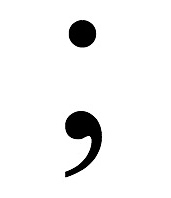
Though they reserve the harshest judgment for professional, do not assume that white people will cast a blind eye to your grammar mistakes in email and official documents. They will judge you and make a general assessment about your intelligence after the first infraction. Fortunately, this situation can be improved if you ask a white person to proof read your work before you send it out. “Hey Jill, I’m sorry to do this, but I have a business degree and I’m a terrible writer. Can you look this over for me?” This deft maneuver will allow the white person to feel as though their liberal arts degree has a purpose and allow you to do something more interesting.
Don’t worry, it is impossible for a white person to turn down the opportunity to proofread.



 Stuff White People Like
FIRST!!!!!!!!!!!!
your great!
First!
Gosh Darnit!
“It explains why so they get upset when people cut in line, why they tip so religiously and why they become lawyers.”
Correction: It explains why they get so upset….not why so they get upset.
Brilliant
So true. I love when comments are criticized for someone’s typo’s or incorrect use of grammer. It’s like ‘get a life’ or something! Don’t you have anything better to do?
Man, you forgot to close your quote after “it’s”.
Self-professed grammar geek
I pooped my pants!
Your a funny guy, i am always criticizing people for grammar mistakes. LOL
Could be the first outright, non-subtle attack on something….in this case a liberal arts degree
good times
Also, I hate it when some people think they have a priority to get in line over yours. Once, coming in opposite directions to an airport security area, an old guy yelled at me to get in the back of HIS line. I told the bloke to piss off. I’m sure he loved me even more.
This blog have been bether
I feel so gay saying this, but this reminds me of the episode of Sex in the CIty when Mr. Big’s new wife misuses “their” in a letter to Carrie. Aweome post again!
Guilty as charged, I must say. It’s just so exciting, hunting for typos.
Less genius than usual, although more genius than Jesus fighting a Satan Robot…http://www.wordgnome.com/2008/04/blasphemy.html
how much is his guy making from the book?
good disclaimer….at least your anonymous
I guess that I’m more white than one would think at first (or second or third) glance considering you know…my ancestry. Haha
Ahem…”typo’s” shouldn’t have an apostrophe. You misspelled grammar, and you probably should have placed a comma after ‘get a life’. Just sayin’
Just having some fun…enjoy.
http://www.wordgnome.com/2008/04/blasphemy.html
Another sloppy conflation, but whatever … still funny. I worry about the comments, though. Too many move right past humor and into a new cause: vive stoopiditee!
That’s what you get for trying to cut the line!
Can’t resist. “Professional” should be “professionals.” 5th paragraph, first sentence.
I know. I just became that guy. I should have a shirt made. Perhaps a large party, too.
BTW, English degree. Pasty white. Big fan.
He must be going through the editing stages of his book. So transparent.
“Though they reserve the harshest judgment for professional, do not assume that white people will cast a blind eye to your grammar mistakes…”
I think ‘professionals’ would be more better in stead of ‘professional’.
“Though they reserve the harshest judgment for professional” (sic)
———————————————————————–
Ummm…is that a joke? I think we’re forgetting a letter here. TYPO! I win! I’m super-white.
Aw…I lost by a nano-second.
Actually you both lost by 5 minutes.
Is anyone else keeping track of just how white they are?
I fit the profile on twenty-four points. That’s pretty pasty, isn’t it?
“Maybe comma splices, I’m not sure but it’s definitely one of the two” needs another comma after sure. No, actually a semi-colon after “splices” and a comma after “sure.” No, an em dash would work better. No, wait…
(white professional editor here. I love my punctuation choices, I do.)
Great post. lol.
http://stufflatinpeoplelike.com/
> This is seen as more productive and forward thinking that
should probably be
This is seen as more productive and forward thinking than
You should have had this proof-read by a white person.
“This is seen as more productive and forward thinking that simply stating your anger at the improper use of “it’s.”
I believe you meant:
“This is seen as more productive and forward thinking THAN simply stating your anger at the improper use of “it’s.”
Also, as a white person, I found this completely true.
Maybe white people do not understand that English is on going language and that if you live in England, there are various slangs and based on the city you are based in.
If You are in London you have cockney rhyming slang and in all major cities there are variations.
But of course it is a product on the class system that the middle classes distinguish themselves from the working classes by pronouncing all the words and speaking received English.
http://stuffgirlslike.wordpress.com
Guilty as charged, though my affection for grammar happened after college, while studying Greek and then Latin. It’s only grown since then.
Grammar is stuffwriterslike.
I’ve met enough white people who don’t know their apostrophes from their apostates to completely remove #99 from the list.
I’ve been waiting for this since post #7. Thank you! I love grammar and I don’t care who knows it!
first
Not a grammar issue, but I’ve noticed that the blogger uses “less” when “fewer” would be more appropriate. Use “fewer” when you can enumerate. Use “less” when you can’t. It’s really pretty simple.
When will “blogging” be added to the list?
this is the gayest thing ever
Last month I caught a mistake in The New York Times, emailed it to them, and they fixed it. I’m still get excited when thinking about it.
At least *you’re* anonymous.
SO fantastically funny! Thanks for the laugh!
Kind regards,
An English major (who works as an editor)
I have a friend who fits a good percentage of this blog to a T. Lived in France, liberal arts degree, threatening to move to Canada, Socialized medicine, etc. But his ultimate whiteness is confirmed with this post, as he is not only fanatical about English grammar, but French as well. How’s THAT for white-ness?.
Great blog…can’t get enough!!
Damn,you got me again. Pointing out grammar errors is my only joy in my jobless, LAS degree life, and I graduated yesterday! It’s going to be a long year.
no shit you fucktard
there is nothing more I hate than people with no sense of humor its annoying
What’s with the snowflakes?
Grammar is the last refuge of the dull mind.
Yeah me too. About the English degree (well, actually not yet). I actually think that has a lot more to do with it than my being white (and I am neither American nor an English native speaker, I am European and thankfully we get to study abroad and believe in socialized medicine without it being blamed on our skin color ;)). I do not get so much pleasure about finding grammar mistakes in books (and on TV shows all the time), it just makes me roll my eyes on the inside (and sometimes on the outside too), and think some editor did not do their job properly.
Brilliant. There’s at least one typo or grammar mistake in each paragraph. For those of you who said that this post was less witty than those in the past, the comments section totally proves you wrong! He’s gotten the readers to show just how much they love grammar, and apparently how white we all are!
I love how people are correcting the post, and then correcting the comments about the corrections on the post.
sounds like you should butt fuck him.
Comedy gold.
Checking to see if their random.
They’re is no there, Their…
… *it’s* annoying
I was really hoping #99 was going to be Wayne Gretzky. There was a real opportunity there.
I love how white people will completely stray off the post topic to criticize someone for thier lack of grammatical finnese…
Hotfishgrease.blogspot.com
Nice. Since I caught the mistake in your post (“I’m still get”), that makes me better than the person who caught the mistake in The New York Times. Time for a party!
This is hilarious. . . . and so incredibly true. I agonize over the Oxford comma at least monthly. My boss does not use it, and I always have. Do I correct it when I proof his stuff? Will he correct it back? Will each of us secretly think the other is a grammar dunce?
I miss happyjack and tornados 1 thru 28
yeah how did he miss that
As I was proofreading your post, I couldn’t help but notice the second sentence was incorrect.
You wrote: “It explains why so they get upset…”
I’m sure you meant: “It explains why they get so upset…”
Hey, I guess you’re right!
Freaking perfect. This basically sums up my entire existence. Good times.
I think the typos in this entry are there on purpose.
The number of entries pointing them all out is proof how much white folks love finding flaws in others…
JoBlo: “there is nothing more I hate than people with no sense of humor its annoying”
That’s you!
That’s because this blog would be more accurately titled “Stuff Yuppies Like”. There are 99 entries so far and no mention of Nascar. Most white people probably do not like the things in this blog.
Perhaps you’ve been meeting the “wrong kind of white people”.
From my mother, who corrected my letters from camp (for me to review when I got back home) to my girlfriend, who can’t navigate but can always find a dangling participle or split infinitive, it’s always been a “sign of breeding” to have good grammar.
I secret relish finding grammatical mistakes. Especially if they occur within academic paper. Teehee, seriously WTF.
I miss Come Let Us Reason Together (CLURT). He wrote intelligent prose. –Jeff in Houston, Texas
I’d like to also point out, as a white person and graphic designer, scanning publications for design errors and finding one is as rewarding as finding a grammatical error!
Been waiting for this one. I just got a C on a paper for using a non-academic writing style.
Are you crazy?
Of course, the Oxford Comma is mandatory! Who taught you to write?
I’m a WASP and I’m guilty-as-charged. First in the army and then in college I learned the value of precise, clear communications to include spelling & grammar. Those lessons served me well in the work-a-day world. (I don’t claim to never make a mistake or a typo).
Through no fault of their own my parents weren’t educated. In the early-to-mid seventies I learned to enunciate clearly by listening to William Shatner and Leonard Nimoy on _Star Trek_ and immitating their speech. Seriously.
In the U.S. certain groups have really put themselves at a disadvantage both in acadmia and the work-place by either refusing to learn (standard American) English or by insisting on speaking-in-dialect. That’s not a racist statement it’s just the truth.
The contraction of “you are” is “you’re” not “your.” (My personal pet-peeve). –Jeff in Houston, Texas
JESUS WAS A BLACK MAN LYNCHED ITALIAN STYLE
This weblog stopped being funny about 2 months ago.
Okay, this one really is hilarious, because I can think of at least 8 people (all white of course) who HATE people with poor grammar. They own up to it! Admittedly, I dislike when people say things like “alls I know is…” because ‘alls’ is not a word. If english were french and we slurred certain things together, I might accept that, but it isn’t.
At any rate, I am now afraid of the grammatical errors I may have made in here (others may have said the same thing, I haven’t checked). But at least I am one white person who does not live by ALLS the rules. 😉
For more less than perfect work and hilarity, check out this art blog
http://artgonewrong.blogspot.com/
The only reason black people have such poor grammar, spelling and handwriting is because they all learned to write with spraypaint.
I thought it was an attempt at a joke: embedding an actual comma splice in the complaint about comma splices.
Proofread = one word.
#100- blogs
#101- crocs
HAHA! JoBlo just got owned!
This was GOLD.
This sounds racist.
The subtle brilliance of this post is how the writer intentionally uses poor grammar to out the people about whom he’s writing. It’s a clever “white people trap,” and judging by some of the comments many have taken the bait.
ummmm.. “your great!” should read, “you’re great!” 😉
Rock on sister. My favorite book in the world is The Little, Brown Handbook, dang it!
I am the whitest Black woman in all the land. I have (duck) edited a sign in a hotel because of poor grammar *and* brought it attention to the hotel staff. I thought I was doing them a favor, but they looked at me like I was crazy. But I mean, is that really the impression that you want of your “fine establishment”? I stand by my decision.
lol at white people trap
Punctuation should go inside quotation marks — usually.
Actually, there were two typos in The New Yorker two or three weeks back–a misplaced m-dash where a hyphen should have been and some awkward spacing. It was glorious.
I think it’s (or should it be “it is?”) Mr. Lander’s “F U” to the grammer nerds who swarm this blog’s comments section.
(They’re still preferable to the neo-nazis who infest it, but that’s another story.
)
True! Absolutely 100% true!
Way too true! This blog (sadly?) defines my life but I wear it as a badge of honor. Nothing to be ashamed of when it comes to correct grammar–people who use words incorrectly should be embarrassed (and it’s sad that they often are not).
Greatness is something alien to the savage.
Maybe you are “better than the person who caught the mistake in The New York Times” since the New York Times and other newspapers always make mistakes since they are dailies and sometime rushed.
The New Yorker, as the post says, is quite another story.
totes funny
I am the whitest Black woman in all the land.
You must be an albino.
LMAO! This is the best one yet.
I sincerely hope YOUR just kidding.
Hey, fuzznuts, who cares from lesser or fewer? Are a you a tard or something? Just be thankful people posting can write in English at all. The number of people who write in correct English is fewer than those who can balance their own checkbook and far less than those who realize how asinine it is to fret over the use of the words fewer and less. Did I put that correctly? If not, call me at 1800blowmeutard.
I think this is my favourite.
This is very true. It is one of my least favorite parts of being a writer and having white friends.
Your purple identicon reminds me of a swastika. Wanna trade?
Correcting grammar is petty and condescending.
Jesus was Jewish, you idiot. And stop yelling.
This explains why no matter what document I send to a white coworker to provide comments on they send it back with grammar corrections. Even if it’s something they wrote themselves and forgot about, the urge to correct something is so compelling that they can’t bear to send it back uncorrected.
I am speechless. I have been called a grammar Nazi since I was a child. Turns out, it was my whiteness all along. To paraphrase a famous comedian;
All this time I thought I liked proofreading because it was fun; turns out I genetically predisposed.
Truly insightful.
p.s. guess I wasn’t speechless.
Whoops, forgot my link: donotwantyou.com.
White people aren’t the only ones who care about grammar and usage. When I was still a lowly student with no clue about how to use a semicolon, the punctuation in one of my term papers was severely criticized by a professor who was black. He taught me the proper relationship between periods and quotation marks.
Now I’m an editor and an avid reader of The New Yorker. I caught a typo in that magazine a few months ago. I didn’t throw a party, but I told my editor in chief about it, and she was impressed.
Very good post; this is so true of this guy I work with-a white guy of course; nothing pisses him off more than when he gets an email from someone and they writer of the email uses “their” when it should be “there”–it could be a co worker, the boss or George W. Bush–you could spit in this guy’s coffee and he’d be more mad if he gets an email reading—“…and there car was broken into and there stereo was stolen…”
Edited version:
Maybe white people do not understand that English is an on-going language and that, if you live in England, there are various slangs based upon the city in which you live.
If you are in London, you have cockney rhyming slang, and in all major cities there are variations.
But of course, it is a product of the class system that the middle classes distinguish themselves from the working classes by sounding all their words phonetically and using received pronunciation.
Nice flawless useage of the quotation mark and question mark!!! Well done! 🙂
You’re right! Jews from antiquity up to the middle ages had blond hair and blue eyes. This is why Leonardo da Vinci gave Jesus these features in his painting because this is how the typical Jew looked.
Hey, there’s a type-o in your first paragraph up there. See it?
No, you’re wrong, Vanessa. In American usage, commas and periods go inside quotation marks, but semicolons, colons, and question marks go outside. In British usage, it is the opposite.
Sooo right!
Unless you’re a news editor forced to submit to the horrible AP Stylebook. Oxford commas are a major no-no there, and although I have long advocated their usefulness on a personal level, it’s taken me years of working outside journalism to recover from the urge to strike them all out.
funny that some of you deem the “oxford comma” compulsory when in actual oxford nobody is of that opinion, as it is rather an american feature. which is why it should aptly be called the “harvard comma”…
My GAWD how I love this writer! Hope this post makes it into the book!
And as one who can’t spell or grammarize worth a damn, thank goodness for the grammar nazi’s who care about that stuff!
It was racist.
I’m not a neo-Nazi. I’ve always been one.
boom boom!
LOL! Funny! Who’s the loser with the blue-eyes who didn’t get any love as a kid? Go have s*x with a black man an get you fantasy OVER WITH! gees!!!
So far I’m at 18 and I’m black
As a citizen of houston, tx i can tell you with great shame that white people here HATE grammar with a passion.
Glad I’m not the only one who scoured the latest article for grammatical errors
I notice bad grammar, but I do not correct people. I hate to be so critical. I don’t think it will make them better and it can ruin the message they were trying to convey.
I wish Peter King in MMQB would put the subject “I” back in front of his sentences. Professional journalists, even sports writers, should uphold the standards.
agreed. there are no limits to human stupidity or being anal.
Put that in your Strunk and White and smoke it!
Me fail english? That’s unpossible!!!!
I wish MORE white people liked grammar.
As a professional copywriter, editor, and proofreader who recently finished compiling her company’s official style manual, I have to say this is the best entry yet. I’m also thrilled to see that I’m not the only one who bristles at the your/you’re mix-up and can’t resist correcting it.
I frequently spot mistakes in the New York Times and this very blog, and it’s nice to be made to laugh over my most, “if I actually had real problems” issues.
It’s called “Sex and The City”, not “Grammar and The City”. These girls (& guys) are too busy trading STDs to worry about punctuation and spelling!
Has this blog jumped the shark? The early entries were funny and pointed — the last few are flailing about for a target.
The moment has passed, so I guess the book made it into print just in time.
It’s not racist, spray paint has no race.
It’s not racist, spray paint has no race.
good one!
but im in such suspense for what #100 will bring!!
I found an error!!! I feel so superior!
Very clever, CLander. Knowing your audience so well that they gladly proofread for free.
I love gerunds and onomotopoeia.
good thang i write so good. can’t have white folk tellin me how ta do tha dizzle.
Don’t forget, most people use grammar correction in lieu of a good counter argument or comeback. I’ve seen people get pissed off after reading a blog, but rather than constructing an awesome counter argument they comment on the person’s grammar. Bad grammar must mean that the blogger in question is a total retard and has no idea what they’re talking about…
Why be thankful for anything except not being dead? Why not just go straight to the bottom? Minimum expectations all around! If it ain’t death, why worry?
Reductionism Ho!
you guys are actually paying money to earn a BA in English?
As long as somebody’s writing flows nicely, and they’re using the correct words, I’ll give them a pass on grammar. I don’t really know it that well myself, though I always try to use it to the best of my knowledge. I probably use way too many commas and semi-colons in my writing, but that’s how I like it to read.
But I do have to admit, that when I read somebody’s writing that is completely messed up grammar wise, no periods, no capital letters, and such; I can’t take them seriously.
__________
White people love: http://whatiwatchedlastnight.blogspot.com/
Does illiterate equal non-white? Looks to me like a lotta honkeys up in here done got dey degrees by mail order.
If grammar was all about how the sentence looked, I don’t think I would be bothered with it. However, when a grammar error changes or obscures the meaning of what you’re trying to say, then we have a problem. Sure, English has a lot of homophones – which means that they sound that same, not that they sound like those guys on “Queer Eye” – but be grateful you didn’t grow up with Japanese, a language that encourages you to eat your dinner with a bridge (hashi), comb your paper (kami), or stab (sasu) the tea.
Here’s a quick test of your skills: do you know the difference between “principal” and “principle”, without hitting the dictionary?
What a complete waste.
It is called Devry, and it happens to be very honorable….
Im a Chemist/Fashion Designer/Doctor/Mechanic, ALL THANKS TO DEVRY!
I’ve been asked to proofread so many things in my office, I’m known as the Comma Queen. I love it!
“Your” jumped out at me too. But how can you not see the misuse of the plural “they” when what is intended is the singular “he or she?” When did “they” become an acceptable non-gender-specific singular? Disgraceful!:)
You are right on with this one. It drives me crazy when white people try to correct my grammar. The people I work with won’t do it anymore. I told them that “were come from you would get knocked out correcting somebody.”
You see as long as I know what I’m talking about and you understand what I’m saying then we have communicated dig?
War put it clearly in this video.
http://culturallycool.wordpress.com/2008/03/28/wars-why-cant-we-be-friends/
Yet here you are.
Ahem… The period at the end of your second sentence should’ve been placed inside the quotation mark.
Just correcting myself before somebody else does.
I told them that “were I come from you would get knocked out correcting somebody.”
http://www.culturallycool.com/
White people hate people that correct their grammar. They also hate running, Kim Kardashian as well as 20 other things so far (and the list is growing). ThingsWhitePeopleHate
So, so, so very white … my thesis advisor was not a fan of the Oxford, but I use it religiously. We literally spent hours arguing about punctuation, reading passages back and forth to each other, red pens at the ready.
The whitest thing about this story? This occured in the 12th grade. Yes, my high school required a thesis.
I’m doing this too fast
ust correcting myself before somebody else does.
I told them that “where I come from you would get knocked out correcting somebody.”
totally gay.
What do you propose instead?
see: http://xkcd.com/145/
Conjunction junction, what’s your function?!
However, White People still use pieces such as, “UR,” and “ROFL.” Some might make fun of others for it, but it’s a nigh-universal trait.
http://profileofadipshit.wordpress.com
Better than catching a grammar mistake, is catching the writer when he has wrongly referenced a work by another author. Talk about self-satisfaction.
“he or she” is to smart people what “they” is to stupid people.
You’re all idiots. It’s obvious that the poster was being ironic.
No comma is needed after “get a life.” As far as whether the period goes in or outside the comma, that is up for debate.
WASPs don’t join the military unless they graduate West Point.
WASPs wear linen, drink gin, and think less of everyone else. Basically, think James Spader in Pretty in Pink or Judge Smails in Caddyshack.
If you don’t own a pink polo shirt, you’re just plain old Christian.
I ain’t a WASP myself. I’m in a cult.
I just had another grammar unit on this….stupid commas. Though, I must say, even though white people seem to love catching grammar mistakes, they HATE learning about them. Grammar homework is loathed by students.
That sounds terrible.
I hate it when people prevent me from handing in shite to my boss.
Apex Tech myself. But note that they wouldn’t call me — I had to take the first step.
On weekends I work for Garden State Brickface & Stucco. And every time Rooms Plus has its “Just ‘Round the Corner Sale,” I’m there too.
I hate poor punctuation usage as well. My most recent sighting was an adverts that said, “Get your iPod’s here”. This was professionally produced and hanging in every store window of Carphone Warehouse across Britain! I see more and more signs like this in store fronts. And I’m not talking about handwritten signs, but slick, professional produced ones. Ones that you would assume would have been proofread or sum’ink. Numpties.
Grammar NAZIS!!!!!!!!!!
You know what I hate more than people who don’t use proper grammar?
Losers who copy this site and then try to pimp their weak-ass knock-off blogs on this very site. (E.g., “Check out my cool and totes original blog, http://www.stuff____people like.com.”)
But I do hate people who don’t know how to speak English. It’s not like I work at it. I don’t even read that much. It’s fucking English, for Christ’s sake. It’s our first language. Half of the people I work with are conversational in 2 or 3 languages. I speak and write one. I’ve done it all my life. How many fucking times do you have to see “you’re” and “your” to know how to employ them properly?
Personal pet peeve: that/which. Approximately 97% of Americans have no fucking clue when to use “that” as opposed to “which.” Most people overuse “which” because they think it sounds “smarter.” It’s the same reason people say “please send all feedback to Julio and I” or “please give $5 for the Abitino’s pizza to myself.”
I have a kink for misused apostrophes. Like when folks turn plurals into possessives.
And while we’re at it, the question to Jill in the last paragraph should read, “Hey, Jill…”
That’s Hey, COMMA, Jill, because the questioner is addressing his white friend.
Grammar MUST be upheld!
I also hate smiley faces.
Perhaps you should be vaguely familiar with the source material before you try to be witty; Big’s wife was made fun of for not knowing the difference between those homonyms, to the best of my recollection. We’re not supposed to like Big’s wife. The four main women on that show are overeducated.
My favorite part of this post is the last run-on sentence, cured by the giant semicolon in the right margin. Even after reading a whole post making fun of my propensity to edit while I read, I still ended up jumping a little at the comma.
Actually, “they” as a gender neutral third person singular dates back as far as Shakespeare.
Just sayin’.
Actually, “they” as a gender neutral third person singular dates back as far as Shakespeare.
Just sayin’.
Brilliant! I hope you include lots of grammatical errors in your book 🙂 It’ll make me feel so smart to find them, even though I’ll suspect they are intentional.
haha! so damn true!!
Pictures are hung. People are hanged.
.02
I recently saw a news feature on some twit who travels around the U.S. correcting spelling and grammer mistakes on storefront signs. He actually has markers, paints, and brushes and he corrects the error right then and there because “of how much it bothers him”. He was very smug and self-satisfied, even though he’s probably never touched a boob in his life!
Like most people, I don’t give much of a rip about using 100% proper grammer. You could spend an eternity trying to make the green “bad grammer” underlines from MS Word go away. Then again I’m an engineer, so not much is expected from me. We don’t talk or write too good!
Heh.
I thought noone understood my angst over people who mix up there their’s and they’re’s.
http://athenasmom.wordpress.com/
I especially love pointing out grammar errors to those who claim the label “grammar nazi” for themselves. Recently, I corrected this man who had been making fun of an ESL girl’s crappy grammar. He used quotation marks incorrectly. After correcting him, I got hate mail for a week! He kept correcting all of my grammar and I was like, listen, I’m not the one who’s going around pretending I’m so superior to some poor ESL kid!
It’s OK! Everyone makes mistakes! White people don’t like to admit this, though.
😦
Oh no! This is me! Haha…I love it.
Asians are honorary white people. After the first generation, anyway.
I want to be your friend.
I hope you two are independently wealthy.
Generally speaking, liberal arts degrees cost more to earn than they raise your potential salary. Outside the publishing industry, anyway.
Still, it’s your money (I assume), so spend it as you wish.
Further explanation of the opening sentences: “White people love rules. It explains why so they get upset when people cut in line…”
Let’s just say that “Cutting in line” should be a topic on http://www.stuffBLACKpeoplelike.com
All because IN GENERAL they think they are entitled.
Some people are well hung …
I’m fairly certain cockneys fall into TWKOWP territory.
Another nested comment.
White people follow the rules of grammar so others know what we mean when we speak.
Black people say gibberish, such as, “yo, dat fool be cheezin’ when he git his picture took”.
Which is worse?
Also, blacks change the ebonics every few years. No one hears phrases like, “jive turkey” these days. Maybe if blacks went to school, instead of slinging rock on the corner they could also learn to speak correctly.
shizzleblackpeopledig.blogspot.com
I just peed myself
Hmmm…now that I think about, white people do love rules. Wow, so that explains everything…
http://ezapples.com/
your real funny
It isn’t just promotion of a knock-off blog; it proves that political correctness is one-sided. It is not perfectly ok to make jokes of white people, only to give black people immunity in the name of being non-offensive.
This is not being racist, fair is fair.
You will never see the “N” word anywhere on this blog:
shizzleblackpeopledig.blogspot.com
All cultures deserve equality, and poking fun is part of the package. As long as it is in good-naturedness and not filled with hate.
jews are arabs
me too
Since this is an American blog, I think vanessa is correct.
I remember hearing the reason that periods and commas go inside quotes goes back to the days of movable type printing presses. They would fall off or get broken if they were on the outside.
Please check the following site and definition:
http://www.merriam-webster.com/dictionary/They
I’m not entirely sure when we were permitted to us “They” in the singular non-gender sense; however, according to Webster, we are now allowed.
This is definitely my favorite of all articles on the list.
that should have read “permitted to use”
Actually, “they” does not date back to Shakespeare as a gender neutral third person singular.
I have actually have no idea if that’s true or not, I just wanted to make an argument.
me too
boring post – be more funny
I can’t stand people that want to correct other people’s grammar or writing, especially when it is on a blog comment. Makes me want to slap’em upside the head. This is a blog. These are blog comments. We are not writing a fucking book or a prime piece of literature here. It’s a comment.
To those that need to criticize I say get a life and a job. Go see if some publisher will hire you as an editor. Otherwise STFU beotch. Nobody asked you to begin with.
Joe
P.S. – Not you as in the person that wrote this post. All you’uns out there as in the people that have nothing better to do than criticize blog comments for grammar. Blow it out your ass.
JOHN MCCAIN LOVES GRAMMER! GO JMC
If they stopped slinging rocks, where would i buy my stuff?
white people like DRUGS too!!
i love ur (ie. your) blog! it’s so funny! this entry is so hilarious!
it’s seriously my new bible even though i’m not even white. just wanted to give u props! ^^
i totally agree with u on this one. well said!
Wow. Two people first today. Before now, I would have thought that impossible.
lame
If you want to see bad grammar and punctuation, read almost any internet message board. There are many more examples of bad grammar and punctuation than there are people who use correct grammar and punctuation.
It makes me wonder about the educational training that people are receiving. To be perefctly honest, when someone uses blatantly bad grammar, spelling and punctuation, it tells me that they are very low class. As a certified white person, it offends me.
Also, my late mother was an English teacher, so I had better watch my p’s and q’s (is that bad grammar?)
P.S. I tried to proof this post very carefully, so if I made any grammatical mistakes I will be very embarassed!
As I have gotten older and hopefully more mellow, I have found that it is easier to admit when I made a mistake and own up to it. It greatly reduces the number of BS arguments I get into over insignificant nonsense.
Life is too short.
This blog is great, but isn’t the whole thing basically on stuff that limousine liberals like – not white people in general?
I mean, we can’t deny that only white people like Nascar, but liberals hate Nascar so who knows if it’ll show up here.
Tell me, what is the rule for when you use “its” vs. “it’s”?
I used to know but I forgot and probably use the two incorrectly a lot of the time.
It’s not just about salary, it’s about class. Two people can have the same income but be in different social classes due to factors like education and location.
I don’t hate Kim Kardashian but I absolutely do not understand why anyone over the age of 15 would be even the slightest bit interested in her and her lame-ass reality TV show.
Hopefully her 15 minutes of fame will be over soon.
BTW, I am a white male.
In case you haven’t been paying attention, this blog isn’t for middle class, bible belt whites.
If you’re going to use grammar to feel superior, you should at least get it right yourself. There should be a comma between “life” and “but” because you have two independent clauses and a conjunction. Further, you should begin your second sentence with “There is.”
You are too stupid to live.
I parlayed my BA in linguistics into a lucrative career as a pipefitter.
Um….you’re asking them to provide comments. That’s what they’re doing. You’re an idiot.
If you’re trying to be funny, then you did a great job. If you’re serious, then you should really learn how to write. That second paragraph is completely “messed up grammar wise.”
Are you just now figuring this out, Cindy? You’re retarded.
This is great!!
http://englishfail.wordpress.com
A friend of mine had told me that the grammar rules are changing due to the frequent use of “they” as a non-gender-specific singular. i have no proof.
Wow. Again, this is very true (and freakin’ hilarious!). Though I would like to point out that as race, white folks are getting really lazy with their duty as proofreaders to the nations.
As a non-white who has taught your young ones composition at the collegiate level, I can say from experience that the future of Caucasian grammar dominance is bleak. I don’t know who to blame! Lack of parental oversight, country music, and text messaging have all played their part in this fall from greatness.
I mean, young whites these days can barely pick out a gerund, a dangling participle, or the object of the prepositional phrase. They get paler than usual if you start talking about the differences between a predicate adjective and a predicate nominative; and if you try to teach them the joy of diagramming, they immediately fall unconscious!
White people, listen well! You must not let this great calling of yours fall by the way side! Educated minorities cannot combat poor grammar on our own. I hate to say it, but we need your help.
Because if white people don’t correct bad grammar…who will?
you don’t need the second comma in the last sentence. stella.
I can’t wait to send this to all my English-major friends! All very true!
Yeah, but Webster doesn’t count, see. It’s all about OED.
Oh my good. Thanks for clearing that up. I have a British secondary education and I make this mistake all the time.
Is it me or do Americans use commas far too frequently? e.g. it always shows up before an “and”. I thought that was a big no no.
Hey white professional. Do you have any recommendation on good grammar/writing manuals. Please don’t recommend Elements of Style. It’s overrated.
Some of us trule advanced white people despise grammar and love language log:
http://languagelog.ldc.upenn.edu/nll/
Which makes the entire blog and laughing along with it really, really white. IOW, the blog’s a white version of self-hating Jews.
This entry is tops, because I’ve been following SWPL for months now, and after almost every entry, my initial thought is, “I hope this dude gets a good proofreader before finishing the book, because he’s horrible at grammar.” Oh God… does that make me white?
I needed to take a Xanax after seeing the phrase “Oxford comma.” The Oxford comma is the most vile, loathsome and unnecessary invention in human history.
What’s your fascination with black people? Are you some poor to middle class slouch from West Virginia? Get off our dicks already.
Am I wrong, or do I spy another sly Vampire Weekend reference?
I think this blog is more for college educated, professional white people who probably tend to be more toward the liberal side of the spectrum.
I am a college educated white person who considers himself fiscally conservative (actually, very conservative) but socially progressive. I think this blog is very funny but I am concerned that it either has or is about to jump the shark.
My younger brother, OTOH, is a white person who is a high school graduate who likes to drink beer and watch the NFL. He would be totally unable to relate to this blog. His grammar also sucks big time.
I hope this post doesn’t contain any grammatical errors………
White people love the Oxford comma because it’s supposedly attached to “Oxford.” You’re right, it’s largely used by Americans. What most people don’t understand is that as far as punctuation goes, American English is actually way more old-fashioned and fuddy-duddy. Oxford commas, commas inside the quotation marks, etc. — all those things used to be common in British English, too. Therefore, Americans use a more “traditional” style of punctuation. In other words: USA! USA! USA! Americans, we win at being white!
My principal held to the principle that students should think of him principally as our “pal.”
Yes. White people LOVE to correct others’ grammar, but HATE it when these others correct their OWN grammar. Different sides, same coin.
Great post.
http://www.thechrisivesexperience.com
Not white people.
I’ve always been for just getting rid of commas. internet style writing like for comments and message boards is the most superior.
wowww… it’s pretty cool that you live in Spain. White people love making others jealous.
too bad you’re not hot, though.
Loved this article! This is by far my favorite article up until now…close behind the “‘Gifted’ Children” one.
I just had the your/you’re and their/there/they’re and its/it’s “pet peeve” conversation last week with someone! I am a grammar freak, I’ll admit it. I am also a teacher (thus why the “gifted” children article is one of my favorites). So I guess I’m not really sure if it’s the teacher in me or the white person in me that makes me such a grammar freak. The world will never know…:)
Keep these hilarious articles coming!
Chicago Manual of Style
Here’s an explanation…
1) “Its” is the possessive form of “it.”
2) The contraction of “it is” is “it’s”.
For example…
1) “The bird flew to its nest.” (the nest belongs to the bird)
2) “I hope it’s not going to rain tomorrow.” (it’s=it is)
And hence this blog…
I don’t think it did until you did the long ellipsis there!
Slander!
Oh, wait. My mistake.
Libel!
The Oxford comma is the most vile, loathsome COMMA and unnecessary invention in human history.
😀
About time. This has been the first interesting post in about 6 weeks. Scarves? C’mon!
Most of the hits on this site I think are from people coming back to see if they can keep up the steam from the first few weeks of this site. I kept checking all the time.
Maybe this site is making a comeback?
I love grammar, too!
01000001011100110010000001110111011001010010000001100001011100100110010100100000
01101101011011110111011001101001011011100110011100100000011101000110111101110111
01100001011100100110010001110011001000000110000100100000011001110110110001101111
01100010011000010110110000100000011001010110001101101111011011100110111101101101
01111001001011000010000001110111011010000110010101110010011001010010000001101100
01100001011011100110011101110101011000010110011101100101011100110010000001100001
01110010011001010010000001101001011011100111010001100101011100100110110101101001
01111000011010010110111001100111001000000111010001101111001000000110000100100000
01110000011011110110100101101110011101000010000001101111011001100010000001100011
01110010011001010110000101110100011010010110111001100111001000000110111001100101
01110111001000000110010001101001011000010110110001100101011000110111010001110011
00101100001000000111011101100101001000000111001101101000011011110111010101101100
01100100001011000010000001101001011011100111001101110100011001010110000101100100
00100000011011110110011000100000011001100110111101100011011101010111001101110011
01101001011011100110011100100000011011110110111000100000011000010110111001100100
00100000011001010110111001100110011011110111001001100011011010010110111001100111
00100000011011110111010101110010001000000111000001110010011001010110010001100101
01100011011001010111001101110011011011110111001001110011001000000110011101110010
01100001011011010110000101110100011010010110001101100001011011000010000001110010
01110101011011000110010101110011001011000010000001101101011011110111011001100101
00100000011101000110111100100000011000010010000001110101011011100110100101110110
01100101011100100111001101100001011011000010000001101100011000010110111001100111
01110101011000010110011101100101001011100010000001101111011011100110010100100000
01100110011011110111001000100000011000010110110001101100001000000111010001101000
01100101001000000110110101100001011100110111001101100101011100110010000001110100
01101111001000000110011001101001011011100110010000100000011000110110111101101101
01101101011011110110111001100001011011000110100101110100011110010010111000100000
01001001001000000111000001110010011011110111000001101111011100110110010100100000
01110111011001010010000001110101011101000110100101101100011010010111101001100101
0010000001000010011010010110111001100001011100100111100100101110
http://www.theskull.com/javascript/ascii-binary.html
How’s this for white? I was reading the website for Clorox’s new natural line of cleaning products, Greenworks, and was appalled to see that they say, “Much of the ingredients used in Greenworks…”
Only a matter of time before most whites are using the colored language of African American Vernacular English.
http://privatewww.essex.ac.uk/~patrickp/AAVE.html
In Hispaniola if the savages didn’t bring gold they became comedy. 🙂
I climbed to Dharamsala too, I did.
Don’t worry, it is impossible for a white person to turn down the opportunity to proofread.
Wrong! I hate proofreading.
You know what’s awesome about racism? Sweeping generalizations..
Is sarcasm #100?
That’s an Oxford comma. I always use them, there’s nothing wrong with them.
Who gives a fuck about an oxford comma.
Which, according to Thomas Sowell, would mean a return to “cracker culture” vernacular of the ante-bellum South? Talk about regressing…
Is Clorox the bleach Michael Jackson used?
There’s a grammar error on line 12, characters 17-23. They should read: 1110101. Just trying to help!
A binary joke:
There are 11 types of people. Those who understand binary. And those who don’t.
Damn! You are proving him right.
Educated minorities cannot combat poor grammar on our own. I hate to say it, but we need your help.
What is an educated minority?
I agree. Too many to be coincidence.
That’s true–all of the people in my writing tutor’s class were white…go figure.
white people love irony
Love this post–so sad how close it comes to truth for me.
Love the binary joke!!!
I am NOT white, however, I am a stickler for proper grammar (I am a HS English teacher)! One of my current pet peeves is when someone says that they will do something “on tomorrow.” (Eeek!!!)
I teach in the inner-city…and I must attest to the fact that my skin color does NOT provide a type of osmosis into deciphering the local language! Actually, it took me three weeks to REALLY understand what in the hell my students were saying!
Ms. Friendly
http://www.msfriendly.wordpress.com
HA! Then don’t come work where I do! Proper grammar is a concept that is thrown three sheets to the wind!
http://www.msfriendly.wordpress.com
I know – I get hammered on my blogs for grammatical mistakes!
Ibrahim
http://www.StuffWhitePeopleLikeTShirts.com
Second paragraph, 3rd line should read, “I don’t know whom to blame!”
I’m sorry, but this ain’t true all the time. I s’pose I can be a stickler for grammar rules, but I don’t judge people about it. Plus, barely any of my white friends (I’m also white) know proper grammar anyway. (There–I just disproved your point!!)
Actually, I feel that proper grammar is one of the worst things to know. Why do I say this? Well, let’s just say I haven’t been the same ever since I learned the differences between when to use “who” and “whom”…
Haha, I was just listening to that song.
You should be embarrassed. Embarrassed has two r’s. But then again, you weren’t really worried about spelling errors, now were you?
I’m a tutor at an Asian-American afterschool tutorial program, and as the only half-white, I’m the go-to guy when the others have grammar questions.
Alright, so maybe it’s because I’m the biggest nerd there, with immediate recall of foreign terms like “predicate adjective” and “preposition.”
I’m actually pretty relaxed about grammar. I’m taking a proscriptive approach to English. As long as the spelling is correct and the sentence parses into a reasonably understandable thought, I’m fine with it.
However, the new trend that is increasingly frustrating me is when people use contractions of “not” and then leave off the “n’t.” This makes parsing so much harder. Does “I can do this” mean what it says, or “I can’t do this”?
I totally agree with you, Kool. I think I’ll have to give up on explaining the difference between lie (intransitive) and lay (transitive). It’s a lost cause.
At first I was thinking this is a bad post, but as a white person I have noticed that all my white gf’s were into grammar pretty hardcore.
truelax.wordpress.com
anyways what the hell
– http://www.anythingblack.net
Well……………Since I live in a foreign country, there are quite a few mistakes over here, causing great laughter on my part. But, make no mistake, I’m very poor at grammar as is the greater part of America. Just ask my British supervisor.
i thought so too. was it not?
and obviously, lack of capitalization doesn’t count.
These entries — like Barak — are growing more and more out of touch with working class whites (oops, interjected the race card and I’m not even white).
Ivy league? New Balance? Grammar? Are you trying to revise your blog before it goes to print to —
whatprincetongradsuckers like?
Ask Larry the (white) cable guy if he cares about grammar.
This blog is such a service to white and non-white people around the world. Who knows how many job interviewers, girlfriends’ parents, and desperate cougars have been won over by these simple instructions. There are so many topics taht once touched upon will send the conversating white people into a frenzy of proving their love. This one gets me because my ex-girlfriend always wanted a semi-colon tattoed on her hand. I told her it would look like a birthmark. Semi-colons are to prove you went to college. U Pitt is the Public Princeton. The next post should be ‘recognizing awkwardness’, ‘the JumboTron’, or ‘boats/lakes’.
That binary joke Was funny.
also the book needs to be thickened to about 400-500 pages perhaps with blank pages.
First!
white can be interpreted as the top half of an eroding middle class. The problem is that institutionalized racism has made rich (and thus educated) black and asian people be included in the “white” category. Proof of such epithets as “oreos” and “twinkies” is proof of this. Having a black relative through adoption or marraige is pretty sweet too if you are a white person. Also proving that you are not racist is somethign that can take people inordinate amounts of time. Many of these posts are racist. “Stuff white people like” is not racist except for that it is examining a culture that is.
Thank you!
Fret? Yeah, let’s stop all this fretting and let all our standards, grammar and otherwise, go straight to hell. Wouldn’t that be just great? A step in the right direction, eh?
“This deft maneuver will allow the white person to feel as though their liberal arts degree has a purpose and allow you to do something more interesting.”
the white person = singular
their = plural
oops
(:
Lander, will you please tell us if you make little mistakes half-on purpose… in some sort of I’m-so-brilliant-and-creative-that-I’m-sometimes-sloppy-about-spelling-and-grammar way? I’ve been dying to find out…
First to be oblivious to the truth!
All your points are true. I wish you wouldn’t swear so much, though. I think I would like you better if you didn’t.
Also, I hate when people mix up “eager” with “anxious.”
Nowadays, this is actually grammatically correct in order to avoid the archaic “his” or the awkward “his or her” or “his/her”. We should avoid sexism when we write.
I take digital photos of hand written signs that use quotation signs incorrectly.
For example…
Please “Close” the door
Sorry, proper grammar trumps political correctness
this is very true. no white person can resist the temptation to proofread. even if they have bad grammar, such as myself. Here is the evidence, taken from the ‘about’ page:
“You’re a c*nt and your blogs sucks.
ed. note – I had to add a * to this comment to keep it clean.”
only a white person would have an editorial note AND inncorrect grammar (‘blogs sucks’ instead of ‘blog sucks’ or ‘blogs suck’).
white people LOVE rules. i am sure that this is the defining feature of white identity. sadly, my surname is the whitest name in the world – Law. yes, it is devastating.
hahahahahahahahhaaaaaaaa.
Every friend I send this link to is going to hate me for at least a week. Poor whites.
This comment was the icing on the cake…”awkward spacing”. Funny!
the SWPL definition of the “right kind of whites”:
The jew’s wet dream: Every White boy packing fudge and every White girl carrying a mulatto child.
Yes, that’s correct. Jews are Semites, not Whites.
Hasn’t anyone seen a jew with blue eyes? There are plenty, therefore Jesus could’ve had them.
Two thousand years ago the Greeks had them too, but they are being diminished since dark trumps light most often in breeding.
Jews are semites, my God, if you deny this then you are called the A-bomb of jew slurs: “anti-semite”.
Some jews who try to pass for White, will actually call you an anti-semite if you call them a Semite!! LOL!!!
This is seen as more productive and forward thinking that simply stating your anger at the improper use of “it’s.
Someone may have already said this; I haven’t read all 300 comments, but I just should should point out you forgot to close your quote around “it’s.” I can never turn down a chance to proofread. 🙂
Hello!
Aren’t we talking about “punctuation” and not “grammar”?
Any English teachers want to address that? Thanks.
Right, because The New Yorker doesn’t have deadlines.
Da Bears!
I thought the cockneys were all gone, and that East London is totally non-White.
A great thread on the British accent can be found here: http://www.stormfront.org/forum/showthread.php?t=373871
Ha!!! LMAO!!!
Grapeape, that’s a good post! This liberal he’s referring to won’t reproduce anyway, and if he/she does the offspring won’t be fully White most likely anyway.
Yeah, buddy. Dumb-ass it’s for non-Whites, jews, homos, and their lackeys.
I bet the “99” reference flew right over the head of all the non-Whites and gays.
Good post though.
That’s preposterous. The majority of GI’s killed in Iraq are White Protestants.
It’s the Jews that hardly ever serve in combat. Get real. You must be a neocon’s wet dream with your lack of critical reasoning skill.
As an SAT prep tutor, all I’ll say is that while I sympathize with your viewpoint, it won’t get you into an Ivy League school. Hehe.
This is a racist website: Stuff White People Like. Get over it.
YOUR the best.
LOL
YOUR<<—my biggest pet peeve and I’m not white.
Shawn: There’s more Jews that infest this site than Nazis, which is kinda odd since this is a White people’s website.
You have to hand it the Nazis, they really understood and liked cool fonts.
Only Whites could have come up with all the incredible fonts that exist in the Western canon.
Take it easy. Officially it’s called the serial comma.
Nazi Nazis!!!!
Sharp dressed men. Nice leather jackets. There is nothing like seeing the joy in the faces of the people who lived during that period. Women, children, men all smiling and throwing flowers into an convertible Mercedes Benz limo at their country’s leader!
Contrast that to Bush or Clinton. They ride behind bullet-proof glass and their constituents can’t stand the sight of them.
Oh well.
Liberals hate NASCAR because they don’t understand engineering, technology, etc.
Most liberals take their lame cars to Mexican hack mechanics that don’t know anything about the automobile — a White invention that is taken to highly advanced levels in NASCAR.
Only Whites could come up with Formula One and NASCAR type technology.
Every “cable guy” who has come to my house has been non-White.
Working-class whites are slated for extinction by the greedy Whites and jews that want to replace them with cheaper non-White labor that is less proficient in English and therefore more pliable and less likely to want to advance or ask for things.
i’m white, That was shit mate its dickheads like you that think of this crap
This would depend upon nationality. That is the general method in American English, but British English often leaves the punctuation outside of the quotation marks.
The best part about this entry is that I’m a white guy and I actually had a strong opinion about the ‘Oxford Comma’ even though I had no idea it had a name until now.
To Hell with AP style. I support the Oxford Comma!
nice comments
Good entry.
Although far worse is text speak. Or the word ‘beverage’.
How white is this guy?:
http://timesunion.com/AspStories/story.asp?storyID=688136&category=REGIONOTHER&BCCode=&newsdate=5/13/2008
It should be obvious that White is used by the author of this blog in the cultural sense. Obviously, most of the white people in the cultural sense have white skin and are also white in the racial sense. (This is not the same thing – in many comments here Jews are clearly distinguished from Whites in the racial sense).
It is, however, quite possible for people with different skin color and race to be white culturally (in USA such people will be usually partially white in the genetic sense, for multiple reasons.)
I think that this site could be used to create a simple test for people who want to know if they are culturally white.
I do not have to add that the white culture in question is an American culture; there are many white countries with diametrically different cultures.
I love ’em, myself. L’chaim, baby!
I often find that the New Yorker can’t tell the difference between ensure and insure. They frequently use the latter when they mean the former.
And yes, I am white as the driven snow. When I was a child, I was frequently mistaken for an albino.
This post was hilar!
In the second paragraph you quote a hypothetical white person saying, “Maybe comma splices, I’m not sure but it’s definitely one of the two.”
Being a white person I feel obligated to inform you that this sentence is two independent caluses. In other words, it is a comma splice. I find this rather amusing; you have managed to write a comma splice about comma splices. How ironic. But is it intentional?
Such subtleties are what make your blog so enjoyable.
If only this were true. I’m all about the grammar, but it seems like so few others are. Most people figure if you can read it and understand it, who cares if it’s correct. I wish more people (white or otherwise) cared about grammar!
Guilty as charged.
the best is when jews accuse arabs of being anti-semitic
I dunno. White people love Vampire Weekend, and Vampire Weekend certainly doesn’t give a fuck about an Oxford comma.
Nah, it’s not about grammar. It’ about POWER! You silly gits. Here’s what our friend is on about!
http://www.stuffwhitedbagslike.wordpress.com
… I am so, so very white.
I used to use the Oxford comma but I have decided to stick with the standard format from now on.
I WILL judge you if you don’t know how to use an apostrophe!
Also: I think that “they” is a better gender-neutral pronoun than “he or she,” as it is far less clumsy. However, it shouldn’t be used in formal writing.
just to be a white math geek. the binary joke should start with ‘there are 10 types of people’.
01(binary) = 1
10(binary) = 2
11(binary) = 3
i’m always getting corrected by whites on my spelling and my pronunciation. gets on my nerves especially when i get way better grades than them and english is my 2nd language.
but i guess it makes them feel smarter than me, so oh well. it’s so, annoying but it’s starting to rub off on me, now I find myself correcting my colored friends, who look at me all weird. But i don’t correct them often as I have to worry about poverty or getting shot (I really do).
Of course, that would be ‘faux cracker culture’ since actual culture has been eliminated in America.
i don no u but i think i h8 u.
There was no mention of the Illustrated Strunk and White in the article? That’s like the Bible of whiteness.
I saw a comment about the use of they as a singular non gender specific term. The best way I can explain the use of the word and/or determining the correct usage of the word is to determine if you believe the prescriptivist or descriptivist ideals on American English grammar.
Linguistics was invented to piss off white people, yet practically created by white people, so in a sense us white people enjoy pissing ourselves off. Conundrum, perhaps.
The four main women on that show are overeducated.
I’ve sat through two viewings over every episode (once with my ex, once with my current) tho I hate the show, I can tolerate it. I don’t see how you can mistake any of those characters as over-educated. Overpaid? Overexposed? Over-The-Top? Overslutty? Maybe but not over-educated. A good income or propensity to gab & talk lots does not mean education.
Yeah right. Knowledge of the Wayner’s number is not exclusive to redneck pasty beerguzzling meatheads.
You’d be hard pressed to find a fag or brown person who doesn’t know that up here in Canada. Jeez.
Take getting shot; it’s quicker.
Hence the issue right? Usually an apostrophe denotes that it is a possesive except in this case cause it reserved for the contraction (which really shouldn’t trump in the hierarchy of proper grammar if you ask me).
So crazy no wonder we mess this up so much!
that
honestly … it just sounds clunky. Also feminists would riot to insist that ‘she or he’ is more correct than ‘he or she’. It would be bedlam.
… speaking of, is there a post for feminism? There should be.
Smug liberals (why do you Yanks insist on this term – I mean like even capitalism is based on it, we much prefer “progressive”) and loads of brown people love F1, it’s like that soccer post a ways back.
I’m at 45/99, so I guess I’m like 45% white. Against me are my religious convictions against drinking and other stimulants, but that also leans me toward organic food, etc., so it’s a win-win situation, which I (as a white person) love!
* I’m wearing a scarf RIGHT NOW
* I own a pair of NB’s
* I love SF
* I host Dinner Parties
* I’m aiming for a Doctorate degree in Japanese Linguistics (and I love Sushi & Asian food) and intend to become published in the field and teach my gifted children the same while living near Yokaohama Bay (Numbers 16, 19, 42, 47, 51, 58, 71, 72, 78, 81, 92, ).
* I love modern furniture
* I have performed musical comedy
* I drink bottled water only
* I love gentrification
* Love Jazz, stand still at the concerts, or “performances”
* I recycle when possible
* My wife once made me a $32 sandwich for my birthday
* I bike to work
* My wife and I are into herbalism
* I always apologize
* I adore kitchen gadgets
… the list goes on!
You are absolutely correct! I heard the joke about 10 (base 10) years ago and I forgot the exact number. I realized my mistake after the comment was posted! That’s why I majored in English. I knew someone would catch the error.
lame idea – get some balls and use ‘his’ or ‘her’ ….this ‘their’ crap is soo annoying and weighs down prose too much. are you the gender sensitivity police?
How white is Maira Kalman’s new illustrated edition of S&W’s “The Elements of Style” then? hehehe
Check out http://www.jtcinc.blogspot.com – getting great reviews
Is it pathetic that I was proofreading this entry as I read it???
Only a few mistakes – I will point them out to my friends to boost my ego!
its like so totallly me! I mean, “it’s definitely about me!”
I’ve been to the Museum of Tolerance in Los Angeles and they have a Jew working there who has sunny blonde hair with brilliant sparkling bright blue eyes. So yes Jesus could have these features and still be Jewish.
Research indicates that the part of the brain responsible for grammar is the part of the brain responsible for math.
So either stereotyping Grammar Grannies as liberal arts majors is inaccurate, or liberal arts majors are using up all their mathy cells for grammar.
No, every white boy carrying his girlfriend’s mulatto baby, and every (cute) white girl getting her fudge packed with my all beef kosher sausage.
Mazel Tov, ya’ll.
Me, I’ll just call you a jerk.
Christian Lander wrote, “This deft maneuver will allow the white person to feel as though their liberal arts degree has a purpose and allow you to do something more interesting.”
He should go back to Mexico for not having enough cojones to use “his” or “her”!
I fail to see the logic of this. 🙂
man, just shut the fuck up
For those of you who are constantly patronized for your poor use of grammar, I offer a solution.
Claim “poetic license” as your (excuse) reason for butchering the English language, or you can claim using the “queen’s english” as an alternate excuse.
Too bad you can’t use “poetic license” on your tax returns
If u wooda axsed me Ida said da same thing,dem white crackas is crazy.
I saw a white guy with a hand-made (is that hyphen correct?), airbrushed t-shirt (hyphen? capital t?) with a toaster on it, and the saying “Your toast.” I said, “Hey, thanks for my toast.” He grunted at me. You had to be there, I guess.
Conjugate this
What is an acceptable non-gender-specific singular? In the south, it’s “Ya’ll” but what’s a Northerner like me to do?
The period inside the quotation mark has never made sense to me logically. I’m glad to hear that the Brits do it right.
The reason they like it is because they love living by rules and I just couldn’t agree more…loo
The reason they like it is because they love living by rules and I just couldn’t agree more…loo
Well put. Good job writing a post about grammar while trying to make sure not to make grammatical errors in the process. The nerve-wracking life of white people and grammar…
theleftovers.wordpress.com
Ah ha! I was looking to see if anyone else had pointed out this distinction. Thank you, and I second the question. As long as we’re going to be anal . . .
you white folks crack me up. i’m LMAO right now.
HOCKEY has to be 100! You’re from Canada!
You misspelled grammar in your name.
Cheers!
I kumpleetly ugree!
http://www.jonesview.wordpress.com
tammymandy.blogspot.com
You need a semicolon between “them” and “there’s.” Semicolon’s separate two independent clauses that are not connected by a conjunction.
The best part about this entry is the Ayn Rand example in the Oxford comma Wikipedia link. White people love Ayn Rand!!
MY BOYFRIEND ALWAYS CORRECTS MY GRAMMAR WHEN I WRITE SOMETHING AND IT ANNOYS THE FUCKING CRAP OUT OF ME.
Scarves, Ivy League, Oxford Commas? Someone found a lot of inspiration for what white people like with the Vampire Weekend album, didn’t they?
you know, there’s a error in the first line of this post?
“White people love rules. It explains why so they get upset…”
if that’s on purpose, it’s hilarious.
OK, I am as white as they get, and I hate grammar even spelling, whats up with that?(i am aware i mistaked on Whats)
FINALLY! Something white people REALLY like!
Thanks, Christian!
It’s like a socially engineered Escher painting, isn’t it?
It’s “y’all” not “ya’ll” y’all. Unless there are lots of y’all, then it’s “all y’all.”
The whitest thing about that story? Mentioning that your high school required a thesis.
Okay, so what if I catch mistakes within the text of the article? (“This deft maneuver will allow the white person to feel as though their liberal arts degree has a purpose and allow you to do something more interesting.”) It should read “This deft maneuver will allow the white person to feel as though his liberal arts degree…”) The singular “white person” and “their” do not agree.
You’re not The New Yorker, but I’m gonna celebrate anyway.
We have a first, Stuff Educated Black People Like beat to this one. They had this grammar stuff before you did.
I thought everyone was stealing your ideas.
http://stuffgirlslike.wordpress.com
Does that mean it’s correct? Torturing non-Christians dates back as far as Shakespeare, but that doesn’t mean it’s right.
Just sayin’.
If we all went by OED, we’d all be slaughtering English, anyway.
Webster is the lesser evil.
How do I post?
Generally speaking, “he” is acceptable unless the subject is specifically a female.
Ahem.
Trust the Google. It will not take over your entire life. Promise.
You probably like dangling participles, too.
There’s no innuendo there. Shut up.
Now, now. You are not a Chemist/Fashion Designer/Doctor/Mechanic. You are designing a video game with a Chemist/Fashion Designer/Doctor/Mechanic as its main character.
You have got to be kidding…there’s a museum dedicated to Tolerance? Gotta love American propaganda.
Are you drinking a tall glass of LMAOade?
Classic.
Classic.
Classic example of white people bait.
The period, question mark or exclamation point should be inside the quotation marks if it refers to what the person being quoted is saying (Bill said, “I’ll have a beer.”) If you’re talking about something like a television series, it’s another story (When I watch “Family Guy”, I wet my pants.)
Goddamn smilies.
y’all, technically, ain’t singular. it addresses a whole lot of folks. therefore, it’s the “you plural” which we lack in english.
and bless you, nakedbiped, for putting the apostrophe in the right place. even slang needs to have proper apostrophe placement for nerds such as myself.
i hate it when people use “could care less” when they MEAN “couldn’t care less”
if you could care less then there are things that are less important that they could care about.
i wish people would get off there hi horses and stop using that phrase incorrectly.
I’m nested, too!
You know. The minority of Americans that are educated.
It’s not a waste if that’s what we want to do. Some of us love English enough to want to learn as much as we are able. I love etymology but I need a BA in order to do anything with it. Even if I don’t find a career using my love of word origins, the degree will not be a waste of my time, money or effort. If I am happy with it and have proven myself to be goal-oriented enough to make something of my life, who are you to call it a “waste”?
HAHAHAHAHAHAHA!
I’m an administrative assistant.
HAHAHAHAHAHAHA!
I love Spain. I want to die there. But first, I want to live there.
Isn’t Antonio Banderas Spanish?
Oh
My
Gawd
KITCHEN GADGETS!
I love kitchen gadgets! I love kitchen gadgets! I love kitchen gadgets! I love kitchen gadgets! I love kitchen gadgets! I love kitchen gadgets! I love kitchen gadgets!
And they have to be blue! And KitchenAid! And Pampered Chef! And Tupperware!
Oooooh! ***ORGASM***
DA BEARS!
DA COACH!
I got a saasage lodged in the lining of my heart, Bob!
Ohmygosh I am SO white it is embarrsassing. Shit.
It’s y’all, not ya’ll. The plural is all y’all.
Tolerance as a museum piece. Quiet children we’re going into the gallery where tolerance is displayed. Don’t touch!
That’s funny because when I watch Kelsey’s Grammer I wet your pants. Small world, no?
Grammar is the most awesome thing in the world. Grammar FTW.
It’s, just, you. Most, Americans, don’t.
That’s mighty white of you.
I have an administrative assistant’s position open in Spain right now. Interested?
Well then, it would be “where I come from”, not “were.” Thanks for sharing.
my neighborhood’s not that bad, so i guess i’ll be dying a slow and painful death from all the grammar comments made by white people like u.
Here in Edinburgh I found a sign reading, “Stop and Have a Refreshing ‘Diet Coke.’ ”
Kid you not.
Not to overly prove the point, but can we get an entry for white people’s hatred of mis-pronounced words and/or misused euphemisms? My personal favorites are “irregardless” (which is sadly so prolific as to be in the dictionary despite its incorrectness) and “I could care less.”
It’s not only punctuation that you yanks are old-fashioned at, but also the use of certain (archaic) words, e.g. “goal”/”jail” and things like that.
Still don’t get why you can’t spell organisation properly, though… 😉
To summarize:
Jesus was a patrician Jew who plowed greedy liberal Jews in the butt on a regular basis and began the spread of AIDS, before he opened his Jew maw and swallowed the entire landmass west of Phoenicia in his Jewy Jew greed, damning non-Jews to socioeconomic extinction in the 21st century through a tangle of causality involving the 1952 New York Mets and Erasmus. Also, we now have the Mediterranean Ocean because of this insatiable Jewsy appetite. The Grecian islands are is largely made of dribbles that would’ve been caught by a bib, but Jews don’t wear bibs because they’re haughty Jews. Duh.
*cough* wkowp *cough*
cdubgee, those two mis-uses are my FAVORITE hated, newly acceptable words.
What’s wrong with proper grammar? Anyone who appreciates the English language has to appreciate the use of proper grammar. Plus, there’s a million ‘white persons’ out there who don’t know grammar for shit.
I enjoyed your blog. It’s good natured. Thanks for being upbeat!
What we fail to understand is that English is a perpetually-morphing language. As much as I’d like to believe that any one person could be 100% correct in spoken and written English, it’s just not the case. There was a time in which “ain’t” was the antichrist of the language. Now, it’s in the dictionary. Now, that doesn’t mean it’s correct. However, it’s accepted by the general public and we who speak and write “properly” are in the minority.
I’m really trying to be more tolerant of new variations and evolution (or devolution, depending upon how you look at it) of the language. I wanted it to be constant and unchanging, but it’s not.
Let he who speaks only the King’s English pass judgment on those who speak the English used in the 21st century.
Brilliant!
White people love grammar because they think they are the best thing since sliced bread…Wonder Bread that is…the most shittiest sandwich bread to ever be invented since white sugar and white rice. The most unhealthiest of all forms of nutrition.
The irony is that white people are asinine enough to believe that proper grammar is an indicator and/or measurement of your intelligence.
White people continue to destroy the earth with their linear left-brain thinking.
In the last paragraph, the first sentence should have “professionalS” rather than just “professional”.
Ohhhhhhh!!! Count it!
Ooooh! Yeah, I’ll whisper my résumé into your ear…
I’m more of an NHRA girl, myself.
Great Blog! I love the open discourse over issues of race and identity.
nuestrasenora.wordpress.com
Huge difference between white people and white trash….
I’d be bitter too if I were a minority.
I am glad you pointed this out – when I read the entry I felt disgust bordering on disgusted rage that ‘they’ was repeatedly used in place of s/he and ‘their’ in place of his/her
I should also note that I have maintained a strict stance on the Oxford comma question since – at the latest – the third grade.
The Museum of Tolerance is another Holocaust memorial center. Nothing uniquely American about this. They’re all over the U.S. and Europe.
I try to have relations between periods.
Judas is from Texas? Won’t that make the Mormons happy!
Whenever Carson Kressley calls me, he uses his homo phone.
OH MY GOD! YOU’RE SO SPECIAL!
Misuse of “yourself” and “myself” is the mistake that annoys me the most. It’s not that hard to use “me” and “I” correctly and substituting “myself” is just not right!
Yes! Eat it, Paula Dean!
GREATNESS WAS THE ONLY THING THOSE SAVAGES TAUGHT YOU. you would have died.
Go back to England.
Au contraire! I loved phonics and grammar and punctuation throughout school (K-BA English). I was a weird kid in that I would ask for extra-credit homework in English, no matter what we were doing. Some call it “sucking-up”. I call it “scholarship”.
That kind of thing is disturbing. While the language may change, punctuation is pretty much punctuation. Posessives are NOT and never will be plurals.
I have taken my business elsewhere over signs like this one.
Hear, hear!
Yet another thing this white broad hates: when people say “Yea, I’m going to the store.”
Idiots, it is YEAH, I’M GOING. “Yea” is affirmative.
White, grammatically-correct people don’t like mistakes.
Well, “ps and qs” aren’t possessive, but…
There’s no such thing as a long ellipsis. An ellipsis is three periods. Looks as if he has multiple ellipses which, in and of itself, is incorrect.
White people love to say “in and of itself”.
What’s a “vampire weekend” and may anyone attend?
CapitolG is gay.
HA
English doesn’t lack a plural form of “you”; it has just fallen into obsolescence. “You” is the plural, “thou” the singular. White people worth their salt should lobby for its reinstatement.
Say Yiens! (c’mon Pittsburghers of the world, unite!)
Good point! You can stay, and he can go back! to Canada.
Trying to use good Grammer, however annoying, has some useful effects, but puh-lease stop telling people that they cant use the pronouns him, her , he , she etc because it might be ‘sexist’
Getting worked up over ‘him’ or ‘he’ (or ‘she’ or ‘shim’) instead of some gender-nutral ‘they’ is so mid-90’s sensitivity crapola. It’s one step from a hyphenated last name after marriage.
ugh.
OK, so English wasn’t my native language, I stand corrected, it can be y’all, maestro. Your girl still has my putz in her tuchas.
Move to the South.
The entire comment thread is funnier than the post. We don’t speak like Chaucer anymore. Though it would be pretty cool if we did.
As far as punctuation goes, typing on a keyboard is not the same as writing by hand. For the touch typist the mind maps different keys and keystrokes to different sounds. The sound of [yor] (not correct IPA) meaining “your” can either be represented by the keys y, o, u, r or y,o,u,’,r,e. It’s the same thing with “its”, it can either be i,t,s or i,t,’,s. The keystrokes for these words are extremely similar which is why they are misspelled most often.
It doesn’t necessarily mean that people are stupid and don’t know how to spell, just that the brain pulled the wrong keystrokes.
Really the few thing that annoy me is when people write a whole chunk of paragraph and leave out periods. It makes it really hard to read and understand. Also when some younger people WrItE lIkE tHiS cUz ItS lIkE kUl N sTuFf. Just makes it harder on the eye.
“Most unhealthiest”?
“Most shittiest”?
A few hours late there LL Bean.
I agree, your grate. Its so obvious too me that you have to much time on you’re hands.
hahahaha too true the last line. too freaking true.
“Though it would be pretty cool if we did.”
Sentence fragment anyone?
“Really the few thing that annoy me . . .” I’m not sure where you are going with that grammatical error.
Yea, I suppose it was jews what made NASCAR switch to unleaded gas, and want to replace the carbueretter and V8 with fuel injected four cylinder engines by order of the EPA?
Since it’s the Oxford Comma, I assumed that would be standard British English. I never use it personally, it bothers me to no end when people do.
number 100 is hopefully gonna be amazing
Case in point:
http://www.city-data.com/forum/education/282485-what-language-mistakes-bug-you-most.html
Point-taken.
(the dash is supposed to be a joke in light of the grammar commentary…sigh…it is sad that we have to actually make these joke disclaimers here).
crap .. i always correct people on their grammar and also judge others relentlessly on grammar mistakes. i guess that’s lame. crap.
I proved how white I am by finding grammar mistakes in this column. Booyah.
It’s The New York Times, not the New York Times. Heh.
I find all these comments ridiculously sad. Correcting the grammar on someone’s cover letter or term paper is kind. Taking umbrage at someone’s grammatical “mistakes” in casual writing or speaking is petty, arrogant, and pathetic.
White people…using manners and grammar to ostracize the poor for hundreds of years!
Damn, let a comma splice through! Pull my White Card!
WOW! Seriously?
ef yes!
Huh?
How I about I brand your forehead and your penis with the star of david? A proud jew wouldn’t object!
That is the ones that don’t change their names to hide their semite background! LOL!!
Did you notice that in your writing about grammar, you have many typographical and grammatical errors? I noticed because, as a white person, it is a joy to proofread the work of others. =) As a white person who happens to be a linguist, my main goal in life is to improve the grammar of others.
Seriously though – this article is so correct, it’s hilarious! =)
God bless!
White-hating Jews date to even before 70 A.D.
Masada is famous because the Romans took it without even a single casualty!
Jew York Times.
Even worse in its White-hate is the NY Sun, the ultimate in bigotry.
Talk about ENTITLED-white people are the biggest line cutters. Do you know how many times I have to tell white women at Macy’s that I am not just standing at the register for decorative purposes. It never fails, they waltz up to the register right to the front of the line and start to demand attention from the clerks as if no one else is standing there.
And wtf, this may just be a northeaster thing, but white people never say excuse me or pardon me, if they are standing behind you or want to get by. They just hover and stand behind you for 2 minutes waiting for you to sense their presence. What the hell is that socially retarded behaviour practised by your kind?
The Museum of “Tolerance” is a jew-infested propaganda aed solely at duped Whites that fall for their White-guilt campaig.
At this “museum” there will be nothing noting the Jews’ intolerance towards the Palestinians
It’s complete and utter jew hypocrisy and racist ideology.
If they try to drag your White kid to this antiWhite hate useu, keep them home from school that day, as is your right as an American.
You forgot to include those that like to use perfect grammar in their text messages and then bring it up in conversation. Nothing finer then a semi-colon placed while texting drunk
Sarah Jessica Parker has an ashkenazi horse face.
What Whites really need to do is study: GENEALOGY
This will help unplug them from the anti-White matrix many of them are asleep in.
Copying “Whites” cannot make your genes White. Sorry, but you can never be White.
PS Your offspring will NEVER be White either. Pack it in and leave Whites alone.
That’s utterly wrong.
Cockneys are certainly “White” by every single possible analysis.
Asians and jews can never be White. Get real. A-hole.
how about “whether or not”? (should close parens be outside of the qxn. mark?). oh god, should the question mark be outside of the close bracket?
False. Whites are Whites.
Worse still are the White that follow homosexuality, judaism, Oprah and all the rest.
“rednecks” pioneered a continent. jews only followed after the real work was done to claim their historic parasitic position.
Liar. I’ll bet you on that.
Close. But this site really is about self-hating jews and their lackeys (homos, liberal Whites with no muscle-tone or posture, etc.)
This is a White website, if you like Jews then go elsewhere please.
I told them that “were come from you would get knocked out correcting somebody.”
Go fvck yourself and return to the Third World.
Whites need to support the Second Amendment and empty a clip into people who act like the above.
End of story.
You are right – it is punctuation rather than grammar that is being discussed here. And in that vein, my peeve is the mis-use of apostrophes. I don’t get why the correct usage of this little hanging banana is such a mystery. Drives me crazy. I’m so white. So judgemental about the punctuation of others!
Bruce: I am a college educated white person who considers himself fiscally conservative (actually, very conservative) but socially progressive.
For the uninitiated this is the definition of the greedy jew. Every single “Bruce” I have ever met was this kind of jew
Yeah, that’s great (but false)…but still, browns could never come up with the skill and technology required by NACSAR.
Browns are good at fixing beaters and installing 21 inch tires, not fine-tuned racing.
Get real.
Um, excuse me? How much White Gentile “foreign aid” does the corrupt hebrew nation (israel) need every year to survive?
Can it ever live without White Gentile subsidies? How many more years on the White dole?
Oh sure, it’s all made up!! LOL!!!
Non-whites (with the exception of Asians) have lower IQs than Whites. Don’t worry about something you cannot change.
Eats, Shoots, and Leaves.
The book and the panda joke are both equally amusing.
I would suspect that most everyone lurking heard the piece on NPR awhile ago about the book; forgive me, I’ve forgotten the author’s name (British, though.) More appropriate for a punctuation entry, but I suspect applicable to the topic at hand.
—-
I used to show up early to 8th grade English so that I could proofread for my fellow students. (Before the days of Word Perfect and spell check.) We had the highest class average that year. Coincidence?
I’m a nerd. And a very white one, at that.
Lol, love the blog! Although as a white person myself, I don’t agree with everything. Congratz on the book deal!
“I’m still get excited”
It happens to the best of us. It is rude to bask in another’s flaws.
The best part is that they still get it wrong regardless.
an academic circle-jerk…
and around and around it goes. Hypnotic, ain’t it?
Oh please, please planet earth, STOP using reverse formations. ‘Conversate’ and ‘Orientate’ are verb forms constructed from the noun forms ‘Conversation’ and ‘Orientation’. We already have perfectly the serviceable verbs ‘Converse’ and ‘Orient’, let’s all use those instead. The reverse formations should all be stricken immediately.
I cannot claim to always use perfect grammar (note: split infinitives are not wrong, necessarily, just intensely disliked. Shatner ROCKS) however, I have certain pet peeves, like most others that have commented. Reverse formations are one of them.
Correct away…
-Whitey McWhitenstein
I’m an alcoholic, lapsed-Catholic. Can I be a lackey, too? Please… I’ve mastered the guilt.
I continue to believe that punctuation is an expression of one’s voice. If you, in natural conversation, would change your inflection, or possibly the emotion behind the words you speak, then by all means throw in the comma.
Punctuation is our tool to make our sentiments understood, in a voice that our reader can hear in their own head. “And” as a list conjunction requires use of a comma. Why wouldn’t “and” as a thought conjunction want any less.
Say Whaaaaaaaaaat?
Americans have the worst grammar in the world!
Meh.
Most white kids and not a few adults in this country couldn’t spell their way out of a paper bag. I think you missed this one by a mile.
This is true for mid level white people. However, the truly elite white people know that grammar is a construction, that grammar rules were created in part as a signal of class, and that language is fluid and changes every day.
These are the white people that correct other white people for saying ebonics is for people who don’t know English. The real elite whites will point out that the American Black Dialect is a rich language, and just as valid as so-called “standard English.”
When you are dodging bullets, proper grammar won’t save you. Even if you get an “A” in English class.
It makes perfect sense, too. We white folk make up a huge chunk of the computer geek population; we appreciate the proper use of the semi-colon.
Any discount department store is a white people trap. How else do you justify a square mile of parking lot?
http://next-thing.net/?p=2245
DANCE LIKE A WHITE BOY!
WTF! You are bordering on ridiculous. White-y is a pale, stale cracker of predictable deviation, no matter how unique we like to fancy ourselves. To attribute the variety of “font” style to white supremacy is laughable. And not in the “good” funny way.
I will always prefer the appearance of “cheque” to “check” and “colour” to “color.” I suspect I’m a freak.
Don’t underestimate the freakish appeal of nit-picking.
As a non-white person I had to leave something for you to correct. I’m a descriptive linguist. I butcher the English language with glee.
While that might be correct in terms of grammar, it is not politically correct. Nor is it sensitive to the fight for equality between genders. Language is constantly evolving with culture and shouldn’t stay still.
thumbs up! 😉
i hate all you sons of bitches. allah whakbar
Superlative post Christian Lander. You do Me proud My child.
http://stuffgodhates.wordpress.com/
I love the Oxford Comma
How did you know?
The Chicago Manual of Style folks decided that “they” was acceptable for use in place of “he” or “she” (or “he or she”)as it’s an easy way of addressing the sexist language issue, even though there’s a singular/plural clash…but CMOS could since have reversed its decision.
“Though they reserve the harshest judgment for professional,”
Shouldn’t there be an “s” at the end of “professional”? 😉
I’ve never been a big fan of following grammar rules just because I’m supposed to.
“he or she” is to smart people what “they” is to stupid people.
Sooo wow I didn’t know there were definite correct ways to write slang….(y’all/ya’ll)…”I guess ya learn sumthin’ erry day.” lmao…lames… don’t take life so serious…take care of your responsibilities and just enjoy the world for what it is. Oh, and for the person who responds to this….don’t put me in a category based on the following statements…you couldn’t be more wrong.
thank you
-the corporation
One reason why white guys like Asian girls is because they get to correct their grammar if English is their second language. Heh.
its != it’s
their != there != they’re
whose != who’s
your != you’re
it’s not that hard. But people are too dumb to learn, so they just write what they want and make it the law.
This stuff is great, though I have to say that I was extremely amused by all the grammatical mistakes. 🙂
No, but y’all is a contraction for “you all.” You put the apostrophe where you’ve taken out some letters, in this case, the “o” and “u.”
Oh, the cost of popularity.
This blog has Scientology ads. I understand, of course, that the writers didn’t put them here intentionally and that Google put them here automatically. It’s still kinda stupid, though.
Do these ads actually work for Scientology? Doesn’t everybody already know that it’s crap?
blue-eyed columbus you’re a bad tit
what a bad tit you are, Blue Eyed Columbus.
A lillywhite racist too scared to even express his (repellent) views without the cover of elegant english and attempts at prose style.
You are the worst kid of bigot. Semi-intelligent, semi-erect, semi-conscious.
Baduin it’s funnier as white people.
You sound like my dad if he had a blog: “Get a job!” “When are you going to start earning some money with that degree!” etc. It’s so great your blog gives voice to this woefully underrepresented perspective in our contemporary society where meaningful jobs are so plentiful and so darned interesting, if only these smart-alec know-it-alls would get off their butts and produce…like you have with your very timely and much needed book. By the way, I guess all your friends are actuaries and computer programmers. Wow, they must be SO much more interesting to have at parties than all these overeducated, underemployed English majors. I’ll bet they talk about their jobs! How exciting! I SO envy you. P.S. Could you do yet ANOTHER posting on how liberal arts degrees are worthless… I don’t think you’ve got nearly enough mileage out of them yet. What’s that? You’re going to recycle them for your book. Oh, great!
Quote: “…at the improper use of “it’s.”
You missed the closing quotation marks after “it’s”
Capital T for T-shirt.
The T-shirt is so-called because it resembles a capital T.
The only time to use the lower-case ‘t’ is if the T-shirt in question has been made for a one-armed person with a wonky hip.
Well, yeah, I knew about the date, but I was just trying to make a point.
I loved the movie “Masada”! It rocked!
Three sheets to the wind means to be drunk. How do you throw proper grammar to drunk?
I agree, but “their” is incorrect. So I guess you speak awkwardly and say “he/she” or “he and she” or “he or she”. We all know political correctness is the way to go!
Sheesh.
Man, I’ve been waiting for this one. So many people correct your posts. Totally on the mark with this one. It’s impossible not to feel a sense of elation when I find a misplaced semi-colon in a major publication. It’s like all my seven years of liberal arts education come to fruition in that single moment.
Cartoons here: http://spinachflame.wordpress.com/
Be funnier.
He’s not white to begin with: Aaron’s a jew’s name.
You also spelled judgmental wrong- there’s no e in it. My grammatical pet peeve is when people interchange “less” and “fewer.” For example, “I’m so glad I asked you to proof-read my article, so that I can turn it in with fewer mistakes” is correct, while “less mistakes” would be incorrect. Yes, I’m practically alabaster over here (with freckles).
I miss that Oy Gevelt. I bet she’s a minx in the sack.
10 Truths Black and Hispanic people know but
White people wont admit:
1. Elvis is dead.
2. Jesus was not white.
3. Rap music is here to stay.
4. Kissing your pet is not cute or clean.
5. Skinny does not equal sexy.
6. Thomas Jefferson had black children.
7. A 5 year old is too big for a stroller.
8. N’SYNC will never hold a candle to the Jackson 5.
9. An occasional BUTT whooping helps a child stay in line.
10. Having your children curse you out in public is not normal.
10 Truths White and Black People know but
Hispanic people wont admit:
1. Hickeys are not attractive.
2. Chicken is food not a pet or a roommate.
3. Jesus is not a name for your son.
4. Your country flag is not a car decoration.
5. Maria is a name but not for every daughter.
6. 10 people to a car is considered too many.
7. ‘Jump out and run’ is not in any insurance policies.
8. Buttoning just the top button of your shirt is a bad fashion statement.
9. Mami & Papi cant possibly be the nickname of every person in your family.
10. Letting your children run wildly through the store is not normal.
10 Truths white and Hispanic people know but
Black people wont admit:
1. O.J. did it.
2. Tupac is dead.
3. Teeth shouldnt be decorated.
4. Weddings should start on time.
5. Your pastor doesnt know everything.
6. Jesse Jackson will never be President.
7. Red is not a Kool Aid flavor, its a color.
8. C hurch does not require expensive clothes.
9. Crown Royal bags are meant to be thrown away.
10. Your rims and sound system should not be worth more than your car.
Good diction is also something white people like, and your use of “three sheets to the wind” is all wrong. The phrase is a synonym for “drunk.”
More Stuff White People Like:
1. Timeliness
2. Being skinny
3. Hip blogs
4. Not spanking their kids
She actually once corrected my correction of her misuse of myriad. I’ll still say myriad should not be used as a noun. Gosh, I miss her.
Easy, grammar freaks are about as effective as a drunk when it comes to the productivity of their efforts.
I get it.
More Stuff White People Like:
Baking
Where I live, the Jews are white. It’s called Scotland.
I work at a publishing company.
Enough said.
Yes, mother.
We can speak gramatical but without loving the person whom we are adresing the word is just useless.
I like aluminium instead of aluminum. It just sounds more “Periodic.”
grammar nazis.
Genealogy is tedious. Besides, I don’t need to know anything about my ancestors. Most likely, they’re all nuts, too.
This is right on! I love finding errors in professionally printed materials. 🙂
How sad is that?
http://entirelyrandom.wordpress.com
Fukui-san. It’s cool how it sounds like squizan, isn’t it?
Allow myself to introduce…myself.
Cindy is not retarded. She’s just late to the party. I need some rum.
Ha!
but apparently, the guy who discovered aluminium, deliberately named it aluminum for some reason (which i can’t recall just now), so again, americans use the original or even proper term for it. it was later changed in order to sound what you call “periodic”.
The Mets began playing in 1962. Not knowing small details like this enable whites to discern fellow whites from jews.
my best friend has a semicolon tat…I shit you not.
If I wasn’t a writer and editor, I would never use a semicolon for anything but the winking smiley face. Hate those bastards. The semicolons, that is…
Okay, Deacon, but what about if you weren’t a writer and editor?
“The reason they like it is because they love living by rules and I just couldn’t agree more.”
Edit: “The reason they like it is THAT they love living by rules, and I just couldn’t agree more.”
Oh, I knew a rather well-endowed white boy way back when. You gotta watch out for those skinny, blonde guys. Sometimes, they’re packin’!
It’s not all white people. I’m very considerate of others and so are many I know. I don’t usually associate with people who are rude other than on blogs. 🙂
“Alright” is not a word.
Hey, I have a hyphenated last name. It doesn’t make me sensitive, it just makes me retarded because now I have to write another whole name on my checks!
Damn me to hell!
Yeah, your name gave it away.
cute. were you aware there is actually a typo in this blog? i almost read the comments to see if anyone mentioned it, but i don’t care that much.
you wrote:
…thinking than simply stating your anger at the improper use of “it’s.
you did not close your quotation mark.
“it’s” would have been correct. so there ;p
Are you cunning, too?
Joe, your name isn’t capitalized.
People really do freak out about grammar. Emails can really get people going the misuse of Etc. and …. (which I personally use alot). I am not so good with grammar and people really do love to correct you for too.
http://green4u.wordpress.com
This is why I do not use text-messaging services. If I’m too drunk to place a phone call, I’m WAY too drunk to type.
Text messaging is stupid, anyway.
Thanks so much for your wise and witty observation Mr. Whitey. Because I actually appreciate the grammar corrections when I ask for them. I’m also a notorious for correcting grammar mistakes myself. So this is clearly not just a white thing. It’s only annoying when they provide word changes that provide no additional clarity, or worst of all “correct” something that wasn’t wrong in the first place. I should have been much clearer in my gripe about my white coworkers.
Colorless green ideas sleep furiously.
How about doing your next one on our love of Restoration Hardware or Pottery Barn?
Amusing blog. Except for the use of “they” for NGSTPS, and the accusative for the nominative case. Darn it, I just couldn’t resist the urge. How I am so pure as the driven-through snow!!!
I’m not surprised racists like this are so scared. They are so stupid that it’s just a matter of time before natural selection wipes them out. He calls it “propaganda” but then probably celebrates Hitler and what he did with his racist buddies.
Apparently you didn’t read thoroughly. I said language changes way-the-hell up there.
Except for one guy, the editors who’ve handled my articles probably care less about the wasn’t/weren’t debate than I do. And less than you, too. But I’m assuming it was a joke you were making and not a criticism, so I won’t shank you with a semicolon-shaped knife.
JESUS WAS A POOR BLACK MAN LYNCHED ITALIAN STYLE
Just use initials. It’s not as impressive, but it’s legal and it saves mucho time.
Janitors work at publishing companies. So do IT guys who have nothing to do with grammatical correctness.
YAY! RESTORATION HARDWARE!
Whee!
Right, as my linguistics professor pointed out long ago. It’s one of those odd blanks in English grammar that gets filled in this way.
The sayings go, “throw caution to the wind”, or “three sheets to the wind”. Similar sounding, but with very different meanings. =)
John Mccain is insane
OK, my 11:11 a.m. comment should have been nested under Catsandbeer.com’s post, but I’m sure he or she figured it out.
Wonder what grammar or punctuation errors I can be called out on for this post or my 11:11 a.m. one?
Language should not de-evolve even if culture does, which is what you are suggesting.
If you would bother to learn English, and express yourself clearly, you wouldn’t need to explain your own comment with a post-script, pea-brain.
Grammar and spelling are the least of your worries.
Anyone notice the missed punctuation at the end of the third paragraph? They left off a quotation mark.
I aint sayin, I’m just sayin….
By enlarge, I myself wood say theirs know problem between whites & there grammer accept four some few who is rapped whey to tight.
I HATE YOU TUCC!!!
“To be perefctly honest, when someone uses blatantly bad grammar, spelling and punctuation, it tells me that they are very low class.”
Who doesn’t love self-effacing humour?
Just imagine all the furious proof reading expended on this silly little thread of posts.
Personally, I feel that grammar should be used the way a person speaks, like, if I want to keep on going and using commas everywhere, I should be allowed, and stuff. But, you know I never know if it’s ok to start a start a sentence with conjunction or, not.
“The irony is that white people are asinine enough to believe that proper grammar is an indicator and/or measurement of your intelligence.”
You’re looking at it from the wrong direction.
I trust people who want to be taken seriously to have good grammar, spelling, and general language skills by default, and I assume a person is intelligent until that person proves me wrong.
It’s poor communication (lack of respect for a language) that betrays one’s laziness, ignorance, or — worst of all — stupidity.
“White people continue to destroy the earth with their linear left-brain thinking.”
Nobody’s forcing you to shop at Wal-Mart.
HAHA! dude this is so right,
and i love the person who said
I kumpleetly ugree! that makes
me laugh. you people need to get
a life correcting someone elses
grammar doesn’t make you look smarter
it makes you look like a dick (:
I have to admit that I cringe when I read the word “loose” used instead of the word “lose” on these internets.
You know what else is great? A new social network about to the Stuff White People Like.
http://www.StuffTheyLike.com/
Not much yet since it’s new. Make it your own.
Well I’m screwed. My grammar is horrible. White people probably hate reading my papers.
I’m half-white, and I love English grammar. Both my wife (who is white) and I proofread papers for others; my wife sometimes does it for pay. This proves (a) that you’re right on and (b) that my wife is genuinely whiter than me.
Well done!
You know, Mr. Blue-Eyed Cristobal Colon, you’re “colored” too. Unless you happen to be transparent. White is a color too. I hate to be the one to tell you, but people of all melanin concentrations originated in Africa. We are all related. Everyone in the world shares almost exactly the same mitochondrial DNA, (which is inherited only from the mother, suggesting that every living human descended from one mother) and minute differences in nuclear DNA account for the phenotypic variations among all “races.” Biologically, there is no such thing as race! So why must you live your life hating anyone who isn’t just like you? It takes much less energy to love people than it does to hate. Do you think when you’re on your deathbed you will wish you could’ve spent more time hating your fellow man? If you intend to spend your eternity in Paradise, I think you might as well get used to being around people that don’t share your physical characteristics, or are not as enlightened as you clearly are about what’s important in life. I doubt Yah will appreciate you not getting along with others when you live with Him. Love yourself by loving others. One Love.
“The keystrokes for these words are extremely similar which is why they are misspelled most often.”
Your theory fails to explain why people used to make the same mistake in handwriting before the Internet became popular.
In fact, the failure is caused by two things:
1) Ignorance
A failure to understand how contractions work results in an attempt to spell the intended word or phrase phonetically.
2) Mental laziness
A brain that is paying attention contracts the words “you are” to “you’re” almost effortlessly; a brain befuddled by a lack of sleep or a bad attitude, hoping to avoid any sort of mental exertion, inevitably chooses the incorrect homophone.
In any case, proofreading can catch most, if not all, errors. Need I explain why people don’t proofread? Give yourself ten points if you said “laziness.”
As a southerner, I must explain about y’all. Y’all is a contraction that is short for “you all.” It wouldn’t make sense to put the apostrophe after the a, because then you would be splitting up the word all. It would be like writing “tha’ts” instead of “that’s.” I would like to suggest that perhaps the real experts on the word are in Florence, Kentucky. A water tower near the Florence mall reads “Florence Y’all.” Originally, it said “Florence Mall,” but for some reason they were forced to change it. The next time you’re driving south on 71/75 through Cincinnati, keep an eye out to your right a few miles after you cross into Kentucky.
It should be noted that despite loving grammar, white people always use “I” even when they should use “me.”
For example,
“My mother took Stacey and I to the grocery store.”
If fact most of you white people will probably think there’s nothing grammatically wrong with this sentence, but the mistake would be obvious if you read,
“My mother took I to the grocery store.”
You would know that “me” is clearly correct. White people are just programmed to think that “I” is more elegant sounding than “me.”
would be “a lot?” two words? as in “a whole lot.” we don’t generally split a single word into two parts to insert a second word inside it. “a lot” is TWO words. signed really old white woman
The lack of distinction between “less’ and “fewer” is also a big peeve of mine. No one seems to understand the difference anymore. The worst of all is when someone misuses “myself.” As in, “If you have any questions, just refer them to John or myself.” Or, “Myself and John worked on that project.” Doesn’t that sound wrong to anyone else? It should be “me” and “I,” respectively! The way you tell the difference what to replace “myself” with is by taking out the other person from the sentence. For example, it should be, “If you have any questions, just refer them to me,” and, “I worked on that project.” My boss says that wrong at least twenty times each day! I’m considering changing careers because of it. How can I continue to survive this daily torture? It’s all my mother’s fault. She was an English teacher.
“Finding one allows a white person to believe that they are better than the writer and the publication since they would have caught the mistake.”
That first “they” is an error since it refers to a singular noun. The usual defense — avoiding sexist language — is a lazy cop-out. A quick rewrite avoids the problem:
Finding one allows a white person, who would have caught the mistake, to feel superior to the writer and the publication.
just to be clear: Blue _Eyed Columbus: you don’t annoy me.
It’s just blatantly obvious that you are one massive, massive, tit.
And to be clearer yet…
whata…..
tit. tit. tit. tit. tit. tit. tit. tit. tit. tit. tit. tit. tit. tit. tit. tit. tit. tit. tit. tit. tit. tit. tit. tit. tit. tit. tit. tit. tit. tit. tit. tit. tit. tit. tit. tit. tit. tit. tit. tit. tit. tit. tit. tit. tit. tit. tit. tit. tit. tit. tit. tit. tit. tit. tit. tit. tit. tit. tit. tit. tit. tit. tit. tit. tit. tit. tit. tit. tit. tit. tit. tit. tit. tit. tit. tit. tit. tit. tit. tit. tit. tit. tit. tit. tit. tit. tit. tit. tit. tit. tit. tit. tit. tit. tit. tit. tit. tit. tit. tit. tit. tit. tit. tit. tit. tit. tit. tit.tit. tit. tit. tit. tit. tit. tit. tit. tit. tit. tit. tit. tit. tit. tit. tit. tit. tit. tit. tit. tit. tit. tit. tit. tit. tit. tit. tit. tit. tit. tit. tit. tit. tit. tit. tit. tit. tit. tit. tit. tit. tit. tit. tit. tit. tit. tit. tit. tit. tit. tit. tit. tit. tit. tit. tit. tit. tit. tit. tit. tit. tit. tit. tit. tit. tit. tit. tit. tit. tit. tit. tit. tit. tit. tit. tit. tit. tit. tit. tit. tit. tit. tit. tit. tit. tit. tit. tit. tit. tit. tit. tit. tit. tit. tit. tit. tit. tit. tit. tit. tit. tit. tit. tit. tit. tit. tit. tit.tit. tit. tit. tit. tit. tit. tit. tit. tit. tit. tit. tit. tit. tit. tit. tit. tit. tit. tit. tit. tit. tit. tit. tit. tit. tit. tit. tit. tit. tit. tit. tit. tit. tit. tit. tit. tit. tit. tit. tit. tit. tit. tit. tit. tit. tit. tit. tit. tit. tit. tit. tit. tit. tit. tit. tit. tit. tit. tit. tit. tit. tit. tit. tit. tit. tit. tit. tit. tit. tit. tit. tit. tit. tit. tit. tit. tit. tit. tit. tit. tit. tit. tit. tit. tit. tit. tit. tit. tit. tit. tit. tit. tit. tit. tit. tit. tit. tit. tit. tit. tit. tit. tit. tit. tit. tit. tit. tit.tit. tit. tit. tit. tit. tit. tit. tit. tit. tit. tit. tit. tit. tit. tit. tit. tit. tit. tit. tit. tit. tit. tit. tit. tit. tit. tit. tit. tit. tit. tit. tit. tit. tit. tit. tit. tit. tit. tit. tit. tit. tit. tit. tit. tit. tit. tit. tit. tit. tit. tit. tit. tit. tit. tit. tit. tit. tit. tit. tit. tit. tit. tit. tit. tit. tit. tit. tit. tit. tit. tit. tit. tit. tit. tit. tit. tit. tit. tit. tit. tit. tit. tit. tit. tit. tit. tit. tit. tit. tit. tit. tit. tit. tit. tit. tit. tit. tit. tit. tit. tit. tit. tit. tit. tit. tit. tit. tit.tit. tit. tit. tit. tit. tit. tit. tit. tit. tit. tit. tit. tit. tit. tit. tit. tit. tit. tit. tit. tit. tit. tit. tit. tit. tit. tit. tit. tit. tit. tit. tit. tit. tit. tit. tit. tit. tit. tit. tit. tit. tit. tit. tit. tit. tit. tit. tit. tit. tit. tit. tit. tit. tit. tit. tit. tit. tit. tit. tit. tit. tit. tit. tit. tit. tit. tit. tit. tit. tit. tit. tit. tit. tit. tit. tit. tit. tit. tit. tit. tit. tit. tit. tit. tit. tit. tit. tit. tit. tit. tit. tit. tit. tit. tit. tit. tit. tit. tit. tit. tit. tit. tit. tit. tit. tit. tit. tit.tit. tit. tit. tit. tit. tit. tit. tit. tit. tit. tit. tit. tit. tit. tit. tit. tit. tit. tit. tit. tit. tit. tit. tit. tit. tit. tit. tit. tit. tit. tit. tit. tit. tit. tit. tit. tit. tit. tit. tit. tit. tit. tit. tit. tit. tit. tit. tit. tit. tit. tit. tit. tit. tit. tit. tit. tit. tit. tit. tit. tit. tit. tit. tit. tit. tit. tit. tit. tit. tit. tit. tit. tit. tit. tit. tit. tit. tit. tit. tit. tit. tit. tit. tit. tit. tit. tit. tit. tit. tit. tit. tit. tit. tit. tit. tit. tit. tit. tit. tit. tit. tit. tit. tit. tit. tit. tit. tit.tit. tit. tit. tit. tit. tit. tit. tit. tit. tit. tit. tit. tit. tit. tit. tit. tit. tit. tit. tit. tit. tit. tit. tit. tit. tit. tit. tit. tit. tit. tit. tit. tit. tit. tit. tit. tit. tit. tit. tit. tit. tit. tit. tit. tit. tit. tit. tit. tit. tit. tit. tit. tit. tit. tit. tit. tit. tit. tit. tit. tit. tit. tit. tit. tit. tit. tit. tit. tit. tit. tit. tit. tit. tit. tit. tit. tit. tit. tit. tit. tit. tit. tit. tit. tit. tit. tit. tit. tit. tit. tit. tit. tit. tit. tit. tit. tit. tit. tit. tit. tit. tit. tit. tit. tit. tit. tit. tit.tit. tit. tit. tit. tit. tit. tit. tit. tit. tit. tit. tit. tit. tit. tit. tit. tit. tit. tit. tit. tit. tit. tit. tit. tit. tit. tit. tit. tit. tit. tit. tit. tit. tit. tit. tit. tit. tit. tit. tit. tit. tit. tit. tit. tit. tit. tit. tit. tit. tit. tit. tit. tit. tit. tit. tit. tit. tit. tit. tit. tit. tit. tit. tit. tit. tit. tit. tit. tit. tit. tit. tit. tit. tit. tit. tit. tit. tit. tit. tit. tit. tit. tit. tit. tit. tit. tit. tit. tit. tit. tit. tit. tit. tit. tit. tit. tit. tit. tit. tit. tit. tit. tit. tit. tit. tit. tit. tit.tit. tit. tit. tit. tit. tit. tit. tit. tit. tit. tit. tit. tit. tit. tit. tit. tit. tit. tit. tit. tit. tit. tit. tit. tit. tit. tit. tit. tit. tit. tit. tit. tit. tit. tit. tit. tit. tit. tit. tit. tit. tit. tit. tit. tit. tit. tit. tit. tit. tit. tit. tit. tit. tit. tit. tit. tit. tit. tit. tit. tit. tit. tit. tit. tit. tit. tit. tit. tit. tit. tit. tit. tit. tit. tit. tit. tit. tit. tit. tit. tit. tit. tit. tit. tit. tit. tit. tit. tit. tit. tit. tit. tit. tit. tit. tit. tit. tit. tit. tit. tit. tit. tit. tit. tit. tit. tit. tit.tit. tit. tit. tit. tit. tit. tit. tit. tit. tit. tit. tit. tit. tit. tit. tit. tit. tit. tit. tit. tit. tit. tit. tit. tit. tit. tit. tit. tit. tit. tit. tit. tit. tit. tit. tit. tit. tit. tit. tit. tit. tit. tit. tit. tit. tit. tit. tit. tit. tit. tit. tit. tit. tit. tit. tit. tit. tit. tit. tit. tit. tit. tit. tit. tit. tit. tit. tit. tit. tit. tit. tit. tit. tit. tit. tit. tit. tit. tit. tit. tit. tit. tit. tit. tit. tit. tit. tit. tit. tit. tit. tit. tit. tit. tit. tit. tit. tit. tit. tit. tit. tit. tit. tit. tit. tit. tit. tit.tit. tit. tit. tit. tit. tit. tit. tit. tit. tit. tit. tit. tit. tit. tit. tit. tit. tit. tit. tit. tit. tit. tit. tit. tit. tit. tit. tit. tit. tit. tit. tit. tit. tit. tit. tit. tit. tit. tit. tit. tit. tit. tit. tit. tit. tit. tit. tit. tit. tit. tit. tit. tit. tit. tit. tit. tit. tit. tit. tit. tit. tit. tit. tit. tit. tit. tit. tit. tit. tit. tit. tit. tit. tit. tit. tit. tit. tit. tit. tit. tit. tit. tit. tit. tit. tit. tit. tit. tit. tit. tit. tit. tit. tit. tit. tit. tit. tit. tit. tit. tit. tit. tit. tit. tit. tit. tit. tit.tit. tit. tit. tit. tit. tit. tit. tit. tit. tit. tit. tit. tit. tit. tit. tit. tit. tit. tit. tit. tit. tit. tit. tit. tit. tit. tit. tit. tit. tit. tit. tit. tit. tit. tit. tit. tit. tit. tit. tit. tit. tit. tit. tit. tit. tit. tit. tit. tit. tit. tit. tit. tit. tit. tit. tit. tit. tit. tit. tit. tit. tit. tit. tit. tit. tit. tit. tit. tit. tit. tit. tit. tit. tit. tit. tit. tit. tit. tit. tit. tit. tit. tit. tit. tit. tit. tit. tit. tit. tit. tit. tit. tit. tit. tit. tit. tit. tit. tit. tit. tit. tit. tit. tit. tit. tit. tit. tit.tit. tit. tit. tit. tit. tit. tit. tit. tit. tit. tit. tit. tit. tit. tit. tit. tit. tit. tit. tit. tit. tit. tit. tit. tit. tit. tit. tit. tit. tit. tit. tit. tit. tit. tit. tit. tit. tit. tit. tit. tit. tit. tit. tit. tit. tit. tit. tit. tit. tit. tit. tit. tit. tit. tit. tit. tit. tit. tit. tit. tit. tit. tit. tit. tit. tit. tit. tit. tit. tit. tit. tit. tit. tit. tit. tit. tit. tit. tit. tit. tit. tit. tit. tit. tit. tit. tit. tit. tit. tit. tit. tit. tit. tit. tit. tit. tit. tit. tit. tit. tit. tit. tit. tit. tit. tit. tit. tit.tit. tit. tit. tit. tit. tit. tit. tit. tit. tit. tit. tit. tit. tit. tit. tit. tit. tit. tit. tit. tit. tit. tit. tit. tit. tit. tit. tit. tit. tit. tit. tit. tit. tit. tit. tit. tit. tit. tit. tit. tit. tit. tit. tit. tit. tit. tit. tit. tit. tit. tit. tit. tit. tit. tit. tit. tit. tit. tit. tit. tit. tit. tit. tit. tit. tit. tit. tit. tit. tit. tit. tit. tit. tit. tit. tit. tit. tit. tit. tit. tit. tit. tit. tit. tit. tit. tit. tit. tit. tit. tit. tit. tit. tit. tit. tit. tit. tit. tit. tit. tit. tit. tit. tit. tit. tit. tit. tit.
tit. tit. tit. tit. tit. tit. tit. tit. tit. tit. tit. tit. tit. tit. tit. tit. tit. tit. tit. tit. tit. tit. tit. tit. tit. tit. tit. tit. tit. tit. tit. tit. tit. tit. tit. tit. tit. tit. tit. tit. tit. tit. tit. tit. tit. tit. tit. tit. tit. tit. tit. tit. tit. tit. tit. tit. tit. tit. tit. tit. tit. tit. tit. tit. tit. tit. tit. tit. tit. tit. tit. tit. tit. tit. tit. tit. tit. tit. tit. tit. tit. tit. tit. tit. tit. tit. tit. tit. tit. tit. tit. tit. tit. tit. tit. tit. tit. tit. tit. tit. tit. tit. tit. tit. tit. tit. tit. tit. tit. tit. tit. tit. tit. tit. tit. tit. tit. tit. tit. tit. tit. tit. tit. tit. tit. tit. tit. tit. tit. tit. tit. tit. tit. tit. tit. tit. tit. tit. tit. tit. tit. tit. tit. tit. tit. tit. tit. tit. tit. tit. tit. tit. tit. tit. tit. tit. tit. tit. tit. tit. tit. tit. tit. tit. tit. tit. tit. tit. tit. tit. tit. tit. tit. tit. tit. tit. tit. tit. tit. tit. tit. tit. tit. tit. tit. tit. tit. tit. tit. tit. tit. tit. tit. tit. tit. tit. tit. tit. tit. tit. tit. tit. tit. tit. tit. tit. tit. tit. tit. tit. tit. tit. tit. tit. tit. tit. tit. tit. tit. tit. tit. tit. tit. tit. tit. tit. tit. tit. tit. tit. tit. tit. tit. tit. tit. tit. tit. tit. tit. tit. tit. tit. tit. tit. tit. tit. tit. tit. tit. tit. tit. tit. tit. tit. tit. tit. tit. tit. tit. tit. tit. tit. tit. tit. tit. tit. tit. tit. tit. tit. tit. tit. tit. tit. tit. tit. tit. tit. tit. tit. tit. tit. tit. tit. tit. tit. tit. tit. tit. tit. tit. tit. tit. tit. tit. tit. tit. tit. tit. tit. tit. tit. tit. tit. tit. tit. tit. tit. tit. tit. tit. tit. tit. tit. tit. tit. tit. tit. tit. tit. tit. tit. tit. tit. tit. tit. tit. tit. tit. tit. tit. tit. tit. tit. tit. tit. tit. tit. tit. tit. tit. tit. tit. tit. tit. tit. tit. tit. tit. tit. tit. tit. tit. tit. tit. tit. tit. tit. tit. tit. tit. tit. tit. tit. tit. tit. tit. tit. tit. tit. tit. tit. tit. tit. tit. tit. tit. tit. tit. tit. tit. tit. tit. tit. tit. tit. tit. tit. tit. tit. tit. tit. tit. tit. tit. tit. tit. tit. tit. tit. tit. tit. tit. tit. tit. tit. tit. tit. tit. tit. tit. tit. tit. tit. tit. tit. tit. tit. tit. tit. tit. tit. tit. tit. tit. tit. tit. tit. tit. tit. tit. tit. tit. tit. tit. tit. tit. tit. tit. tit. tit. tit. tit. tit. tit. tit. tit. tit. tit. tit. tit. tit. tit. tit. tit. tit. tit. tit. tit. tit. tit. tit. tit. tit. tit. tit. tit. tit. tit. tit. tit. tit. tit. tit. tit. tit. tit. tit. tit. tit. tit. tit. tit. tit. tit. tit. tit. tit. tit. tit. tit. tit. tit. tit. tit. tit. tit. tit. tit. tit. tit. tit. tit. tit. tit. tit. tit. tit. tit. tit. tit. tit. tit. tit. tit. tit. tit. tit. tit. tit. tit. tit. tit. tit. tit. tit. tit. tit. tit. tit. tit. tit. tit. tit. tit. tit. tit. tit. tit. tit. tit. tit. tit. tit. tit. tit. tit. tit. tit. tit. tit. tit. tit. tit. tit. tit. tit. tit. tit. tit. tit. tit. tit. tit. tit. tit. tit. tit. tit. tit. tit. tit. tit. tit. tit. tit. tit. tit. tit. tit. tit. tit. tit. tit. tit. tit. tit. tit. tit. tit. tit. tit. tit. tit. tit. tit. tit. tit. tit. tit. tit. tit. tit. tit. tit. tit. tit. tit. tit. tit. tit. tit. tit. tit. tit. tit. tit. tit. tit. tit. tit. tit. tit. tit. tit. tit. tit. tit. tit. tit. tit. tit. tit. tit. tit. tit. tit. tit. tit. tit. tit. tit. tit. tit. tit. tit. tit. tit. tit. tit. tit. tit. tit. tit. tit. tit. tit. tit. tit. tit. tit. tit. tit. tit. tit. tit. tit. tit. tit. tit. tit. tit. tit. tit. tit. tit. tit. tit. tit. tit. tit. tit. tit. tit. tit. tit. tit. tit. tit. tit. tit. tit. tit. tit. tit. tit. tit. tit. tit. tit. tit. tit. tit. tit. tit. tit. tit. tit. tit. tit. tit. tit. tit. tit. tit. tit. tit. tit. tit. tit. tit. tit. tit. tit. tit. tit. tit. tit. tit. tit. tit. tit. tit. tit. tit. tit. tit. tit. tit. tit. tit. tit. tit. tit. tit. tit. tit. tit. tit. tit. tit. tit. tit. tit. tit. tit. tit. tit. tit. tit. tit. tit. tit. tit. tit. tit. tit. tit. tit. tit. tit. tit. tit. tit. tit. tit. tit. tit. tit. tit. tit. tit. tit. tit. tit. tit. tit. tit. tit. tit. tit. tit. tit. tit. tit. tit. tit. tit. tit. tit. tit. tit. tit. tit. tit. tit. tit. tit. tit. tit. tit. tit. tit. tit. tit. tit. tit. tit. tit. tit. tit. tit. tit. tit. tit. tit. tit. tit. tit. tit. tit. tit. tit. tit. tit. tit. tit. tit. tit. tit. tit. tit. tit. tit. tit. tit. tit. tit. tit. tit. tit. tit. tit. tit. tit. tit. tit. tit. tit. tit. tit. tit. tit. tit. tit. tit. tit. tit. tit. tit. tit. tit. tit. tit. tit. tit. tit. tit. tit. tit. tit. tit. tit. tit. tit. tit. tit. tit. tit. tit. tit. tit. tit. tit. tit. tit. tit. tit. tit. tit. tit. tit. tit. tit. tit. tit. tit. tit. tit. tit. tit. tit. tit. tit. tit. tit. tit. tit. tit. tit. tit. tit. tit. tit. tit. tit. tit. tit. tit. tit. tit. tit. tit. tit. tit. tit. tit. tit. tit. tit. tit. tit. tit. tit. tit. tit. tit. tit. tit. tit. tit. tit. tit. tit. tit. tit. tit. tit. tit. tit. tit. tit. tit. tit. tit. tit. tit. tit. tit. tit. tit. tit. tit. tit. tit. tit. tit. tit. tit. tit. tit. tit. tit. tit. tit. tit. tit. tit. tit. tit. tit. tit. tit. tit. tit. tit. tit. tit. tit. tit. tit. tit. tit. tit. tit. tit. tit. tit. tit. tit. tit. tit. tit. tit. tit. tit. tit. tit. tit. tit. tit. tit. tit. tit. tit. tit. tit. tit. tit. tit. tit. tit. tit. tit. tit. tit. tit. tit. tit. tit. tit. tit. tit. tit. tit. tit. tit. tit. tit. tit. tit. tit. tit. tit. tit. tit. tit. tit. tit. tit. tit. tit. tit. tit. tit. tit. tit. tit. tit. tit. tit. tit. tit. tit. tit. tit. tit. tit. tit. tit. tit. tit. tit. tit. tit. tit. tit. tit. tit. tit. tit. tit. tit. tit. tit. tit. tit. tit. tit. tit. tit. tit. tit. tit. tit. tit. tit. tit. tit. tit. tit. tit. tit. tit. tit. tit. tit. tit. tit. tit. tit. tit. tit. tit. tit. tit. tit. tit. tit. tit. tit. tit. tit. tit. tit. tit. tit. tit. tit. tit. tit. tit. tit. tit. tit. tit. tit. tit. tit. tit. tit. tit. tit. tit. tit. tit. tit. tit. tit. tit. tit. tit. tit. tit. tit. tit. tit. tit. tit. tit. tit. tit. tit. tit. tit. tit. tit. tit. tit. tit. tit. tit. tit. tit. tit. tit. tit. tit. tit. tit. tit. tit. tit. tit. tit. tit. tit. tit. tit. tit. tit. tit. tit. tit. tit. tit. tit. tit. tit. tit. tit. tit. tit. tit. tit. tit. tit. tit. tit. tit. tit. tit. tit. tit. tit. tit. tit. tit. tit. tit. tit. tit. tit. tit. tit. tit. tit. tit. tit. tit. tit. tit. tit. tit. tit. tit. tit. tit. tit. tit. tit. tit. tit. tit. tit. tit. tit. tit. tit. tit. tit. tit. tit. tit. tit. tit. tit. tit. tit. tit. tit. tit. tit. tit. tit. tit. tit. tit. tit. tit. tit. tit. tit. tit. tit. tit. tit. tit. tit. tit. tit. tit. tit. tit. tit. tit. tit. tit. tit. tit. tit. tit. tit. tit. tit. tit. tit. tit. tit. tit. tit. tit. tit. tit. tit. tit. tit. tit. tit. tit. tit. tit. tit. tit. tit. tit. tit. tit. tit. tit. tit. tit. tit. tit. tit. tit. tit. tit. tit. tit. tit. tit. tit. tit. tit. tit. tit. tit. tit. tit. tit. tit. tit. tit. tit. tit. tit. tit. tit. tit. tit. tit. tit. tit. tit. tit. tit. tit. tit. tit. tit. tit. tit. tit. tit. tit. tit. tit. tit. tit. tit. tit. tit. tit. tit. tit. tit. tit. tit. tit. tit. tit. tit. tit. tit. tit. tit. tit. tit. tit. tit. tit. tit. tit. tit. tit. tit. tit. tit. tit. tit. tit. tit. tit. tit. tit. tit. tit. tit. tit. tit. tit. tit. tit. tit. tit. tit. tit. tit. tit. tit. tit. tit. tit. tit. tit. tit. tit. tit. tit. tit. tit. tit. tit. tit. tit. tit. tit. tit. tit. tit. tit. tit. tit. tit. tit. tit. tit. tit. tit. tit. tit. tit. tit. tit. tit. tit. tit. tit. tit. tit. tit. tit. tit. tit. tit. tit. tit. tit. tit. tit. tit. tit. tit. tit. tit. tit. tit. tit. tit. tit. tit. tit. tit. tit. tit. tit. tit. tit. tit. tit. tit. tit. tit. tit. tit. tit. tit. tit. tit. tit. tit. tit. tit. tit. tit. tit. tit. tit. tit. tit. tit. tit. tit. tit. tit. tit. tit. tit. tit. tit. tit. tit. tit. tit. tit. tit. tit. tit. tit. tit. tit. tit. tit. tit. tit. tit. tit. tit. tit. tit. tit. tit. tit. tit. tit. tit. tit. tit. tit. tit. tit. tit. tit. tit. tit. tit. tit. tit. tit. tit. tit. tit. tit. tit. tit. tit. tit. tit. tit. tit. tit. tit. tit. tit. tit. tit. tit. tit. tit. tit. tit. tit. tit. tit. tit. tit. tit. tit. tit. tit. tit. tit. tit. tit. tit. tit. tit. tit. tit. tit. tit. tit. tit. tit. tit. tit. tit. tit. tit. tit. tit. tit. tit. tit. tit. tit. tit. tit. tit. tit. tit. tit. tit. tit. tit. tit. tit. tit. tit. tit. tit. tit. tit. tit. tit. tit. tit. tit. tit. tit. tit. tit. tit. tit. tit. tit. tit. tit. tit. tit. tit. tit. tit. tit. tit. tit. tit. tit. tit. tit. tit. tit. tit. tit. tit. tit. tit. tit. tit. tit. tit. tit. tit. tit. tit. tit. tit. tit. tit. tit. tit. tit. tit. tit. tit. tit. tit. tit. tit. tit. tit. tit. tit. tit. tit. tit. tit. tit. tit. tit. tit. tit. tit. tit. tit. tit. tit. tit. tit. tit. tit. tit. tit. tit. tit. tit. tit. tit. tit. tit. tit. tit. tit. tit. tit. tit. tit. tit. tit. tit. tit. tit. tit. tit. tit. tit. tit. tit. tit. tit. tit. tit. tit. tit. tit. tit. tit. tit. tit. tit. tit. tit. tit. tit. tit. tit. tit. tit. tit. tit. tit. tit. tit. tit. tit. tit. tit. tit. tit. tit. tit. tit. tit. tit. tit. tit. tit. tit. tit. tit. tit. tit. tit. tit. tit. tit. tit. tit. tit. tit. tit. tit. tit. tit. tit. tit. tit. tit. tit. tit. tit. tit. tit. tit. tit. tit. tit. tit. tit. tit. tit. tit. tit. tit. tit. tit. tit. tit. tit. tit. tit. tit. tit. tit. tit. tit. tit. tit. tit. tit. tit. tit. tit. tit. tit. tit. tit. tit. tit. tit. tit. tit. tit. tit. tit. tit. tit. tit. tit. tit. tit. tit. tit. tit. tit. tit. tit. tit. tit. tit. tit. tit. tit. tit. tit. tit. tit. tit. tit. tit. tit. tit. tit. tit. tit. tit. tit. tit. tit. tit. tit. tit. tit. tit. tit. tit. tit. tit. tit. tit. tit. tit. tit. tit. tit. tit. tit. tit. tit. tit. tit. tit. tit. tit. tit. tit. tit. tit. tit. tit. tit. tit. tit. tit. tit. tit. tit. tit. tit. tit. tit. tit. tit. tit. tit. tit. tit. tit. tit. tit. tit. tit. tit. tit. tit. tit. tit. tit. tit. tit. tit. tit. tit. tit. tit. tit. tit. tit. tit. tit. tit. tit. tit. tit. tit. tit. tit. tit. tit. tit. tit. tit. tit. tit. tit. tit. tit. tit. tit. tit. tit. tit. tit. tit. tit. tit. tit. tit. tit. tit. tit. tit. tit. tit. tit. tit. tit. tit. tit. tit. tit. tit. tit. tit. tit. tit. tit. tit. tit. tit. tit. tit. tit. tit. tit. tit. tit. tit. tit. tit. tit. tit. tit. tit. tit. tit. tit. tit. tit. tit. tit. tit. tit. tit. tit. tit. tit. tit. tit. tit. tit. tit. tit. tit. tit. tit. tit. tit. tit. tit. tit. tit. tit. tit. tit. tit. tit. tit. tit. tit. tit. tit. tit. tit. tit. tit. tit. tit. tit. tit. tit. tit. tit. tit. tit. tit. tit. tit. tit. tit. tit. tit. tit. tit. tit. tit. tit. tit. tit. tit. tit. tit. tit. tit. tit. tit. tit. tit. tit. tit. tit. tit. tit. tit. tit. tit. tit. tit. tit. tit. tit. tit. tit. tit. tit. tit. tit. tit. tit. tit. tit. tit. tit. tit. tit. tit. tit. tit. tit. tit. tit. tit. tit. tit. tit. tit. tit. tit. tit. tit. tit. tit. tit. tit. tit. tit. tit. tit. tit. tit. tit. tit. tit. tit. tit. tit. tit. tit. tit. tit. tit. tit. tit. tit. tit. tit. tit. tit. tit. tit. tit. tit. tit. tit. tit. tit. tit. tit. tit. tit. tit. tit. tit. tit. tit. tit. tit. tit. tit. tit. tit. tit. tit. tit. tit. tit. tit. tit. tit. tit. tit. tit. tit. tit. tit. tit. tit. tit. tit. tit. tit. tit. tit. tit. tit. tit. tit. tit. tit. tit. tit. tit. tit. tit. tit. tit. tit. tit. tit. tit. tit. tit. tit. tit. tit. tit. tit. tit. tit. tit. tit. tit. tit. tit. tit. tit. tit. tit. tit. tit. tit. tit. tit. tit. tit. tit. tit. tit. tit. tit. tit. tit. tit. tit. tit. tit. tit. tit. tit. tit. tit. tit. tit. tit. tit. tit. tit. tit. tit. tit. tit. tit. tit. tit. tit. tit. tit. tit. tit. tit. tit. tit. tit. tit. tit. tit. tit. tit. tit. tit. tit. tit. tit. tit. tit. tit. tit. tit. tit. tit. tit. tit. tit. tit. tit. tit. tit. tit. tit. tit. tit. tit. tit. tit. tit. tit. tit. tit. tit. tit. tit. tit. tit. tit. tit. tit. tit. tit. tit. tit. tit. tit. tit. tit. tit. tit. tit. tit. tit. tit. tit. tit. tit. tit. tit. tit. tit. tit. tit. tit. tit. tit. tit. tit. tit. tit. tit. tit. tit. tit. tit. tit. tit. tit. tit. tit. tit. tit. tit. tit. tit. tit. tit. tit. tit. tit. tit. tit. tit. tit. tit. tit. tit. tit. tit. tit. tit. tit. tit. tit. tit. tit. tit. tit. tit. tit. tit. tit. tit. tit. tit. tit. tit. tit. tit. tit. tit. tit. tit. tit. tit. tit. tit. tit. tit. tit. tit. tit. tit. tit. tit. tit. tit. tit. tit. tit. tit. tit. tit. tit. tit. tit. tit. tit. tit. tit. tit. tit. tit. tit. tit. tit. tit. tit. tit. tit. tit. tit. tit. tit. tit. tit. tit. tit. tit. tit. tit. tit. tit. tit. tit. tit. tit. tit. tit. tit. tit. tit. tit. tit. tit. tit. tit. tit. tit. tit. tit. tit. tit. tit. tit. tit. tit. tit. tit. tit. tit. tit. tit. tit. tit. tit. tit. tit. tit. tit. tit. tit. tit. tit. tit. tit. tit. tit. tit. tit. tit. tit. tit. tit. tit. tit. tit. tit. tit. tit. tit. tit. tit. tit. tit. tit. tit. tit. tit. tit. tit. tit. tit. tit. tit. tit. tit. tit. tit. tit. tit. tit. tit. tit. tit. tit. tit. tit. tit. tit. tit. tit. tit. tit. tit. tit. tit. tit. tit. tit. tit. tit. tit. tit. tit. tit. tit. tit. tit. tit. tit. tit. tit. tit. tit. tit. tit. tit. tit. tit. tit. tit. tit. tit. tit. tit. tit. tit. tit. tit. tit. tit. tit. tit. tit. tit. tit. tit. tit. tit. tit. tit. tit. tit. tit. tit. tit. tit. tit. tit. tit. tit. tit. tit. tit. tit. tit. tit. tit. tit. tit. tit. tit. tit. tit. tit. tit. tit. tit. tit. tit. tit. tit. tit. tit. tit. tit. tit. tit. tit. tit. tit. tit. tit. tit. tit. tit. tit. tit. tit. tit. tit. tit. tit. tit. tit. tit. tit. tit. tit. tit. tit. tit. tit. tit. tit. tit. tit. tit. tit. tit. tit. tit. tit. tit. tit. tit. tit. tit. tit. tit. tit. tit. tit. tit. tit. tit. tit. tit. tit. tit. tit. tit. tit. tit. tit. tit. tit. tit. tit. tit. tit. tit. tit. tit. tit. tit. tit. tit. tit. tit. tit. tit. tit. tit. tit. tit. tit. tit. tit. tit. tit. tit. tit. tit. tit. tit. tit. tit. tit. tit. tit. tit. tit. tit. tit. tit. tit. tit. tit. tit. tit. tit. tit. tit. tit. tit. tit. tit. tit. tit. tit. tit. tit. tit. tit. tit. tit. tit. tit. tit. tit. tit. tit. tit. tit. tit. tit. tit. tit. tit. tit. tit. tit. tit. tit. tit. tit. tit. tit. tit. tit. tit. tit. tit. tit. tit. tit. tit. tit. tit. tit. tit. tit. tit. tit. tit. tit. tit. tit. tit. tit. tit. tit. tit. tit. tit. tit. tit. tit. tit. tit. tit. tit. tit. tit. tit. tit. tit. tit. tit. tit. tit. tit. tit. tit. tit. tit. tit. tit. tit. tit. tit. tit. tit. tit. tit. tit. tit. tit. tit. tit. tit. tit. tit. tit. tit. tit. tit. tit. tit. tit. tit. tit. tit. tit. tit. tit. tit. tit. tit. tit. tit. tit. tit. tit. tit. tit. tit. tit. tit. tit. tit. tit. tit. tit. tit. tit. tit. tit. tit. tit. tit. tit. tit. tit. tit. tit. tit. tit. tit. tit. tit. tit. tit. tit. tit. tit. tit. tit. tit. tit. tit. tit. tit. tit. tit. tit. tit. tit. tit. tit. tit. tit. tit. tit. tit. tit. tit. tit. tit. tit. tit. tit. tit. tit. tit. tit. tit. tit. tit. tit. tit. tit. tit. tit. tit. tit. tit. tit. tit. tit. tit. tit. tit. tit. tit. tit. tit. tit. tit. tit. tit. tit. tit. tit. tit. tit. tit. tit. tit. tit. tit. tit. tit. tit. tit. tit. tit. tit. tit. tit. tit. tit. tit. tit. tit. tit. tit. tit. tit. tit. tit. tit. tit. tit. tit. tit. tit. tit. tit. tit. tit. tit. tit. tit. tit. tit. tit. tit. tit. tit. tit. tit. tit. tit. tit. tit. tit. tit. tit. tit. tit. tit. tit. tit. tit. tit. tit. tit. tit. tit. tit. tit. tit. tit. tit. tit. tit. tit. tit. tit. tit. tit. tit. tit. tit. tit. tit. tit. tit. tit. tit. tit. tit. tit. tit. tit. tit. tit. tit. tit. tit. tit. tit. tit. tit. tit. tit. tit. tit. tit. tit. tit. tit. tit. tit. tit. tit. tit. tit. tit. tit. tit. tit. tit. tit. tit. tit. tit. tit. tit. tit. tit. tit. tit. tit. tit. tit. tit. tit. tit. tit. tit. tit. tit. tit. tit. tit. tit. tit. tit. tit. tit. tit. tit. tit. tit. tit. tit. tit. tit. tit. tit. tit. tit. tit. tit. tit. tit. tit. tit. tit. tit. tit. tit. tit. tit. tit. tit. tit. tit. tit. tit. tit. tit. tit. tit. tit. tit. tit. tit. tit. tit. tit. tit. tit. tit. tit. tit. tit. tit. tit. tit. tit. tit. tit. tit. tit. tit. tit. tit. tit. tit. tit. tit. tit. tit. tit. tit. tit. tit. tit. tit. tit. tit. tit. tit. tit. tit. tit. tit. tit. tit. tit. tit. tit. tit. tit. tit. tit. tit. tit. tit. tit. tit. tit. tit. tit. tit. tit. tit. tit. tit. tit. tit. tit. tit. tit. tit. tit. tit. tit. tit. tit. tit. tit. tit. tit. tit. tit. tit. tit. tit. tit. tit. tit. tit. tit. tit. tit. tit. tit. tit. tit. tit. tit. tit. tit. tit. tit. tit. tit. tit. tit. tit. tit. tit. tit. tit. tit. tit. tit. tit. tit. tit. tit. tit. tit. tit. tit. tit. tit. tit. tit. tit. tit. tit. tit. tit. tit. tit. tit. tit. tit. tit. tit. tit. tit. tit. tit. tit. tit. tit. tit. tit. tit. tit. tit. tit. tit. tit. tit. tit. tit. tit. tit. tit. tit. tit. tit. tit. tit. tit. tit. tit. tit. tit. tit. tit. tit. tit. tit. tit. tit. tit. tit. tit. tit. tit. tit. tit. tit. tit. tit. tit. tit. tit. tit. tit. tit. tit. tit. tit. tit. tit. tit. tit. tit. tit. tit. tit. tit. tit. tit. tit. tit. tit. tit. tit. tit. tit. tit. tit. tit. tit. tit. tit. tit. tit. tit. tit. tit. tit. tit. tit. tit. tit. tit. tit. tit. tit. tit. tit. tit. tit. tit. tit. tit. tit. tit. tit. tit. tit. tit. tit. tit. tit. tit. tit. tit. tit. tit. tit. tit. tit. tit. tit. tit. tit. tit. tit. tit. tit. tit. tit. tit. tit. tit. tit. tit. tit. tit. tit. tit. tit. tit. tit. tit. tit. tit. tit. tit. tit. tit. tit. tit. tit. tit. tit. tit. tit. tit. tit. tit. tit. tit. tit. tit. tit. tit. tit. tit. tit. tit. tit. tit. tit. tit. tit. tit. tit. tit. tit. tit. tit. tit. tit. tit. tit. tit. tit. tit. tit. tit. tit. tit. tit. tit. tit. tit. tit. tit. tit. tit. tit. tit. tit. tit. tit. tit. tit. tit. tit. tit. tit. tit. tit. tit. tit. tit. tit. tit. tit. tit. tit. tit. tit. tit. tit. tit. tit. tit. tit. tit. tit. tit. tit. tit. tit. tit. tit. tit. tit. tit. tit. tit. tit. tit. tit. tit. tit. tit. tit. tit. tit. tit. tit. tit. tit. tit. tit. tit. tit. tit. tit. tit. tit. tit. tit. tit. tit. tit. tit. tit. tit. tit. tit. tit. tit. tit. tit. tit. tit. tit. tit. tit. tit. tit. tit. tit. tit. tit. tit. tit. tit. tit. tit. tit. tit. tit. tit. tit. tit. tit. tit. tit. tit. tit. tit. tit. tit. tit. tit. tit. tit. tit. tit. tit. tit. tit. tit. tit. tit. tit. tit. tit. tit. tit. tit. tit. tit. tit. tit. tit. tit. tit. tit. tit. tit. tit. tit. tit. tit. tit. tit. tit. tit. tit. tit. tit. tit. tit. tit. tit. tit. tit. tit. tit. tit. tit. tit. tit. tit. tit. tit. tit. tit. tit. tit. tit. tit. tit. tit. tit. tit. tit. tit. tit. tit. tit. tit. tit. tit. tit. tit. tit. tit. tit. tit. tit. tit. tit. tit. tit. tit. tit. tit. tit. tit. tit. tit. tit. tit. tit. tit. tit. tit. tit. tit. tit. tit. tit. tit. tit. tit. tit. tit. tit. tit. tit. tit. tit. tit. tit. tit. tit. tit. tit. tit. tit. tit. tit. tit. tit. tit. tit. tit. tit. tit. tit. tit. tit. tit. tit. tit. tit. tit. tit. tit. tit. tit. tit. tit. tit. tit. tit. tit. tit. tit. tit. tit. tit. tit. tit. tit. tit. tit. tit. tit. tit. tit. tit. tit. tit. tit. tit. tit. tit. tit. tit. tit. tit. tit. tit. tit. tit. tit. tit. tit. tit. tit. tit. tit. tit. tit. tit. tit. tit. tit. tit. tit. tit. tit. tit. tit. tit. tit. tit. tit. tit. tit. tit. tit. tit. tit. tit. tit. tit. tit. tit. tit. tit. tit. tit. tit. tit. tit. tit. tit. tit. tit. tit. tit. tit. tit. tit. tit. tit. tit. tit. tit. tit. tit. tit. tit. tit. tit. tit. tit. tit. tit. tit. tit. tit. tit. tit. tit. tit. tit. tit. tit. tit. tit. tit. tit. tit. tit. tit. tit. tit. tit. tit. tit. tit. tit. tit. tit. tit. tit. tit. tit. tit. tit. tit. tit. tit. tit. tit. tit. tit. tit. tit. tit. tit. tit. tit. tit. tit. tit. tit. tit. tit. tit. tit. tit. tit. tit. tit. tit. tit. tit. tit. tit. tit. tit. tit. tit. tit. tit. tit. tit. tit. tit. tit. tit. tit. tit. tit. tit. tit. tit. tit. tit. tit. tit. tit. tit. tit. tit. tit. tit. tit. tit. tit. tit. tit. tit. tit. tit. tit. tit. tit. tit. tit. tit. tit. tit. tit. tit. tit. tit. tit. tit. tit. tit. tit. tit. tit. tit. tit. tit. tit. tit. tit. tit. tit. tit. tit. tit. tit. tit. tit. tit. tit. tit. tit. tit. tit. tit. tit. tit. tit. tit. tit. tit. tit. tit. tit. tit. tit. tit. tit. tit. tit. tit. tit. tit. tit. tit. tit. tit. tit. tit. tit. tit. tit. tit. tit. tit. tit. tit. tit. tit. tit. tit. tit. tit. tit. tit. tit. tit. tit. tit. tit. tit. tit. tit. tit. tit. tit. tit. tit. tit. tit. tit. tit. tit. tit. tit. tit. tit. tit. tit. tit. tit. tit. tit. tit. tit. tit. tit. tit. tit. tit. tit. tit. tit. tit. tit. tit. tit. tit. tit. tit. tit. tit. tit. tit. tit. tit. tit. tit. tit. tit. tit. tit. tit. tit. tit. tit. tit. tit. tit. tit. tit. tit. tit. tit. tit. tit. tit. tit. tit. tit. tit. tit. tit. tit. tit. tit. tit. tit. tit. tit. tit. tit. tit. tit. tit. tit. tit. tit. tit. tit. tit. tit. tit. tit. tit. tit. tit. tit. tit. tit. tit. tit. tit. tit. tit. tit. tit. tit. tit. tit. tit. tit. tit. tit. tit. tit. tit. tit. tit. tit. tit. tit. tit. tit. tit. tit. tit. tit. tit. tit. tit. tit. tit. tit. tit. tit. tit. tit. tit. tit. tit. tit. tit. tit. tit. tit. tit. tit. tit. tit. tit. tit. tit. tit. tit. tit. tit. tit. tit. tit. tit. tit. tit. tit. tit. tit. tit. tit. tit. tit. tit. tit. tit. tit. tit. tit. tit. tit. tit. tit. tit. tit. tit. tit. tit. tit. tit. tit. tit. tit. tit. tit. tit. tit. tit. tit. tit. tit. tit. tit. tit. tit. tit. tit. tit. tit. tit. tit. tit. tit. tit. tit. tit. tit. tit. tit. tit. tit. tit. tit. tit. tit. tit. tit. tit. tit. tit. tit. tit. tit. tit. tit. tit. tit. tit. tit. tit. tit. tit. tit. tit. tit. tit. tit. tit. tit. tit. tit. tit. tit. tit. tit. tit. tit. tit. tit. tit. tit. tit. tit. tit. tit. tit. tit. tit. tit. tit. tit. tit. tit. tit. tit. tit. tit. tit. tit. tit. tit. tit. tit. tit. tit. tit. tit. tit. tit. tit. tit. tit. tit. tit. tit. tit. tit. tit. tit. tit. tit. tit. tit. tit. tit. tit. tit. tit. tit. tit. tit. tit. tit. tit. tit. tit. tit. tit. tit. tit. tit. tit. tit. tit. tit. tit. tit. tit. tit. tit. tit. tit. tit. tit. tit. tit. tit. tit. tit. tit. tit. tit. tit. tit. tit. tit. tit. tit. tit. tit. tit. tit. tit. tit. tit. tit. tit. tit. tit. tit. tit. tit. tit. tit. tit. tit. tit. tit. tit. tit. tit. tit. tit. tit. tit. tit. tit. tit. tit. tit. tit. tit. tit. tit. tit. tit. tit. tit. tit. tit. tit. tit. tit. tit. tit. tit. tit. tit. tit. tit. tit. tit. tit. tit. tit. tit. tit. tit. tit. tit. tit. tit. tit. tit. tit. tit. tit. tit. tit. tit. tit. tit. tit. tit. tit. tit. tit. tit. tit. tit. tit. tit. tit. tit. tit. tit. tit. tit. tit. tit. tit. tit. tit. tit. tit. tit. tit. tit. tit. tit. tit. tit. tit. tit. tit. tit. tit. tit. tit. tit. tit. tit. tit. tit. tit. tit. tit. tit. tit. tit. tit. tit. tit. tit. tit. tit. tit. tit. tit. tit. tit. tit. tit. tit. tit. tit. tit. tit. tit. tit. tit. tit. tit. tit. tit. tit. tit. tit. tit. tit. tit. tit. tit. tit. tit. tit. tit. tit. tit. tit. tit. tit. tit. tit. tit. tit. tit. tit. tit. tit. tit. tit. tit. tit. tit. tit. tit. tit. tit. tit. tit. tit. tit. tit. tit. tit. tit. tit. tit. tit. tit. tit. tit. tit. tit. tit. tit. tit. tit. tit. tit. tit. tit. tit. tit. tit. tit. tit. tit. tit. tit. tit. tit. tit. tit. tit. tit. tit. tit. tit. tit. tit. tit. tit. tit. tit. tit. tit. tit. tit. tit. tit. tit. tit. tit. tit. tit. tit. tit. tit. tit. tit. tit. tit. tit. tit. tit. tit. tit. tit. tit. tit. tit. tit. tit. tit. tit. tit. tit. tit. tit. tit. tit. tit. tit. tit. tit. tit. tit. tit. tit. tit. tit. tit. tit. tit. tit. tit. tit. tit. tit. tit. tit. tit. tit. tit. tit. tit. tit. tit. tit. tit. tit. tit. tit. tit. tit. tit. tit. tit. tit. tit. tit. tit. tit. tit. tit. tit. tit. tit. tit. tit. tit. tit. tit. tit. tit. tit. tit. tit. tit. tit. tit. tit. tit. tit. tit. tit. tit. tit. tit. tit. tit. tit. tit. tit. tit. tit. tit. tit. tit. tit. tit. tit. tit. tit. tit. tit. tit. tit. tit. tit. tit. tit. tit. tit. tit. tit. tit. tit. tit. tit. tit. tit. tit. tit. tit. tit. tit. tit. tit. tit. tit. tit. tit. tit. tit. tit. tit. tit. tit. tit. tit. tit. tit. tit. tit. tit. tit. tit. tit. tit. tit. tit. tit. tit. tit. tit. tit. tit. tit. tit. tit. tit. tit. tit. tit. tit. tit. tit. tit. tit. tit. tit. tit. tit. tit. tit. tit. tit. tit. tit. tit. tit. tit. tit. tit. tit. tit. tit. tit. tit. tit. tit. tit. tit. tit. tit. tit. tit. tit. tit. tit. tit. tit. tit. tit. tit. tit. tit. tit. tit. tit. tit. tit. tit. tit. tit. tit. tit. tit. tit. tit. tit. tit. tit. tit. tit. tit. tit. tit. tit. tit. tit. tit. tit. tit. tit. tit. tit. tit. tit. tit. tit. tit. tit. tit. tit. tit. tit. tit. tit. tit. tit. tit. tit. tit. tit. tit. tit. tit. tit. tit. tit. tit. tit. tit. tit. tit. tit. tit. tit. tit. tit. tit. tit. tit. tit. tit. tit. tit. tit. tit. tit. tit. tit. tit. tit. tit. tit. tit. tit. tit. tit. tit. tit. tit. tit. tit. tit. tit. tit. tit. tit. tit. tit. tit. tit. tit. tit. tit. tit. tit. tit. tit. tit. tit. tit. tit. tit. tit. tit. tit. tit. tit. tit. tit. tit. tit. tit. tit. tit. tit. tit. tit. tit. tit. tit. tit. tit. tit. tit. tit. tit. tit. tit. tit. tit. tit. tit. tit. tit. tit. tit. tit. tit. tit. tit. tit. tit. tit. tit. tit. tit. tit. tit. tit. tit. tit. tit. tit. tit. tit. tit. tit. tit. tit. tit. tit. tit. tit. tit. tit. tit. tit. tit. tit. tit. tit. tit. tit. tit. tit. tit. tit. tit. tit. tit. tit. tit. tit. tit. tit. tit. tit. tit. tit. tit. tit. tit. tit. tit. tit. tit. tit. tit. tit. tit. tit. tit. tit. tit. tit. tit. tit. tit. tit. tit. tit. tit. tit. tit. tit. tit. tit. tit. tit. tit. tit. tit. tit. tit. tit. tit. tit. tit. tit. tit. tit. tit. tit. tit. tit. tit. tit. tit. tit. tit. tit. tit. tit. tit. tit. tit. tit. tit. tit. tit. tit. tit. tit. tit. tit. tit. tit. tit. tit. tit. tit. tit. tit. tit. tit. tit. tit. tit. tit. tit. tit. tit. tit. tit. tit. tit. tit. tit. tit. tit. tit. tit. tit. tit. tit. tit. tit. tit. tit. tit. tit. tit. tit. tit. tit. tit. tit. tit. tit. tit. tit. tit. tit. tit. tit. tit. tit. tit. tit. tit. tit. tit. tit. tit. tit. tit. tit. tit. tit. tit. tit. tit. tit. tit. tit. tit. tit. tit. tit. tit. tit. tit. tit. tit. tit. tit. tit. tit. tit. tit. tit. tit. tit. tit. tit. tit. tit. tit. tit. tit. tit. tit. tit. tit. tit. tit. tit. tit. tit. tit. tit. tit. tit. tit. tit. tit. tit. tit. tit. tit. tit. tit. tit. tit. tit. tit. tit. tit. tit. tit. tit. tit. tit. tit. tit. tit. tit. tit. tit. tit. tit. tit. tit. tit. tit. tit. tit. tit. tit. tit. tit. tit. tit. tit. tit. tit. tit. tit. tit. tit. tit. tit. tit. tit. tit. tit. tit. tit. tit. tit. tit. tit. tit. tit. tit. tit. tit. tit. tit. tit. tit. tit. tit. tit. tit. tit. tit. tit. tit. tit. tit. tit. tit. tit. tit. tit. tit. tit. tit. tit. tit. tit. tit. tit. tit. tit. tit. tit. tit. tit. tit. tit. tit. tit. tit. tit. tit. tit. tit. tit. tit. tit. tit. tit. tit. tit. tit. tit. tit. tit. tit. tit. tit. tit. tit. tit. tit. tit. tit. tit. tit. tit. tit. tit. tit. tit. tit. tit. tit. tit. tit. tit. tit. tit. tit. tit. tit. tit. tit. tit. tit. tit. tit. tit. tit. tit. tit. tit. tit. tit. tit. tit. tit. tit. tit. tit. tit. tit. tit. tit. tit. tit. tit. tit. tit. tit. tit. tit. tit. tit. tit. tit. tit. tit. tit. tit. tit. tit. tit. tit. tit. tit. tit. tit. tit. tit. tit. tit. tit. tit. tit. tit. tit. tit. tit. tit. tit. tit. tit. tit. tit. tit. tit. tit. tit. tit. tit. tit. tit. tit. tit. tit. tit. tit. tit. tit. tit. tit. tit. tit. tit. tit. tit. tit. tit. tit. tit. tit. tit. tit. tit. tit. tit. tit. tit. tit. tit. tit. tit. tit. tit. tit. tit. tit. tit. tit. tit. tit. tit. tit. tit. tit. tit. tit. tit. tit. tit. tit. tit. tit. tit. tit. tit. tit. tit. tit. tit. tit. tit. tit. tit. tit. tit. tit. tit. tit. tit. tit. tit. tit. tit. tit. tit. tit. tit. tit. tit. tit. tit. tit. tit. tit. tit. tit. tit. tit. tit. tit. tit. tit. tit. tit. tit. tit. tit. tit. tit. tit. tit. tit. tit. tit. tit. tit. tit. tit. tit. tit. tit. tit. tit. tit. tit. tit. tit. tit. tit. tit. tit. tit. tit. tit. tit. tit. tit. tit. tit. tit. tit. tit. tit. tit. tit. tit. tit. tit. tit. tit. tit. tit. tit. tit. tit. tit. tit. tit. tit. tit. tit. tit. tit. tit. tit. tit. tit. tit. tit. tit. tit. tit. tit. tit. tit. tit. tit. tit. tit. tit. tit. tit. tit. tit. tit. tit. tit. tit. tit. tit. tit. tit. tit. tit. tit. tit. tit. tit. tit. tit. tit. tit. tit. tit. tit. tit. tit. tit. tit. tit. tit. tit. tit. tit. tit. tit. tit. tit. tit. tit. tit. tit. tit. tit. tit. tit. tit. tit. tit. tit. tit. tit. tit. tit. tit. tit. tit. tit. tit. tit. tit. tit. tit. tit. tit. tit. tit. tit. tit. tit. tit. tit. tit. tit. tit. tit. tit. tit. tit. tit. tit. tit. tit. tit. tit. tit. tit. tit. tit. tit. tit. tit. tit. tit. tit. tit. tit. tit. tit. tit. tit. tit. tit. tit. tit. tit. tit. tit. tit. tit. tit. tit. tit. tit. tit. tit. tit. tit. tit. tit. tit. tit. tit. tit. tit. tit. tit. tit. tit. tit. tit. tit. tit. tit. tit. tit. tit. tit. tit. tit. tit. tit. tit. tit. tit. tit. tit. tit. tit. tit. tit. tit. tit. tit. tit. tit. tit. tit. tit. tit. tit. tit. tit. tit. tit. tit. tit. tit. tit. tit. tit. tit. tit. tit. tit. tit. tit. tit. tit. tit. tit. tit. tit. tit. tit. tit. tit. tit. tit. tit. tit. tit. tit. tit. tit. tit. tit. tit. tit. tit. tit. tit. tit. tit. tit. tit. tit. tit. tit. tit. tit. tit. tit. tit. tit. tit. tit. tit. tit. tit. tit. tit. tit. tit. tit. tit. tit. tit. tit. tit. tit. tit. tit. tit. tit. tit. tit. tit. tit. tit. tit. tit. tit. tit. tit. tit. tit. tit. tit. tit. tit. tit. tit. tit. tit. tit. tit. tit. tit. tit. tit. tit. tit. tit. tit. tit. tit. tit. tit. tit. tit. tit. tit. tit. tit. tit. tit. tit. tit. tit. tit. tit. tit. tit. tit. tit. tit. tit. tit. tit. tit. tit. tit. tit. tit. tit. tit. tit. tit. tit. tit. tit. tit. tit. tit. tit. tit. tit. tit. tit. tit. tit. tit. tit. tit. tit. tit. tit. tit. tit. tit. tit. tit. tit. tit. tit. tit. tit. tit. tit. tit. tit. tit. tit. tit. tit. tit. tit. tit. tit. tit. tit. tit. tit. tit. tit. tit. tit. tit. tit. tit. tit. tit. tit. tit. tit. tit. tit. tit. tit. tit. tit. tit. tit. tit. tit. tit. tit. tit. tit. tit. tit. tit. tit. tit. tit. tit. tit. tit. tit. tit. tit. tit. tit. tit. tit. tit. tit. tit. tit. tit. tit. tit. tit. tit. tit. tit. tit. tit. tit. tit. tit. tit. tit. tit. tit. tit. tit. tit. tit. tit. tit. tit. tit. tit. tit. tit. tit. tit. tit. tit. tit. tit. tit. tit. tit. tit. tit. tit. tit. tit. tit. tit. tit. tit. tit. tit. tit. tit. tit. tit. tit. tit. tit. tit. tit. tit. tit. tit. tit. tit. tit. tit. tit. tit. tit. tit. tit. tit. tit. tit. tit. tit. tit. tit. tit. tit. tit. tit. tit. tit. tit. tit. tit. tit. tit. tit. tit. tit. tit. tit. tit. tit. tit. tit. tit. tit. tit. tit. tit. tit. tit. tit. tit. tit. tit. tit. tit. tit. tit. tit. tit. tit. tit. tit. tit. tit. tit. tit. tit. tit. tit. tit. tit. tit. tit. tit. tit. tit. tit. tit. tit. tit. tit. tit. tit. tit. tit. tit. tit. tit. tit. tit. tit. tit. tit. tit. tit. tit. tit. tit. tit. tit. tit. tit. tit. tit. tit. tit. tit. tit. tit. tit. tit. tit. tit. tit. tit. tit. tit. tit. tit. tit. tit. tit. tit. tit. tit. tit. tit. tit. tit. tit. tit. tit. tit. tit. tit. tit. tit. tit. tit. tit. tit. tit. tit. tit. tit. tit. tit. tit. tit. tit. tit. tit. tit. tit. tit. tit. tit. tit. tit. tit. tit. tit. tit. tit. tit. tit. tit. tit. tit. tit. tit. tit. tit. tit. tit. tit. tit. tit. tit. tit. tit. tit. tit. tit. tit. tit. tit. tit. tit. tit. tit. tit. tit. tit. tit. tit. tit. tit. tit. tit. tit. tit. tit. tit. tit. tit. tit. tit. tit. tit. tit. tit. tit. tit. tit. tit. tit. tit. tit. tit. tit. tit. tit. tit. tit. tit. tit. tit. tit. tit. tit. tit. tit. tit. tit. tit. tit. tit. tit. tit. tit. tit. tit. tit. tit. tit. tit. tit. tit. tit. tit. tit. tit. tit. tit. tit. tit. tit. tit. tit. tit. tit. tit. tit. tit. tit. tit. tit. tit. tit. tit. tit. tit. tit. tit. tit. tit. tit. tit. tit. tit. tit. tit. tit. tit. tit. tit. tit. tit. tit. tit. tit. tit. tit. tit. tit. tit. tit. tit. tit. tit. tit. tit. tit. tit. tit. tit. tit. tit. tit. tit. tit. tit. tit. tit. tit. tit. tit. tit. tit. tit. tit. tit. tit. tit. tit. tit. tit. tit. tit. tit. tit. tit. tit. tit. tit. tit. tit. tit. tit. tit. tit. tit. tit. tit. tit. tit. tit. tit. tit. tit. tit. tit. tit. tit. tit. tit. tit. tit. tit. tit. tit. tit. tit. tit. tit. tit. tit. tit. tit. tit. tit. tit. tit. tit. tit. tit. tit. tit. tit. tit. tit. tit. tit. tit. tit. tit. tit. tit. tit. tit. tit. tit. tit. tit. tit. tit. tit. tit. tit. tit. tit. tit. tit. tit. tit. tit. tit. tit. tit. tit. tit. tit. tit. tit. tit. tit. tit. tit. tit. tit. tit. tit. tit. tit. tit. tit. tit. tit. tit. tit. tit. tit. tit. tit. tit. tit. tit. tit. tit. tit. tit. tit. tit. tit. tit. tit. tit. tit. tit. tit. tit. tit. tit. tit. tit. tit. tit. tit. tit. tit. tit. tit. tit. tit. tit. tit. tit. tit. tit. tit. tit. tit. tit. tit. tit. tit. tit. tit. tit. tit. tit. tit. tit. tit. tit. tit. tit. tit. tit. tit. tit. tit. tit. tit. tit. tit. tit. tit. tit. tit. tit. tit. tit. tit. tit. tit. tit. tit. tit. tit. tit. tit. tit. tit. tit. tit. tit. tit. tit. tit. tit. tit. tit. tit. tit. tit. tit. tit. tit. tit. tit. tit. tit. tit. tit. tit. tit. tit. tit. tit. tit. tit. tit. tit. tit. tit. tit. tit. tit. tit. tit. tit. tit. tit. tit. tit. tit. tit. tit. tit. tit. tit. tit. tit. tit. tit. tit. tit. tit. tit. tit. tit. tit. tit. tit. tit. tit. tit. tit. tit. tit. tit. tit. tit. tit. tit. tit. tit. tit. tit. tit. tit. tit. tit. tit. tit. tit. tit. tit. tit. tit. tit. tit. tit. tit. tit. tit. tit. tit. tit. tit. tit. tit. tit. tit. tit. tit. tit. tit. tit. tit. tit. tit. tit. tit. tit. tit. tit. tit. tit. tit. tit. tit. tit. tit. tit. tit. tit. tit. tit. tit. tit. tit. tit. tit. tit. tit. tit. tit. tit. tit. tit. tit. tit. tit. tit. tit. tit. tit. tit. tit. tit. tit. tit. tit. tit. tit. tit. tit. tit. tit. tit. tit. tit. tit. tit. tit. tit. tit. tit. tit. tit. tit. tit. tit. tit. tit. tit. tit. tit. tit. tit. tit. tit. tit. tit. tit. tit. tit. tit. tit. tit. tit. tit. tit. tit. tit. tit. tit. tit. tit. tit. tit. tit. tit. tit. tit. tit. tit. tit. tit. tit. tit. tit. tit. tit. tit. tit. tit. tit. tit. tit. tit. tit. tit. tit. tit. tit. tit. tit. tit. tit. tit. tit. tit. tit. tit. tit. tit. tit. tit. tit. tit. tit. tit. tit. tit. tit. tit. tit. tit. tit. tit. tit. tit. tit. tit. tit. tit. tit. tit. tit. tit. tit. tit. tit. tit. tit. tit. tit. tit. tit. tit. tit. tit. tit. tit. tit. tit. tit. tit. tit. tit. tit. tit. tit. tit. tit. tit. tit. tit. tit. tit. tit. tit. tit. tit. tit. tit. tit. tit. tit. tit. tit. tit. tit. tit. tit. tit. tit. tit. tit. tit. tit. tit. tit. tit. tit. tit. tit. tit. tit. tit. tit. tit. tit. tit. tit. tit. tit. tit. tit. tit. tit. tit. tit. tit. tit. tit. tit. tit. tit. tit. tit. tit. tit. tit. tit. tit. tit. tit. tit. tit. tit. tit. tit. tit. tit. tit. tit. tit. tit. tit. tit. tit. tit. tit. tit. tit. tit. tit. tit. tit. tit. tit. tit. tit. tit. tit. tit. tit. tit. tit. tit. tit. tit. tit. tit. tit. tit. tit. tit. tit. tit. tit. tit. tit. tit. tit. tit. tit. tit. tit. tit. tit. tit. tit. tit. tit. tit. tit. tit. tit. tit. tit. tit. tit. tit. tit. tit. tit. tit. tit. tit. tit. tit. tit. tit. tit. tit. tit. tit. tit. tit. tit. tit. tit. tit. tit. tit. tit. tit. tit. tit. tit. tit. tit. tit. tit. tit. tit. tit. tit. tit. tit. tit. tit. tit. tit. tit. tit. tit. tit. tit. tit. tit. tit. tit. tit. tit. tit. tit. tit. tit. tit. tit. tit. tit. tit. tit. tit. tit. tit. tit. tit. tit. tit. tit. tit. tit. tit. tit. tit. tit. tit. tit. tit. tit. tit. tit. tit. tit. tit. tit. tit. tit. tit. tit. tit. tit. tit. tit. tit. tit. tit. tit. tit. tit. tit. tit. tit. tit. tit. tit. tit. tit. tit. tit. tit. tit. tit. tit. tit. tit. tit. tit. tit. tit. tit. tit. tit. tit. tit. tit. tit. tit. tit. tit. tit. tit. tit. tit. tit. tit. tit. tit. tit. tit. tit. tit. tit. tit. tit. tit. tit. tit. tit. tit. tit. tit. tit. tit. tit. tit. tit. tit. tit. tit. tit. tit. tit. tit. tit. tit. tit. tit. tit. tit. tit. tit. tit. tit. tit. tit. tit. tit. tit. tit. tit. tit. tit. tit. tit. tit. tit. tit. tit. tit. tit. tit. tit. tit. tit. tit. tit. tit. tit. tit. tit. tit. tit. tit. tit. tit. tit. tit. tit. tit. tit. tit. tit. tit. tit. tit. tit. tit. tit. tit. tit. tit. tit. tit. tit. tit. tit. tit. tit. tit. tit. tit. tit. tit. tit. tit. tit. tit. tit. tit. tit. tit. tit. tit. tit. tit. tit. tit. tit. tit. tit. tit. tit. tit. tit. tit. tit. tit. tit. tit. tit. tit. tit. tit. tit. tit. tit. tit. tit. tit. tit. tit. tit. tit. tit. tit. tit. tit. tit. tit. tit. tit. tit. tit. tit. tit. tit. tit. tit. tit. tit. tit. tit. tit. tit. tit. tit. tit. tit. tit. tit. tit. tit. tit. tit. tit. tit. tit. tit. tit. tit. tit. tit. tit. tit. tit. tit. tit. tit. tit. tit. tit. tit. tit. tit. tit. tit. tit. tit. tit. tit. tit. tit. tit. tit. tit. tit. tit. tit. tit. tit. tit. tit. tit. tit. tit. tit. tit. tit. tit. tit. tit. tit. tit. tit. tit. tit. tit. tit. tit. tit. tit. tit. tit. tit. tit. tit. tit. tit. tit. tit. tit. tit. tit. tit. tit. tit. tit. tit. tit. tit. tit. tit. tit. tit. tit. tit. tit. tit. tit. tit. tit. tit. tit. tit. tit. tit. tit. tit. tit. tit. tit. tit. tit. tit. tit. tit. tit. tit. tit. tit. tit. tit. tit. tit. tit. tit. tit. tit. tit. tit. tit. tit. tit. tit. tit. tit. tit. tit. tit. tit. tit. tit. tit. tit. tit. tit. tit. tit. tit. tit. tit. tit. tit. tit. tit. tit. tit. tit. tit. tit. tit. tit. tit. tit. tit. tit. tit. tit. tit. tit. tit. tit. tit. tit. tit. tit. tit. tit. tit. tit. tit. tit. tit. tit. tit. tit. tit. tit. tit. tit. tit. tit. tit. tit. tit. tit. tit. tit. tit. tit. tit. tit. tit. tit. tit. tit. tit. tit. tit. tit. tit. tit. tit. tit. tit. tit. tit. tit. tit. tit. tit. tit. tit. tit. tit. tit. tit. tit. tit. tit. tit. tit. tit. tit. tit. tit. tit. tit. tit. tit. tit. tit. tit. tit. tit. tit. tit. tit. tit. tit. tit. tit. tit. tit. tit. tit. tit. tit. tit. tit. tit. tit. tit. tit. tit. tit. tit. tit. tit. tit. tit. tit. tit. tit. tit. tit. tit. tit. tit. tit. tit. tit. tit. tit. tit. tit. tit. tit. tit. tit. tit. tit. tit. tit. tit. tit. tit. tit. tit. tit. tit. tit. tit. tit. tit. tit. tit. tit. tit. tit. tit. tit. tit. tit. tit. tit. tit. tit. tit. tit. tit. tit. tit. tit. tit. tit. tit. tit. tit. tit. tit. tit. tit. tit. tit. tit. tit. tit. tit. tit. tit. tit. tit. tit. tit. tit. tit. tit. tit. tit. tit. tit. tit. tit. tit. tit. tit. tit. tit. tit. tit. tit. tit. tit. tit. tit. tit. tit. tit. tit. tit. tit. tit. tit. tit. tit. tit. tit. tit. tit. tit. tit. tit. tit. tit. tit. tit. tit. tit. tit. tit. tit. tit. tit. tit. tit. tit. tit. tit. tit. tit. tit. tit. tit. tit. tit. tit. tit. tit. tit. tit. tit. tit. tit. tit. tit. tit. tit. tit. tit. tit. tit. tit. tit. tit. tit. tit. tit. tit. tit. tit. tit. tit. tit. tit. tit. tit. tit. tit. tit. tit. tit. tit. tit. tit. tit. tit. tit. tit. tit. tit. tit. tit. tit. tit. tit. tit. tit. tit. tit. tit. tit. tit. tit. tit. tit. tit. tit. tit. tit. tit. tit. tit. tit. tit. tit. tit. tit. tit. tit. tit. tit. tit. tit. tit. tit. tit. tit. tit. tit. tit. tit. tit. tit. tit. tit. tit. tit. tit. tit. tit. tit. tit. tit. tit. tit. tit. tit. tit. tit. tit. tit. tit. tit. tit. tit. tit. tit. tit. tit. tit. tit. tit. tit. tit. tit. tit. tit. tit. tit. tit. tit. tit. tit. tit. tit. tit. tit. tit. tit. tit. tit. tit. tit. tit. tit. tit. tit. tit. tit. tit. tit. tit. tit. tit. tit. tit. tit. tit. tit. tit. tit. tit. tit. tit. tit. tit. tit. tit. tit. tit. tit. tit. tit. tit. tit. tit. tit. tit. tit. tit. tit. tit. tit. tit. tit. tit. tit. tit. tit. tit. tit. tit. tit. tit. tit. tit. tit. tit. tit. tit. tit. tit. tit. tit. tit. tit. tit. tit. tit. tit. tit. tit. tit. tit. tit. tit. tit. tit. tit. tit. tit. tit. tit. tit. tit. tit. tit. tit. tit. tit. tit. tit. tit. tit. tit. tit. tit. tit. tit. tit. tit. tit. tit. tit. tit. tit. tit. tit. tit. tit. tit. tit. tit. tit. tit. tit. tit. tit. tit. tit. tit. tit. tit. tit. tit. tit. tit. tit. tit. tit. tit. tit. tit. tit. tit. tit. tit. tit. tit. tit. tit. tit. tit. tit. tit. tit. tit. tit. tit. tit. tit. tit. tit. tit. tit. tit. tit. tit. tit. tit. tit. tit. tit. tit. tit. tit. tit. tit. tit. tit. tit. tit. tit. tit. tit. tit. tit. tit. tit. tit. tit. tit. tit. tit. tit. tit. tit. tit. tit. tit. tit. tit. tit. tit. tit. tit. tit. tit. tit. tit. tit. tit. tit. tit. tit. tit. tit. tit. tit. tit. tit. tit. tit. tit. tit. tit. tit. tit. tit. tit. tit. tit. tit. tit. tit. tit. tit. tit. tit. tit. tit. tit. tit. tit. tit. tit. tit. tit. tit. tit. tit. tit. tit. tit. tit. tit. tit. tit. tit. tit. tit. tit. tit. tit. tit. tit. tit. tit. tit. tit. tit. tit. tit. tit. tit. tit. tit. tit. tit. tit. tit. tit. tit. tit. tit. tit. tit. tit. tit. tit. tit. tit. tit. tit. tit. tit. tit. tit. tit. tit. tit. tit. tit. tit. tit. tit. tit. tit. tit. tit. tit. tit. tit. tit. tit. tit. tit. tit. tit. tit. tit. tit. tit. tit. tit. tit. tit. tit. tit. tit. tit. tit. tit. tit. tit. tit. tit. tit. tit. tit. tit. tit. tit. tit. tit. tit. tit. tit. tit. tit. tit. tit. tit. tit. tit. tit. tit. tit. tit. tit. tit. tit. tit. tit. tit. tit. tit. tit. tit. tit. tit. tit. tit. tit. tit. tit. tit. tit. tit. tit. tit. tit. tit. tit. tit. tit. tit. tit. tit. tit. tit. tit. tit. tit. tit. tit. tit. tit. tit. tit. tit. tit. tit. tit. tit. tit. tit. tit. tit. tit. tit. tit. tit. tit. tit. tit. tit. tit. tit. tit. tit. tit. tit. tit. tit. tit. tit. tit. tit. tit. tit. tit. tit. tit. tit. tit. tit. tit. tit. tit. tit. tit. tit. tit. tit. tit. tit. tit. tit. tit. tit. tit. tit. tit. tit. tit. tit. tit. tit. tit. tit. tit. tit. tit. tit. tit.
“If there are so many of these that they begin to look silly or distracting, I would edit them out. Gently point out to the writer that although such numbering is useful in complex enumerations, his or her writing is clear enough without the crutch.”
Oddly enough, this excerpt was taken from *gasp* CMOS! Notice how “his or her” is used properly.
Nothing like not being able to get one’s story straight.
Or just say, “Finding one allows white people to believe that they are better . . .”
May you die of a bout of explosive diarrhea.
I can has be proofreader the article? Th4nx.
Y all y’all response on singular page? It make mine scroll and to has long load time.
Okay, I agree with everything you wrote in the post, but how can it be so bloody difficult for people to know when to use “it’s” and “its”, “you’re” and “your”, and “there” and “their”? It’s not so hard! Your prepositions in English are hard for us native speakers, granted. But come on, pronouns and apostrophes?!
You know, it’s like when I catch my hubby singing a song and getting all the lyrics wrong. I joke with him and ask, “Do you like this song? So why don’t you learn it?”. The same thing with grammar. If white people love grammar so much (and I do, but I’m a teacher), why don’t they learn it?
http://www.escrevalolaescreva.blogspot.com
I only drag out the Oxford comma when the items in my series contain the word “and.”
For example:
“The couples included Bob and Jennifer, Keith and Natasha, and Joe and Karen.”
I don’t understand why anyone would NOT want to use an Oxford comma in this instance.
“White people love rules. It explains why so they get upset when people cut in line, why they tip so religiously and why they become lawyers. ”
Uh, Christian. Haste be makes waste. Please spend 10 more minutes on your blog posts and 10 less minutes on your book deal. Proof ’em at least once, bro. Then you wouldn’t have glaring errors like “…explains why SO they get upset…”
And stuff. And such. And so forth.
Much love. Lulu B. whywelovethegays.com
Hello Dear and Respected,
I hope you are fine and carrying on the great work you have been doing for the Internet surfers. I am Altaf Khan from The Pakistani Spectator (TPS), We at TPS throw a candid look on everything happening in and for Pakistan in the world. We are trying to contribute our humble share in the webosphere. Our aim is to foster peace, progress and harmony with passion.
We at TPS are carrying out a new series of interviews with the notable passionate bloggers, writers, and webmasters. In that regard, we would like to interview you, if you don’t mind. Please send us your approval for your interview at my email address “makhan_2005@hotmail.com”, so that I could send you the Interview questions. We would be extremely grateful.
regards.
Altaf Khan
The Pakistani Spectator
http://www.pakspectator.com
why isn’t shit like this just deleted?
Oh my god, that is also my pet peeve. Clearly, someone, somewhere, smacked your boss down when he or she misused “I” or “me” as a child, and so they decided to just always use “myself” — which is almost always wrong! But it does spare them the misery of trying to choose which to use, “I” or “me.”
A disclaimer: I am now learning German, and I have a hell of a time deciding when to use “ich” versus “mich” or “mir.” Eventually I suppose one of them will just “sound right,” but for now, it is awful! As someone who is so so *so* careful with the English language (and yeah, I happen to be white), it drives me crazy to constantly use terrible grammar in another language, but I have no choice. I just can’t remember all the damn rules 😦
agree whole-heartedly! this is my favorite blog ever.
wtf!?! what is up with this article? white people live to correct grammer. NO! HELL NO! people of all reaces correct grammer. usually it is just the smart or well-educated people who know their grammer though. this is a RACIST article. and it is a bunch of bull shit. THANKYOU!
I AGREE! you are so right! idk who would write such a racist thing. people are so stupid. it was probably a racist black person with nothing better to do.
I wish I was white. i suck at grammer too
you are a PENIS
language does not de-evolve. culture does not de-evolve. language changes based on its speakers; culture changes based on its participants. it’s fascinating to see why these changes occur. placing value judgments on the way language is used and how cultures change reflects one’s need to feel superior to the speakers/participants in question.
You just proved the point. Besides, intentional grammar
errors are helpful in distracting from lack of content.
hey jack: are you white? i couldn’t tell from your posts.
how do you know that “aaron” is his real name? or that he’s a man?
Does the kind of Stuff White People Like include things like
‘correcting the errors their own’ ways?’
http://www.survival-international.org
And the Grammar-Nazi says, “Amen.”
To the original blog, not the many moronic comments that followed.
can you go elsewhere please? like to another planet as an illegal alien?
WOW! I congratulate Landis on perfecting the mentality of a whinny 13 year old. It is obviously more important to be (or believe that you are) more interesting at a party than to actually SUPPORT YOURSELF. I’m sure that your poor father would be so glad to know how grateful you are for the ten of thousands of dollars of his retirement savings he spent on your college education. You absolutely deserve to sit back and live off of the hard work of others while you wait for an interesting job that is worthy of your independent-minded genius and fulfills your need to feel important in the world. How could you be expected to tolerate working for any of those meaningless companies that produce 99.9% of jobs whereby people like you are supported?
In the interest of fairness, if you actually paid for and continue to pay for all of your college and living expenses while you are studying to become an irresistible party guest – I apologize.
You’ve got me pegged. Also, I love you.
this post reads like a manual on how to please your white master
And yet, you still abuse quotation marks! Look at those periods. They’re stressed out. They want to be inside the quotation marks, but you’ve exposed them. They don’t feel safe.
i heart dangling participles
i have two independent calluses on my foot.
Y’all are all in a fuss about “grammar”, but you’re actually talking about language style. Seriously, the reasoning people give for using the Oxford comma or not are about as sound as any reasons you might give for why pink is the new black this season, or why men in the West wear pants instead of tunics. Grammar is a whole other subject. But don’t tell white people that.
Hip white people know not only that singular “they” does go back to Shakespeare, but also that Jane Austen was a huge fan of it: (http://www.crossmyt.com/hc/linghebr/austhlis.html)
The “rule” that we should use a general “he” instead of “they” was literally made up in the 1780s. Out of thin air. If you use singular “they” when you’re supposed to (you do this naturally if you grew up speaking English), any English speaker will understand you just fine. Singular “they” is natural, generic “he” is not. Throw in the sexism bit, and there’s no reason to keep using “he”, unless you’re old-fashioned. And if you’re language style is old-fashioned, your dress should be too. Put your money where your mouth is, white people.
Shut up whiny jew Shut up whiny jew Shut up whiny jew Shut up whiny jew Shut up whiny jew Shut up whiny jew Shut up whiny jew Shut up whiny jew Shut up whiny jew Shut up whiny jew Shut up whiny jew Shut up whiny jew Shut up whiny jew Shut up whiny jew Shut up whiny jew Shut up whiny jew Shut up whiny jew Shut up whiny jew Shut up whiny jew Shut up whiny jew Shut up whiny jew Shut up whiny jew Shut up whiny jew Shut up whiny jew Shut up whiny jew Shut up whiny jew Shut up whiny jew Shut up whiny jew Shut up whiny jew Shut up whiny jew Shut up whiny jew Shut up whiny jew Shut up whiny jew Shut up whiny jew Shut up whiny jew Shut up whiny jew Shut up whiny jew Shut up whiny jew Shut up whiny jew Shut up whiny jew Shut up whiny jew Shut up whiny jew Shut up whiny jew Shut up whiny jew Shut up whiny jew Shut up whiny jew Shut up whiny jew Shut up whiny jew Shut up whiny jew Shut up whiny jew Shut up whiny jew Shut up whiny jew Shut up whiny jew Shut up whiny jew Shut up whiny jew Shut up whiny jew Shut up whiny jew Shut up whiny jew Shut up whiny jew Shut up whiny jew Shut up whiny jew Shut up whiny jew Shut up whiny jew Shut up whiny jew Shut up whiny jew Shut up whiny jew Shut up whiny jew Shut up whiny jew Shut up whiny jew Shut up whiny jew Shut up whiny jew Shut up whiny jew Shut up whiny jew Shut up whiny jew Shut up whiny jew Shut up whiny jew Shut up whiny jew Shut up whiny jew Shut up whiny jew Shut up whiny jew Shut up whiny jew Shut up whiny jew Shut up whiny jew Shut up whiny jew Shut up whiny jew Shut up whiny jew Shut up whiny jew Shut up whiny jew Shut up whiny jew Shut up whiny jew Shut up whiny jew Shut up whiny jew Shut up whiny jew Shut up whiny jew Shut up whiny jew Shut up whiny jew Shut up whiny jew Shut up whiny jew Shut up whiny jew Shut up whiny jew Shut up whiny jew Shut up whiny jew Shut up whiny jew Shut up whiny jew Shut up whiny jew Shut up whiny jew Shut up whiny jew Shut up whiny jew Shut up whiny jew Shut up whiny jew Shut up whiny jew Shut up whiny jew Shut up whiny jew Shut up whiny jew Shut up whiny jew Shut up whiny jew Shut up whiny jew Shut up whiny jew Shut up whiny jew Shut up whiny jew Shut up whiny jew Shut up whiny jew Shut up whiny jew Shut up whiny jew Shut up whiny jew Shut up whiny jew Shut up whiny jew Shut up whiny jew Shut up whiny jew Shut up whiny jew Shut up whiny jew Shut up whiny jew Shut up whiny jew Shut up whiny jew Shut up whiny jew Shut up whiny jew Shut up whiny jew Shut up whiny jew Shut up whiny jew Shut up whiny jew Shut up whiny jew Shut up whiny jew Shut up whiny jew Shut up whiny jew Shut up whiny jew Shut up whiny jew Shut up whiny jew Shut up whiny jew Shut up whiny jew Shut up whiny jew Shut up whiny jew Shut up whiny jew Shut up whiny jew Shut up whiny jew Shut up whiny jew Shut up whiny jew Shut up whiny jew Shut up whiny jew Shut up whiny jew Shut up whiny jew Shut up whiny jew Shut up whiny jew Shut up whiny jew Shut up whiny jew Shut up whiny jew Shut up whiny jew Shut up whiny jew Shut up whiny jew Shut up whiny jew Shut up whiny jew Shut up whiny jew Shut up whiny jew Shut up whiny jew Shut up whiny jew Shut up whiny jew Shut up whiny jew Shut up whiny jew Shut up whiny jew Shut up whiny jew Shut up whiny jew Shut up whiny jew Shut up whiny jew Shut up whiny jew Shut up whiny jew Shut up whiny jew Shut up whiny jew Shut up whiny jew Shut up whiny jew Shut up whiny jew Shut up whiny jew Shut up whiny jew Shut up whiny jew Shut up whiny jew Shut up whiny jew Shut up whiny jew Shut up whiny jew Shut up whiny jew Shut up whiny jew Shut up whiny jew Shut up whiny jew Shut up whiny jew Shut up whiny jew Shut up whiny jew Shut up whiny jew Shut up whiny jew Shut up whiny jew Shut up whiny jew Shut up whiny jew Shut up whiny jew Shut up whiny jew Shut up whiny jew Shut up whiny jew Shut up whiny jew Shut up whiny jew Shut up whiny jew Shut up whiny jew Shut up whiny jew Shut up whiny jew Shut up whiny jew Shut up whiny jew Shut up whiny jew Shut up whiny jew Shut up whiny jew Shut up whiny jew Shut up whiny jew Shut up whiny jew Shut up whiny jew Shut up whiny jew Shut up whiny jew Shut up whiny jew Shut up whiny jew Shut up whiny jew Shut up whiny jew Shut up whiny jew Shut up whiny jew Shut up whiny jew Shut up whiny jew Shut up whiny jew Shut up whiny jew Shut up whiny jew Shut up whiny jew Shut up whiny jew Shut up whiny jew Shut up whiny jew Shut up whiny jew Shut up whiny jew Shut up whiny jew Shut up whiny jew Shut up whiny jew Shut up whiny jew Shut up whiny jew Shut up whiny jew Shut up whiny jew Shut up whiny jew Shut up whiny jew Shut up whiny jew Shut up whiny jew Shut up whiny jew Shut up whiny jew Shut up whiny jew Shut up whiny jew Shut up whiny jew Shut up whiny jew Shut up whiny jew Shut up whiny jew Shut up whiny jew Shut up whiny jew Shut up whiny jew Shut up whiny jew Shut up whiny jew Shut up whiny jew Shut up whiny jew Shut up whiny jew Shut up whiny jew Shut up whiny jew Shut up whiny jew Shut up whiny jew Shut up whiny jew Shut up whiny jew Shut up whiny jew Shut up whiny jew Shut up whiny jew Shut up whiny jew Shut up whiny jew Shut up whiny jew Shut up whiny jew Shut up whiny jew Shut up whiny jew Shut up whiny jew Shut up whiny jew Shut up whiny jew Shut up whiny jew Shut up whiny jew Shut up whiny jew Shut up whiny jew Shut up whiny jew Shut up whiny jew Shut up whiny jew Shut up whiny jew Shut up whiny jew Shut up whiny jew Shut up whiny jew Shut up whiny jew Shut up whiny jew Shut up whiny jew Shut up whiny jew Shut up whiny jew Shut up whiny jew Shut up whiny jew Shut up whiny jew Shut up whiny jew Shut up whiny jew Shut up whiny jew Shut up whiny jew Shut up whiny jew Shut up whiny jew Shut up whiny jew Shut up whiny jew Shut up whiny jew Shut up whiny jew Shut up whiny jew Shut up whiny jew Shut up whiny jew Shut up whiny jew
Columbus is a White person, those that hate him are:
whiny jew non-white semites
whiny jew non-white semites
whiny jew non-white semites
whiny jew non-white semites
whiny jew non-white semites
whiny jew non-white semites
whiny jew non-white semites
whiny jew non-white semites
whiny jew non-white semites
whiny jew non-white semites
whiny jew non-white semites
whiny jew non-white semites
whiny jew non-white semites
whiny jew non-white semites
whiny jew non-white semites
whiny jew non-white semites
whiny jew non-white semites
whiny jew non-white semites
whiny jew non-white semites
whiny jew non-white semites
whiny jew non-white semites
whiny jew non-white semites
whiny jew non-white semites
whiny jew non-white semites
whiny jew non-white semites
whiny jew non-white semites
whiny jew non-white semites
whiny jew non-white semites
whiny jew non-white semites
whiny jew non-white semites
whiny jew non-white semites
whiny jew non-white semites
whiny jew non-white semites
whiny jew non-white semites
whiny jew non-white semites
whiny jew non-white semites
whiny jew non-white semites
whiny jew non-white semites
whiny jew non-white semites
whiny jew non-white semites
whiny jew non-white semites
whiny jew non-white semites
whiny jew non-white semites
whiny jew non-white semites
whiny jew non-white semites
whiny jew non-white semites
whiny jew non-white semites
whiny jew non-white semites
whiny jew non-white semites
whiny jew non-white semites
whiny jew non-white semites
whiny jew non-white semites
whiny jew non-white semites
whiny jew non-white semites
whiny jew non-white semites
whiny jew non-white semites
whiny jew non-white semites
whiny jew non-white semites
whiny jew non-white semites
whiny jew non-white semites
whiny jew non-white semites
whiny jew non-white semites
whiny jew non-white semites
whiny jew non-white semites
whiny jew non-white semites
whiny jew non-white semites
whiny jew non-white semites
whiny jew non-white semites
whiny jew non-white semites
whiny jew non-white semites
whiny jew non-white semites
whiny jew non-white semites
whiny jew non-white semites
whiny jew non-white semites
whiny jew non-white semites
whiny jew non-white semites
whiny jew non-white semites
whiny jew non-white semites
whiny jew non-white semites
whiny jew non-white semites
whiny jew non-white semites
whiny jew non-white semites
whiny jew non-white semites
whiny jew non-white semites
whiny jew non-white semites
whiny jew non-white semites
whiny jew non-white semites
whiny jew non-white semites
whiny jew non-white semites
whiny jew non-white semites
whiny jew non-white semites
whiny jew non-white semites
whiny jew non-white semites
whiny jew non-white semites
whiny jew non-white semites
whiny jew non-white semites
whiny jew non-white semites
whiny jew non-white semites
whiny jew non-white semites
whiny jew non-white semites
whiny jew non-white semites
whiny jew non-white semites
whiny jew non-white semites
whiny jew non-white semites
whiny jew non-white semites
whiny jew non-white semites
whiny jew non-white semites
whiny jew non-white semites
SHUT UP JEW!! This is website about whites, not semites.
Run along.
Happy ending!!!
Successful campaign, not one Roman was killed or injured, thanks to Almighty God.
just a jew trying to weasel his way to the front of the Yellow Pages.
It’s not tedious. You must be afraid of your background.
Whites aren’t. Are you some jew that’s trying to dissuade Whites from linking to their White pasts?
Scared? Why do the racist Hebrews feel the need to build many non-American museums? LOL!!!
These hyper-sensitive racist Jews built their museums before the US WW2 memorial was built.
How utterly pathetic.
alcoholic lapsed Catholics are cynical, but never anti-White.
Contrast that to the “sober” White-hating jewish liberal.
Nazis liked the old cool European fonts. Why does that bother you so much.
I still laugh when idiots, taught by jew professors, like to think that Italy, Spain and Germany weren’t Western Civilization as it relates to the battle of WW2. As if Bolshevik Russia was? The US? LOL!!
Western Civ lost that war.
That’s all your own OPINION, nothing more.
Truly elite White people know that Black IQs are one standard deviation lower, and calling Ebonics a rich American dialect is just a clever form of relativism and anti-White (English) racism.
I’ve seen plenty of blacks and mestizo kids on computers in libraries. They are usually on a WWF or UFC page, or looking at White girls on Myspace or some other dating site.
It’s sick, really.
10 Truths white, black and Hispanic people know but
Jews won’t admit:
1. Jews aren’t White.
2. Jews shouldn’t brag about owning a German car.
3. Jews may wanna be Italian, but Italians ain’t having it.
4. The USA really doesn’t like Israel.
5. They ask too many nosy questions.
6. Most Jews are atheists.
7. People can still tell that rhinoplasty was done.
8. You aren’t hot at 40. Ditch the designer clothes!
9. They get the bimbo Whites that are leftovers.
10. Jew or Not a Jew is played by all Gentiles constantly
I’m not “anti-” anything. I’m a Nevadan.
I don’t have anything against other races. It’s Roman Catholics I despise. Horrible creatures with their long tails and beedy wee eyes.
Capitol, capital: another common mistake.
You couldn’t figure out “Where I come from…? More like a sticky keyboard than ignorance.
All homework is loathed by students, or damn close to it.
technically, white is actually not a color.
it is the absence of color when dealing with pigments
and it is the combination of all colors when dealing with light
sorry….. not meaning to start an argument.
i know you were talking about skin… and the “white” that
most people use to describe anything that is
light in color.
so, there you are correct. everyone is colored.
(unless they are albino…..hmmm)
have a nice day 🙂
Mm, Noam Chomsky. 🙂
In the North you would say: “You’ze”…you’ze guys is very popular with the white working crowd.
OMG, that’s fantastic!
This is truly a work of art.
Everyone on this site should spend more time cuddling up to an English grammar text. Stop the infighting… and inbreeding!
I knew this blog’s author’s frequent word misspellings and improper grammar usage was just a ploy to gain new material out of the comments postings for an upcoming blog entry… and I was right.
I think I may be a white boy although my father is Puerto Rican & my mother is Black
this is right up there with the best pages in the universe! hehe… i was a professional editor for a while but this is still awesome. all the posts are awesome.
clander is hilarious. the things he points out are soooooooooooooo true, and a lot of them you just completely realize how inane they are…like the scarf thing. but i’d say my favorite so far has been the dinner party post.
Punctuation is not that big of a deal in literature. Read Cormac McCarthy and you’ll start to realize how you don’t always need quotation marks, commas or “he said” and “she said” tags to understand brilliant writing.
Cartoons here: http://spinachflame.wordpress.com/
IDIOTS! Maybe he meant to use those grammar errors because of the name of the article.
Just maybe.
As a white English teacher, I cannot fully express how much I loved this particular post. Right on the money.
(For you grammer hounds-)
Who’d’ve thunk I’d be drifting away from Stuff White people like. Not really a grammar junkie, but after finding that too many of these things apply, I’m getting a wee bored of it. I don’t check it out daily anymore. I know it already!
Turns out White people are predictable and boring. What would be more interesting would be “Stuff White Amish People Like.”
There’s this Amish guy working on my house, and I was talking about Larry Hagman from Dallas, and he was clueless. He’s never owned a tv. But then, I was painting the fence, and he said I needed Tom Sawyer. Hmmm. They own cellphones (yes, they do.) but boys & girls only wear those same black boots.
Do Amish folk know what Soccer is?
What is it like at thier house? If somebody passes gas, do they laugh? Would be much more interesting that just stuff w.p.l.
boooooooring
boring me more
yur arguments weak
Obviously, the website is less about satirizing white people in general and more about satirizing a specific niche of pretentious people. Also, two wrongs don’t make a right.
You white folks aren’t the only ones…
http://stuffblackpeoplehate.com/2008/03/26/spelling-and-grammatical-errors/
OK…it’s been a while since I took German, but I do remember this: they’re all first person, singular. “ich” is nominative, “mich” is accusative, “mir” is dative.
Wow–that was the most grammar processing my brain’s done in a while. Thank you. 🙂
Ha, ha. You’re so wrong. You obviously don’t visit Indiana very often. White people good at grammar…..where do YOU live?
That’s like saying, all short people are jockeys. All tall black men must be good basketball players. And on and on and on…….
This article is a joke.
What a sweeping and unfair generalization!
Not all white people hypercorrect, only the insecure or stoopid ones do. I myself, for example, know the difference between the cases and cringe everytime one of my friends ends a sentence with “between he and I” or uses “myself” without an antecedent. Or when someone uses “will” when he or she means “shall.” Or doesn’t know how to use the subjunctive. Or ends a sentence with a preposition, something up with which I shall not put.
So there. Punk.
man, every other message I get says “Sent from my mobile phone. Please excuse any typos.” there you go.
un–f***ing–believable
Fucking awesome post. I just got my college degree at 40 (from a state school, in writing) and have become a grammar Nazi because of my editing class. Almost every day I say something like “It’s farther, not further,” or “you mean from which you’ll get pleasure?”
Heh. And I love all the commenters who correct YOUR grammar. Some of them have GOT to be satirical. But some not.
Dude, if you read the rest of the blog you’ll see that the title is “Stuff White People Like,” but all the content is about social class, which is often confused with race in our country. I’ve heard the comment “He’s acting white,” about black men. You think that’s about race? Or is it really class? (i.e. education, wealth, social connections, etc.)
Yes! I laughed my ass off at this post, because this is SO me. I am now feeling both amused and chagrined.
Sometimes I think that if I had one wish, it would not be for world peace, but rather that an English-speaking people could learn once and for all that possessive “its” does not have an apostrophe.
It’s about the middle classes. Race doesn’t really come into it.
Guilty as whitewashed.
Do not even get me started on people with a degree that work at a major publishing agency who are writing about how the american teen can’t or doesn’t need to use proper english when in school. And then there’s the whole cell-phone grammer, (myth).
I’m white, and I never realized how true this was. I don’t purposely look for grammatical errors, but when I find them in the paper or magazines or whatever, I do feel the need to tell someone. Oh wow. Your posts are hilarious. Also, your grammer is better than mine. 🙂
“It explains why so they get upset”
that blazing gramtical error in the first fucking paragraph…obviously this white person is getting non-white people to write this shit!
Best post in a long time……more funnier than alot of them!
Baruch Atah Adonai Eloheinu Melech ha’olam oseh ma’aseh vereshit.
And I’m not even a Shabbas Goy!
Hee hee, this tooooo easy!
Dude, “99” TOTALLy refers to all of Allah’s names!
Everyone knows that.
Salaam, baby!
White People are the reason ESPN starting carrying the national spelling bee.
Hi, any wealthy widows out there, want to meet a senator? So do you ah know how to get to the holiday inn from here?
I always spell it “Yinz.”
As in: “Yinz guys seen Crosby las’ night?! Awright, we’re goin’ to da Cup this year! An’ when we do, I’m goin’ dahn Sathside, drinkin’ some Ahrn, and climbin’ on some buses to celebrate ‘n ‘at!”
Love this one!!!
Love this one!!!
I’ve also been waiting for this one for a long time. It’s extremely funny that so many white people think that there is some kind of standard English despite the fact that many of the words we take for granted today were made up or stolen from another language. And boy do they LOVE to complain about it and force it on everyone else!
Back in high school, I was the copy editor for the yearbook. I found so much joy in correcting other people’s spelling and grammar mistakes.
Oh, sweetie, I did not even mention where I lived, but nice of you to check out my blog. I have no intentions of making anyone jealous, but it sure seems I did.
And I don’t know how old you are, but soon enough I guess you’ll learn that life is not a beauty contest and beauty fades. Grow up.
My degree is very cheap. I not only live in a country with socialized health insurance but also socialized education. 😉
Tuition was only recently introduced, and it is €500 / semester. All in all I will pay €2500 tuition for eight years of school (two of which I spent abroad where not only did I not pay any tuition at all, I even got money for one of those years – approximately €1300).
Maybe in the US your statement is true (I wouldn’t know), but I am not getting my degree there.
Anyway, I would rather study something I enjoy than something I don’t like. I do not care to become a millionaire, I want to be able to have a nice life and be able to pay my bills, but money was clearly not the decisive factor when I chose my major.
At least the nuns taught the Catholics good grammar
There is a mistake in the second sentence of your piece: “It explains why so they get upset;” should read, “It explains why they get so upset.” Sorry I couldn’t help it I am white and have an English Degree (that’s why I’m a bartender YAY!!!).
Any blog has ads based on each reader’s own browsing habits. Hehe
Hey “Death Cures All Ills”,
Go fuck yaself huh? How’s that for grammar and spelling you pussy.
The reason I used a postscript to explain my comment is for the low brows like you. There is always one in every bunch that has to have his hand held and his head patted while mommy explains. It didn’t take long for you to come out from under your rock. Is mommy at the keyboard with you?
You recycle ‘when possible’ yet drink bottled water. Great!
This item is stupid. Grammar is the backbone of thought. okay, pointing out other’s poor grammar is stupid, but we should all try to use good grammar.
Well, your memory is good. But knowing something is “dative” or “accusative” doesn’t help me AT ALL in figuring out which one to use when! I guess what I was getting at was that it’s just not intuitive.
It gives me better insight into why people have trouble with English grammar — if you haven’t grown up with it, it’s hard to know which constructions are correct, because you can’t just go by how they “sound.”
Love it. My girlfriend is ALWAYS correcting my grammar.
http://www.itwouldbescary.com
There is NOTHING fabulous about the ghetto!
Dude. So I saw a link to this blog and was like “Ha! White people love all this stuff! I’m so non-typical caucasoid! Although I do like scarves… ooh, and I love the idea of soccer… GRAMMAR!”
I’m so freaking white, man. And I really like pot and being the only white person around.
God, I should just get it over with and go buy a freaking hybrid.
Excessive use of exclamations, oh please!
There are plenty of white people who don’t give a shit about grammar or know how to spell, write well, etc.
This blog should be stuffwhitedegreedurbanorsuburbancalifornianslike.wordpress.
com, or is that too narrow?
White people love rules. THIS explains why they get SO upset when people cut in line, why they tip so religiously and why they become lawyers. But without a doubt, the rule system that white people love the most is grammar. It is in their blood not only to use perfect grammar but also to spend significant portions of time pointing out the errors of others.
When asking someone about their biggest annoyances in life, you might expect responses like “hunger,” “being poor,” or “getting shot.” If you ask a white person, the most common response will likely be “People who use ‘their’ when they mean ‘there’. Maybe comma splices, I’m not sure, but it’s definitely one of the two.”
If you wish to gain the respect of a white person, it’s probably a good idea that you find an obscure and debated grammar rule, such as the “Oxford Comma”, and take a firm stance on what you believe is correct. This is seen as more productive and forward thinking than simply stating your anger at the improper use of it’s.
Another important thing to know is that when white people read magazines and books they are always looking for grammar and spelling mistakes. In fact, one of the greatest joys a white person can experience is to catch a grammar mistake in a major publication. Finding one allows a white person to believe that they are better than the writer and the publication, since they would have caught the mistake. The more respected the publication, the greater the thrill. If a white person were to catch a mistake in The New Yorker, it would be a sufficient reason for a large party.
Though they reserve the harshest judgment for PROFESSIONALS, do not assume that white people will cast a blind eye to your grammar mistakes in emails and official documents. They will judge you and make a general assessment about your intelligence after the first infraction. Fortunately, this situation can be improved upon if you ask a white person to proof read your work before you send it out. “Hey Jill, I’m sorry to do this, but I have a business degree and I’m a terrible writer. Can you look this over for me?” This deft maneuver will allow the white person to feel as though their liberal arts degree has a purpose and allow you to do something more interesting.
Don’t worry, it is impossible for a white person to turn down the opportunity to proofread.
It was the lessons the priests taught that stayed with them for life.
One can use “one” when speaking about a non-specific person. “One drives to work using one’s car.” I find this helpful because it also makes it less likely that I’ll use “you” generically, which often comes across as a personal attack on a listener or reader.
The plural “they” is not a new problem, according to the Oxford dictionaries grammarian: http://www.askoxford.com/asktheexperts/faq/aboutgrammar/they. And the plural “they” seems to have a somewhat respectable history: http://www.crossmyt.com/hc/linghebr/sgtheirl.html. I cringe when I use it, but it seems to be defensible.
I think white folks have another word for what you are.
The expresssion “three sheets to the wind” means “drunk.”
Susan (an unabashed proofreader)
I am not white, but I DO HATE SPELLING & GRAMMAR MISTAKES!
i.e.:
Pizza’s
I will be right their.
Your an idiot.
I suppose that it wouldn’t be politically correct to point out that whites would have some fun with your post, then. Try saying that you get ‘way better grades than they’, rather than that you get ‘way better grades than them’. Ditto with the ‘smarter than me’, which should read as ‘smarter than I’.
With luck, betterment in education will lead to betterment of one’s lot in life, i.e. the poverty and risk of injury from hot lead projectiles. It’s why Asians such as I learned English as a second language. It pays dividends, in cash and in getting the white babes.
How embarrassing. Yesterday I was at the movies and complained loudly about a pre-film ad that spelled “collectible” as “collectable.”
“It’s -ABLE!” I cried indignantly. “Not -IBLE! What morons, I could do that better!” Thumbs up Christian Lander. A+ for accuracy, yet again.
I do identify with this post!!! BTW, it is not “grammar mistake” but “mistake in grammar!”
Also, it cannot be a “grammatical error” because the word “grammatical” means that the grammar is perfect.
See my post below regarding “grammatical errors.”
Diane
I am not white and I think the Oxford comma is an abomination.
what is the carbon footprint of this blog and all the bloggers?
servers waste more energy the SUV’s/Hummers!!
stop it!
I’m not sure if anyone’s pointed this out, but taking the sentence, “This…will allow the white person to feel as though their liberal arts degree has a purpose…,” “their” should read “his” or “his or her,” although I prefer the former. Pronoun/antecedent agreement, baby, pronoun/antecedent agreement.
i think the proper distinction you’re observing is “people who use arbitrary crap they didn’t google first in satire” from “people who can sit through an entire baseball game without vomiting into their neighbor’s lap”.
To couch it in your terms, it’s not so much “white Gentile subsidies” that they’re getting as it is “Asian investment subsidies briefly handled by white Americans”. And nearly as much of it goes to Egypt every year as well.
Who’s corrupt now…?
by ‘Almighty God’ do you mean Jupiter?
Asian people are unable to say the plural form of nouns.
Using the word “they” for a singular is almost as annoying as the atrocious use of the plural “you” for the second person singular. You would think that the ignoramuses never learned the proper forms “thou” and “thee”.
This is SO funny; Mainly because I can relate to it so well.
Hysterical. Keep them coming!
I am white/asian and it annoys me when people speak Ebonics. There is a time and place. For all the hoodrats and alleycats… speak proper English. This kid came knocking on my door wnating to mow my lawn. I did not have a problem with this, but in the way he asked me I totally could not understand a word that came out of his mouth. Its bad when you need an interpreter. I dont speak jive !!!
Taking the sentence, “This…will allow the white person to feel as though their liberal arts degree has a purpose…,” “their” should read “his” or “his or her,” although I prefer the former. Pronoun/antecedent agreement, baby, pronoun antecedent agreement.
My pet peeve just appeared above. The use of adjectives in the place of adverbs. “My boss says that wrong” should be “My boss says that wrongly (or better yet, incorrectly”). Verbs are modified by adverbs, not adjectives.
I agree with pridegirl23, this is the best site to comment on “Why
white people f##ked buffalo? So the indians could look at them and die laughing!”
Right on! Keep them coming!
Close, yet you still understate the real issue: Grammar isn’t just the “backbone” of thought, grammar in effect IS thought. The quality of grammar isn’t independent of the quality of thought — poor grammar is and can only be the product of poor thought. This argument is laid forth in a both entertaining and succint way in the essay “Less than Words Can Say” by Ritchard Mitchell. If it’s true that whites love good grammar then, indeed, I think that’s something to be proud of, and a desirable quality to promote. There is nothing good about not being able to think properly, but that alone would be excusable — what’s far worse is that not being able to think properly is promoted as a desirable trait (even by this very blog post). Whites like rules because they like systems that work – rules and civilization are not just intertwined, they are one another.
My main problem with the blog post is the false and racist assertion that white people don’t have “real problems”. It’s possible to use parody to point out the humorous absurdity of some of our behaviours without the heavy promotion of hatred and racism, but I suppose the author has a racist demographic to pander to (simple-minded non-whites who get a kick and self-esteem boost from laughing at whites) in order to sell more of their book (and yes, “their” IS an acceptable substitute for “his/her”, it has been for quite some time).
The deliberate grammar errors were a clever touch though, many people fell for it.
Since you have an English degree, I can only presume the grammar errors in your comment (e.g. the “… help it I am white …” run-on), and the childish style, were deliberately placed there as parodic irony in the context of the discussion. Or alternatively, it explains the true reason you are a bartender. Cultivating the relentless habit of precision in thought and writing will lead you on a more successful path; not doing so will likely lead to doing bartending type work no matter your qualification.
STRANGE STUFF WHITE PEOPLE DO
http://strangestuffwhitepeopledo.wordpress.com/
In the third paragraph, you wrote: use of “it’s.
You should have written: use of “it’s.”
A writer should proofread their content, but since this article is based off of grammar, I will let this one slide (as your mistakes may have been on prupose).
P.S. not every white man is this bad, we just like to screw around with everyother race to may them feel more inferior. No offense.
EARLIER IN TEH EVENING WHITE PEOPLE OFFERED TO PROOF READ FOR ME WITHOUT EVEN OFFERING. I ASSOCIATE WITH MANY WHITE PEOPLE, THIS IS BENEFICIAL IN MANY REGARDS.
I AM ALSO DRUNK
STARNAGE THINGS WHITE PEOPLE DO:
1. KISSING IN PUBLIC
2. MONIORING SPOUSES
http://strangestuffwhitepeopledo.wordpress.com/
“Though they reserve the harshest judgment for professional, do not assume that white people will cast a blind eye to your grammar mistakes in email and official documents. They will judge you and make a general assessment about your intelligence after the first infraction.”
Guilty.
One time I saw these two opies nearly come to blows over “i.e.” -v- “e.g.”
Seriously.
As a white person who barely spell (thank God for spell check) and makes frequent grammar mistakes only to have them lorded over her constantly, I appreciated this post! SO TRUE!
I have also noticed this relatively recent foray into improper usage. It almost always happens when the speaker is attempting to sound intelligent. I am also an English teacher, and have heard other teachers at my school use this atrocity: “Thank you for attending our show on today,” or “”Your term paper will be due on tomorrow.” My skin crawls.
We also notice spelling errors. In the fifth paragraph, for instance, you left the letter ‘s’ off the word ‘professionals’.
Nope…that period’s in the right place. 😉
“Proof read” should be one word: “proofread.”
You didn’t close your quote marks in “it’s,” like I just did.
Although most white people may not find ‘REASON” Magazine to their liking politically, it does have an enormous amount of space dedicated to new grammar mistakes, slang and lexicology of the commoners. It is called ‘Word Watch’….
Ha! That’s soooooo true!
¡Dios mio, Clander! Por favor, take this and add it to your original post!!
I love it when white people go out of their way to show their advanced writing capabilities. Not only do they just correct your grammer, but they try and show-off by using some witty form of writing.
For Example:
I was telling this girl about how my cousin was suffering from anorexia and how it was affecting my life since I´m staying with them temporarily.
Her response – That´s heavy(no pun).
I mean c´mon, I just got throught explaining a serious situation, and what do I get in response? Please spare me the ¨wannabe intelectuel lingo.¨
At one point in this post you say “proof read” instead of “proofread.” You do sort of redeem yourself at the end because you then write it as one word, so I assume it was just a typo.
http://www.therealplister.com
Look at this, not a single punctuation mark. For shame.
I really wanted to comment, unfortunately, I have died laughing.
Perhaps someone already pointed this out and I missed it, but I have to ask: is the Oxford Comma debate properly categorized as a “grammar” issue? This looks to be another conflation of punctuation and grammar rules.
LOLOMGSHAMELESSPLUUUUUUUUUG
Interesting subject! I would also recommend Francoise Burgess’ writings on Puritanism, to fully understand the roots of the phenomenon.
White people like rules because they fucking make them and as we all know white is right.
I’m an editor. I have a Facebook photo album documenting “Bad Grammer”.
this “don’t end a sentence with a preposition”-rule was invented by some english poet back in the days and is not rooted in actual grammar. it is completely fine to end a sentence with a preposition in english! this “rule” for some strange reason survived although it’s complete and utter nonsense. i suppose this supposed “rule” was taught by generations of overzealous schoolteachers who learned it from their teachers and never bothered to look it up (which you can’t, at least not in grammars) or test it. rant over!
I wonder if n e 1 has taken the time to think that maybe, just maybe, the person who wrote this decided to spell things incorrectly on purpose. Or is that something that white people can never see themselves doing?
What the hell are you talking about?
I said cockneys are The Wrong Kind Of White People.
Considering the fact that just about the only thing on this blog that applies to them is soccer and maybe rugby, and the few I’ve met couldn’t construct a proper sentence to save their lives, I’m pretty sure I’m right.
Run along and bleach your robes. I’ll take a hardworking Jew or Jap over a lazy cockney or hoodrat any day.
the blog author-cum-urban-outfitter’s-post-hipbooktable-novelist is finally hitting on the essence of white-itude. LANGUAGE LANGUAGE AND MORE LANGUAGE.
for a good while melanin mattered.
NOW
IT
DOES
NOT!
WORDS AND AFFECTATION PICKED UP WHERE SKIN LEFT OFF.
In a post-industrial/IT meritocracy, one does not build things, because hands-on production has been shipped overseas. The careers to be had in the US are therefore not muscular but neuronal. [hence this blog’s addition of multilingualism] One seeks work at a thinktank of one kind or another, then gets locked into an endless circle jerk of emails and document drafting. You become literally A
(hu)MAN OF LETTERS. There is nothing left for a post-production economy to do but eat and speculate and spin witticisms and watch our bridges collapse.
columbus was not from england
bullshit…everyone knows the biggest grammar geeks are second language speakers of english. like me.
“This deft maneuver will allow the white person to feel as though their liberal arts degree has a purpose and allow you to do something more interesting.”
Brilliant!
Actually, from a linguistics point of view, spelling and official grammar are outdated. The way things are officially written in English have not changed for such a long time that the spoken language has changed to a point where they (the spoken and written language) don’t resemble each other much.
In my opinion, I think that the English language should be more flexible in its written form to match the spoken language.
“Proof read” and “proofread” are used interchangeably and inconsistently!
That was funny. I just finished reading Eats, Shoots and Leaves so you pretty much nailed me.
You failed to close the quotation that you opened at the end of the third paragraph. It should read [“it’s”.] —- not [“it’s.] as it’s currently written].
Proofreading for free – You’re welcome.
Bruce
Guilty!
And it’s Lynne Truss’s fault.
Funny story! But you spelled grammar incorrectly. 🙂
Black people definitely aren’t a fan of proper grammar or speech.
The joke as I remember it goes “Indians are proof blacks have sex with buffalos.” Now I know how the all-black 92nd Buffalo Division fighting Nazi’s in Italy got its name! 🙂
Your sentence should start with a capital U, and be indented also.
Fly fishing.
White people definitely like fly fishing.
dude that kind of repetitive posting is soo 2007. seriously
I love grammar, and I love finding errors in snowboarding magazines. I was even going to write in to the magazine with the corrections, but I was too lazy to send the letter. I thank my liberal arts major for my excellent grammar. I really AM white!!
Australian’s don’t believe in grammar and spelling. It’s not really taught in schools. I did most of my elementary schooling in the US and was horrified when my family moved to Australia to find that it doesn’t really matter here.
Grammar and punctuation affect how something reads, or “sounds” in your mind as you read it. It matters.
The difference between someone who catches the error, and someone who doesn’t, is that the person who catches it knows why it doesn’t sound right to them.
Such is the famous example of the difference between
“I helped my Uncle, Jack, off a horse.”
and “I helped my Uncle Jack off a horse.”
“hunger,” “being poor,” or “getting shot.”
this is wrong. unless you’re quoting somebody directly, then you may use “. if not, then ‘
but i think you should have written hunger; poverty or being shot. ‘getting’ is a yucky word….
😆
While I was reading this, I was reminded of a quote by the great hillbilly Hall of Fame pitcher, Dizzy Dean. During the height of the Depression, a reporter asked him if he thought his terrible grammar was setting a bad example for the “Youth of America” and Ol’ Diz replied, “Well, a lot of folks who ain’t sayin’ ‘ain’t,’ ain’t eatin’!”
The trouble with a good liberal arts education is more often than anybody who has one would like to admit, they are sometimes forced to have to say things like “Want fries with that?” Of course, they can rationalize having to say horrible things like this because they know sooner or later their “book deal” will surely come through.
Dude, you better get your book out before this graph goes to back to zero:
http://www.alexa.com/data/details/traffic_details/stuffwhitepeoplelike.wordpress.com
I DO hate it when people use “it’s” instead of “its.” Mostly because it’s one of those things on which we were corrected a million times every year in grammar school, like they’re, their, there, here, hear, bare, bear, your, you’re. Wouldn’t it irritate you if you caught somebody who still thought that “do’nt” was how you contract “do not”? Ok, maybe it wouldn’t.
Yeah, I’m working on a Liberal Arts degree and it HAS to mean something.
Amandzing,
I agree with you that “getting” is not the right word, but it fits in with the author’s light-hearted style. “Being” is almost “too right”.
Cartoons here: http://spinachflame.wordpress.com/
What happened to the last article? Did it get too crazy and clander pulled it?
It won’t, but I’m right there with you. At least we can go down in flames together.
Is that because only snowboarding magazines use incorrect grammar?
The latter would be correct. The former makes no sense whatsoever.
Were you referring to a sexual act with a horse, it would be “jack-off”.
I’m reknowned for my nitpicking when it comes to grammar. I have an intuitive grasp of it, to the point where I was exempted from taking mandatory English classes in college because I got 98 and 99% respectively on the entry placement exams. Here’s the thing though… I’m actually black. So does this make me somehow a white person then? lol
ur all retarted having fights over grammar
oh i get it, if black people have good grammar, they are really white people
yes it does jen. just as the white highschool dropout selling jumbo whiteys and bootleg dvds and scented oils and black pulp novels on my corner of broad and erie in north philadelphia is black.
HABITUS and SOCIO-LINGUISTICS.
NOT
MELANIN and facial features.
learn this.
“…why so they get upset…”
I can’t figure out whether or not this was done on purpose but being a white person, it definitely bugged me. I love it.
Gina honey,
Is this testament to your disdain for blacks or indians; or is it simply your undying affection for the long lost nazi regime? I can only imagine how much the italians and the germans love each other. Love to hear from you!
Someone white kids helping the world: http://www.chicagotribune.com/features/chi-typo-guys-0521may21,0,701362.story
lol You ARE pitiful! Was that the best retort your fifth grade, trailer park, nazi camp drop-out education could provide!
See that’s why teasing racists is no fun, it’s too easy and your stilted little minds can’t keep up!!!
Oh wait that may have been to many words for you! Lets just keep it at your level… let try again…
“Your MOM is an educated minority!!!”
(there, was that childish enough for you to grasp? good.)
Ah, you’re right… it needs the objective form… (you are anal as all hell… but yes, you are correct)
Some of you people frighten me.
Nice article. For the nerdy white and non-white people who like to pick out grammar mistakes and debate whether punctuation should go inside or outside quotation marks: check out GrammarBlog http://spandg.blogspot.com/
Dat be rite. mayb we could cal dis ideal ebonics. Den der b no need to teach english in schol.
Get out of my head.
I have had multiple conversations about the serial comma (although I wasn’t expert-white-person-level enough to know it’s name).
I hate you.
Grammar Troll and others,
I am sorry to say, that white people use “I” when they should use “me” everywhere, all the time, in any conceivable capacity. They use “I” instead of “me” on TV shows (like “Sex and the City”), on the news, in speeches, in song lyrics. Media professionals, writers, professors, everyone in the upper echelons of white culture use “I” in conjunction with other nouns when they should use “me.”
Just think of “Defying Gravity” in the hit muscial “Wicked.”
“With you and I defying gravity . . . ”
“I” is completely incorrect. I am sure that less than 1% of white people have noticed, and even fewer have cared, because it “sounds right.”
I’d like to share my theory on never using “me” or any object pronoun in conjunction with other nouns even when correct. Children tend to use “me” when “I” is correct. This is an easy, unpretentious, and natural grammatical mistake they make:
“Mrs. Wagoner, Adam and me want to read a story.”
Using “me” in this case is actually incorrect, and Mrs. Wagoner will say, “You mean Adam and “I.”
Well, this pattern becomes ingrained over a pretty short period of time, and eventually the children will think using “I” in conjunction with other nouns is correct in all cases. Before you know it, Kristin Davis, Jennifer Aniston, your college English professor, and every newsanchor on CNN are all using “I” when they should use “me” every day, just as brazen and ignorant of their poor grammar as all the white people watching them.
The pretense of using incorrect grammar to attempt to sound intelligent is a thousand times more annoying than poor grammar that comes from a place of ignorace or disinterest.
In good ol’ red, white, and blue Amurika, we teach grammar, including proper use of prepositions. I don’t know what they teach you in Europe, and I really couldn’t care less! But if you are trying to tell us that it is proper English to ask, “Who is that for?” or say, “Where’s it at?” you obviously don’t know jack.
Hey, Christian:
Just remember that popular culture appeals to the least common denominator.
Your explanation perhaps makes sense when children aren’t corrected because of lack of adult supervision, but I can tell you that I’ve been using the proper cases since I learned English back in the day.
I have noticed that even in a lot of your other posts in the list besides this grammar one where it seems you made deliberate mistakes to catch us wonderbreads out, you use “me” when “I” is actually proper with the elliptical verb, e.g., they prefer it more than me…(do). But no biggie. I forgive the grammar because the blog is just so f*in’ hilarious.
Just as I don’t turn to Kristen Davis or Jennifer Aniston (who probably both have no more than a high school “education”) or any other celebrity for my grammar tips, I wouldn’t turn to E.B. White for fashion or fad tips, either.
Because grammar mistakes are ubiquitous doesn’t excuse them. I doubt unless we abolish the accusative and nominative cases that “I” will ever supplant “me.” There are, however, many maroons out there, so who knows? You may be right.
Keep up the good work! And no comment on Darwin fish for no. 100?
Oh, and I forgot: “with you and I” sounds horrible to me, similar to nails on a chalkboard, and not “right.” Anything but. Same with all the stupid pop songs, such as “I Don’t Want to Wait,” with the treasure, “say a prayer for you and I…”
As Charlie Brown says, “AUGHHHH!”
“Finding one allows a white person to believe that they are better than the writer and the publication since they would have caught the mistake.”
Finding one allows a white person to believe that HE/SHE IS better than the writer… (Subject/verb agreement…jeez…)
Bad GRAMMAR. Also, the quote sign goes AFTER the period.
http://www.chicagotribune.com/features/chi-typo-guys-0521may21,0,701362.story
When I showed my friend this post, she immediately showed me this Chicago Trib article. Hilarious!
you forgot to mention that our ultimate act within this whole grammar thing is to write ‘sic’ in italics when we quote someone who we know said something grammatically incorrect. it’s like the biggest moment.
I read this two days ago, and today I was flipping around the on demand movies and the description of The Truman Show begins “Jim Carrey’s stong performance drives this inspired satire of the media.” I realized this was definitely the highlight of my day and remembered the blog!
When I first moved to Florida I was at a pot-luck dinner which had some of the community members giving awards and speeches. One speaker got up and asked the assembled masses…
“Hey, what do you folks call a room full of people?”
They all replied in unison: “Y’all!”
He then asked “And what’s the plural form of y’all?”
Again in unison, but even more loudly, the responded with “ALL y’all!”
The plural of “y’all” is “all y’all” according to most people here.
Who says torturing non-Christians isn’t right? Morality is subjective.
I don’t need anyone’s permission to write as I choose; frack Webster and frack OED.
It makes you an “Oreo,” actually.
Thank YOU! Thank you for this post.
I had this experience with a hobbyist-proofreader and book reader who delightfully pointed out every error of grammar and highlighted them in my book (to help me of course) while commenting how “bad she felt for me.”
Adrienne Zurub
http://adriennezurub.typepad.com
the same goes for black.
when white is the absence of color, black is the combination of all colors (color mixing).
however, when white is the combination of all colors, black is the absence of color (light mixing).
thus, your argument fails.
Using “one” is really tiresome, though. When one overuses it, one can find oneself getting pretty exhausted with it by the end of his or her term paper. I am glad I said that. Because I wanted to ask if there a “one” equivalent for his/her?
he-his
she-hers
one-_____
I think it is time to invent a few words here, people.
proper grammar is something everyone not wanting to come across as a dumbass should be concerned with.
“In fact, one of the greatest joys a white person can experience is to catch a grammar mistake in a major publication.”
HAHA! That’s my boss. She gets so excited when she catches grammar errors in any publication.
wHat. gram!ar..?
Hey, I found some hillarious stories and video at this site you guys may like. Check it out.
http://www.mikesthinktank.com/
I hope not! Three sheets to the wind = really drunk. But, maybe your workplace is more fun than mine.
Guilty as charged! However, I have an excuse; I’m an English teacher. It just happens to be my job, though that would probably be another “white” thing I’ve done
Actually, as the response is a complete sentence, the “y” in “you’re” must be capitaized to read, “You’re great!” If you were white, you would have caught this. Sorry! Perhaps you’re from the Third World or something.
“I’m an English teacher” is an appositive for “excuse.” Hence, a COLON in contradistinction to a SEMI-COLON is required. In addition, perhaps the word “even” should precede “though” to clarify your meaning. Employing “although” in lieu of “though” is the ideal solution. Sorry! Perhaps you’re from a Third World place or something?
PS: The word “probably” is a poor substitute for “perhaps.”
Also, you split your verb construction, which must read “would be.” Are you Hispanic or black and simply using
the name “Emily?” Thank God I learned correct English at Miss Porters!
Muffie
Because “y’all” is a contraction of “you all.” “Ya’ll” doesn’t make any sense. And where I’m from, it ain’t slang.
DON’T TELL THEM ABOUT THE OXFORD COMMMAAAAA!
I can’t share my favorite grammar annoyance with the masses!
I was going to leave a comment that simply said “I love grammar!” It’s so true. But then I spent the last 10 minutes scrolling through the anti-semitic rants and that weird “tit” post. WTF? I still love grammar. And I’m white. and jewish.
Did you mean: “”drunk”.” or “”drunk.” “? 😉
I find that Americans, regardless of their race, make so many grammatical errors that it drives me up a wall! Even news commentators on television are constantly saying something that isn’t correct.
What I hate is when someone will ask, “How are you today?” The reply by most people is, “I’m good.”
Ugh!!! I’m well, or I’m fine thank you, is correct. I’m a good dancer, I’m a good swimmer, etc. is the correct usage of the word good – not, I’m good!
like rofl.
Grammer
Please buy Strunk & White’s tiny little book, “Elements of Style”.
When using a singular noun, the pronoun must also be singular…a person – his or her. People – their. It is not correct to say “A person should edit their paper…”
Also prevalent today (and incorrect):
“How are you?” —“Good”…really BAD!
I was hoping to dodge The Second Coming, but it seems Satan is working all the possible angles.
Ahh but Grammar Troll, you forget that Jennifer Aniston and Kristin Davis are just reading the lines professional writers wrote for them. These are people who are paid to know when to use “I” vs. “me.” Newscasters also just read scripts written for them by professional writers whose knowledge of language arts should exceed far beyond correct pronoun usage, but who can’t even get that right. I think you may be confusing me with someone else, because as far as I can remember, this is the first time I have ever posted in “stuffwhitepeoplelike.”
Also, Guy from Europe is absolutely correct about preposition usage. This movement has been around for a couple of centuries, but was completely contrived to make English more “latinate.” Scholars believed Latin to be a superior langauge, and want to makeover English in its image, but really it took away from English’s uniqueness in being able to end senteces in prepositions. Yes, style books will ask you to avoid ending setneces in prepositions, but even they make allowances for sentences that sounds too contrived when forced not to end in a preposition. Certainly, “Where’s that?’ is preferable to “Where’s that at?” stylistically, but there is nothing grammatically wrong with either.
I’ve been editing white peoples’ grammar for years (on and off). White people have poor grammar. They even make the same mistakes, which is surprising, because English is usually their first, and only, language.
A truer posting there never was. Wave a paper in front of me and I WILL mark it up for you. Sigh. Pegged!
In the last sentence in the third paragraph, “it’s” needs an end quote. 🙂
The end quote actually goes outside of the end punctuation: “in and of itself.”
okay, this is hilarious! And why? Because it’s so true. =]
Actually, I believe that in verb phrases such as “put up,” the “up” is actually considered a particle and thus acceptable at the end of a sentence.
There are few things worse than trying to read something, only to find that the grammar is horrible. Poor grammar makes anything difficult to read.
http://www.momstop.blogspot.com
mmmmm…..such irony.
Your retarded.
😉
When one of my classmates asked our 7th grade English teacher “Why do we need to work on spelling and writing?” she replied, “Why would you want to grow up speaking and writing like an idiot?” That’s a good point.
Language? Language is a virus.
Language is a virus; grammar a symptom.
I totally hatee it when people change from singular to plural in the middle of a sentnce…
“Two days later, he affixed the same bumper sticker to their car and the process began anew until enough people had changed their views to form what we now know as the city of Portland, Oregon.”
Oh well. I guess we can’t win them all.
P.S. If you want to be shunned for having a bumper sticker, stick a Barack sticker on your car in Orange County.
Also when my computer adds multiple letters like when it spelled hate with two e’s.
‘Vampire Weekend’ (Indie band) has a song called ‘Oxford Comma’. Excellent combining of stuff white people like.
DIS NICCA BE SPEEK DA TRUF BIATCH… I SEE DEM CRAKAZ PLAYIN AT DIS GRAMMA SHIAT AND THEY ALL BE ‘WAZUP NICCA WARZ YO EJUACHUSN AT???’ BIATCH I FEELS IT I BE CRAK DOZ CRAKKAZ UP BIATCH I AINT AFRAID OF NOTHIN NICCA YO FEELS IT FUCKIN CRAKAZ???I AINT AFRAID OF WHITEY I AINT AFRAID OF NOTHIN CRAKA AZZ MOTHAFUCKA
This is so true. white people are obsessed with grammar. this is a link to a news article from the new orleans newspaper online. watch the comments from the white people. how do i know they’re white? because they are the only ones that care that much about grammar in a newspaper article.
http://www.nola.com/news/index.ssf/2008/05/accused_quadruple_murder_corru.html
who are you? what is the point of this blog? by the way, gentrification is the soft alternative to forced relocation
Er, Blue Eyed Columbus, I’m actually, a white atheist born as an Irish Catholic in Liverpool, England.
I’m really not interested in your views, as they are something your therapist is better-qualified to address.
As a sane, non-racist member of the planet, I am eminently qualified to reiterate, for the hard of learning that you are indeed, a MASSIVE TIT.
The joy of insulting utter fucking morons never ceases to delight.
And the poster named Shut Up Jew, please note that you aren’t even worth calling a MASSIVE TIT.
Hang on, I lied. You’re MASSIVE TIT, too.
Laughing hard at your expense, like everyone else here,
Mike xxx
Conversation with a white boss (who as a bonus is married to an Asian Girl):
Writer: Sir, I need to get this routed and released.
Boss: Let me see it. Wait right there.
[Several minute pass as he reads the half page]
Boss: Sorry, but you should know that a mans second favorite thing in the world is editting.
Writer: Okay…
Boss: Pro-creating first, then editting.
Misspellings and grammatical errors are even more irritating in the time of spell-check and MS Word. It shows that one is both dumb AND too lazy to open Word.
Ha! I do feel kinda flattered when I get to proofread.
http://death-sentences.blogspot.com/
with color mixing don’t you get brown?
You’re an idiot. You’re forty years old and still in the seventh grade.
Whatcha meen gramer. I done a gram once; why yous think me no good at gramer.
Exception——-in NASCAR a race cars runs good. I heard it on TV; it must be correct.
you are absolutely correct. anyone from texas knows that!
I’ve found a few grammar (or spelling or punctuation) mistakes throughout this list and had to hold back emailing you about it.
Grammar, man… completely.
You might not be paying much, but someone is paying. If you feel comfortable with someone else paying your tab, good for you. Perhaps more white people should spend as much time pondering economics as they do English grammar.
Duh!
There so many idiots in the world. Its impossible to count them all!
personally, i’m for the oxford comma.
I was programmed not to use it, but reading about it makes me rethink it; however, not to judge it as good or bad, but to use it selectively to create or eliminate ambiguity.
😛
When my nephew was 4 years old, he steadfastly proclaimed, “No I amn’t!” which was an excellent example of over-generalization of a grammar rule he was learning – that you can contract two words into one. “Amn’t” isn’t used as a contraction only because it sounds awful. My theory is that “ain’t” was created because there was no “correct” alternative contraction for “am not.” “Ain’t” is undeniably part of the language because when it is used its meaning is understood.
Who made some stupid English professor God, that s/he gets to decide which parts of a language (which is actively used by a billion or so people every day) are right or wrong?
(Note my clever inclusion of yet another way to express the non-gender-specific third person singular.)
If you feel the need for an unchanging language in order to properly express yourself, try Latin.
“The reason is because” is grammatically incorrect. One says, “The reason is that.”
Alright all ready!
Begin your sentence with “I” rather than “i.” Insert “of” after “all.” We’re sorry you’re not white. However, noblesse oblige, and we forgive your failings. Now go back to your fourth-rate country.
We’re wondering what “white English” is, or perhaps you teach English and are a teacher who is white.
Properly hyphenating phrasal adjectives is the most pressing problem in the world. Malaria is a cake walk by comparison.
White Guy
Great Information,Thanks you for the Great topic!
I look forward to learn more about it!!
http://www.contractor.ma was here.
Poor grammer projects ignorance. White people like it because it is equated to professional succes. Professional success=more $$ and financial self sufficiency. There is a reason fewer white people are on welfare. Make fun and continue to enjoy your food stamps!
not even 2007. more 2000. these are the people who still wear embellished jeans and sketchers.
Which are you Portnoy’s complaint? A Non-White, Jew, Homo, and/or one of their lackeys?
Hey! A feminist blogger! I hate that he/she, s/he and (s)he shit. It is almost like people are trying to purposefully make being politically correct difficult. Just say “they”; sometimes we don’t need to know which, if any, gender binary the person might fit into.
Anyone else see that news story with the guy (White) who was on a one-man mission to fix all the grammar and punctuation errors in restaurants, grocery stores, bookstores (Gasp!) and other businesses across the country? Secretly, deep down inside, all white people dream of being this guy. Yay for showing how you are more educated than other people and not having a job!
I think you meant a smaller PERCENTAGE of White people are on welfare compared to Black or Hispanic people. It is certain that most people on welfare are White since Whites are 65% of the American population and Blacks for example are 10-15% of the population.
Be careful what you say. You might be accused of spreading racist lies and misinformation.
hipster chics are always so snobby about grammar!
Thank you, really old white woman.
Ugh, you did that on purpose! This post is so true, especially for me! LOL!
Hah. Awesome entry. Guilty as charged.
PS- stuff this particular white person hates: comments nested to the nth degree; comments full of childish, spammy junk. That is all.
Daniel
…And that greatness wielded in the “unsavage” usually is a form of snobbery.
It’s pretty important to mean what you say and say what you mean in order to communicate effectively you racist ignorant fucks! I eat expensive sandwiches because I can! Kind of like how you put $3000 rims on a $1000 car………..because you can you fucking clandor idiot!
It is also unfortunate that some of us “have” to proof read because the majority of you clowns have no fucking idea what the ebonics coming from your mouths really means!
Also, if this website were reversed, meaning it was titled “Stuff that black people like” and I wrote about the pig feet, bologna, gold teeth, crime, prison, 20″ chrome rims, watermelon, and fried fucking chicken, it wouldn’t take 5 fucking minutes before the NAACP and Louis Farakhan came marching right up and shut it down. Be glad you’re an American you crack-smoking shit bag! Now keep posting ignorance so I can continue to post the truth!
“It wouldn’t make sense to put the apostrophe after the a, because then you would be splitting up the word all.”
Not to nitpick or anything, but you still split up a word every once in a while with an apostrophe. (e.g. can’t for cannot and don’t for do not)
i love this site because i can’t tell if the comments are tongue in cheek or not. that’s tongue-in-cheek for those who’re confused.
Do These Jeans Make My Butt Look Big?*
My girl and I are getting ready to head to a night on the town. Walking back and forth in front of the mirror on her tippy toes (I found that women do this to simulate wearing high heels; why not just put some on? who knows?) she asks the dreaded question, “Do these jeans make my butt look big?” Like a deer caught in headlights, I freeze! She has the hottest body in the world, but she’s wearing that one and only pair of jeans out of the 127 pairs that she owns that would make Kate Moss’s butt look like two over sized Honey Baked Hams. I start to sweat and try not to crack a smile, but the clock is ticking and I have to answer before it’s obvious what I’m thinking. What should I say? If I say “yes”, she’ll think she’s fat. If I say “no” she’ll say, “You’re just saying that so I don’t get mad at you.” What comes first, honesty or my loving girlfriend’s feelings? Well, I still haven’t come up with the perfect answer and I won’t tell you what I said because it didn’t work, but here are the 16 things I KNOW I shouldn’t say from TopFive.com:
16. “Not to Stevie Wonder.”
15. “Big time! That’s why I’m sleeping with your best friend.”
14. “Does this tie make me look stupid?”
13. “No way! You look *least* fat in that outfit!”
12. “I guess there’s not much point in asking if you mean fat with an ‘f’ or phat with a ‘ph.’”
11. “No hablo ingles.”
10. “Yes, but it also makes you look like a pricey hooker, so things balance out.”
9. “No, but taking it *off* sure does.”
http://www.HoneyDewThis.com
While I agree that most grammar-nerds are indeed white, it’s just not so for the white Oklahoman. The Okie is a breed all their own. A state where good grammar is seen as “uppity.” This was a hard lesson for a white yuppie from Austin to learn.
Love this site – brilliant!
So true. I, personally, have spent hours debating ‘than me’ vs. ‘than I’ with less well-informed white individuals. And I enjoyed it.
This is why white people hate Bush. Well, probably in the top ten, anyway.
it’s one’s.
it is a perfect case of hasty generalization… you can’t generalize that the whole white race likes this or not because they are diverse… think, man, think… you’re such a fucking idiot…
so true
http://www.Shop-Luscious.com
Hahaha, I love that the ad above this posting says “video’s.” That’s awful.
rich white people with English degrees make the worst proofreaders.
what do you expect of texas, whose founders stole the Lone Star Republic idea from the Republic of West Florida, including the flag?
PEEVES:
Just between you and ME (not I)
A (not an) historic occasion. Would you say you can ride “an horse” or that you have “an history book”? I think not.
I could NOT care less (not “I could care less.” Think about it).
Sweet Jesus, I am so white.
Ahem:
“Though they reserve the harshest judgment for professional,” should be professionalS, with an “S.”
And:
“Finding one allows a white person to believe that they are better than the writer and the publication since they would have caught the mistake.”
Strictly speaking, the pronoun “they” in the above sentence should be “he or she is better than the writer,” though you can avoid that cumbersome phrasing by substituting “the finder” for the pronoun. However, as I’m sure you are aware, more colloquial-minded grammarians recognize “they” as an antecedent to he or she as standard usage.
The picture shows one using an HB2. Yech. It should be a Dixon Ticonderoga #1388-4/2H. Keeps the point. Available @ Wal-Mart, and other office supply stores. Grammar on!
Hmm I Dunno Bra im VERY whIte and my grammer Hella Sucks MAyne
Indeed – I spent but a mere 3 years in Austin and my one lasting verbal tick is saying “y’all” which is SO not NYC or anywhere, really. But it sure ’nuff is White. Now – right or wrong White??
actually, Ched, you’re wrong.
It can be “I could care less,” as the phrase is historically a bit sarcastic. It’s meant to imply that one could care less, but not much. “I couldn’t care less” is also correct, and probably more common (and probably predates “I could,” which was quite probably a bit of a play on “I couldn’t.)
And “an” is correctly placed in front of any word beginning with an “h” where the “h” is silent or nearly so. Therefore, depending on your (regional) pronunciation of “historical,” “a” could be wrong.
You’re a white piece of shit Tony G.
I may be white, but this is not why I am a grammar aficionado. It was years spent in English courses in my public schools, and my parents who spent time teaching me how to speak properly. Is this white, or just smart? I think grammar rules help us to be concise and specific in our communication with each other. This is especially important in a world of electronic communication that lacks the nuance provided by facial expressions and verbal cues.
This website has got me shitt’n bricks, LOL!
In the second sentence beginning “It explains… the word “so” is misplaced.
I love grammer.
I love spelling. I love spelling grammar correctly.
I was wondering what people thought of Jhumpa Lahiri’s most recent work, Unaccustomed Earth. I came across the following review (See ‘Poor Writing’ by PBS) where the reviewer listed by page number all the errors he found. Classic.
You mean all those hard working people? White people?
I love em.
Actually, Ched, as relates to whether or not one can care less (versus not caring less), I cast my vote with you. Hen is wrong. Reading this essay makes me fear I am some sort of obsessive grammarian . . . and I’m not white. (Reaching for the telephone book, thumbing through Yellow Pages for grammarian counseling, grammarian therapy . . . . )
Several mistakes were evident in your document. Prognosis is poor when the second sentence contains error.
I have no respect for your jernalistick stilings.
Perhaps a boreding skool would cure your educational dearth.
I have to admit, typos that often frequent daily/weekly publications do make me a bit insane. God forbid a paragraph gets duplicated in an op-ed piece in the paper! 😦
It’s bad enough that most so-called reporters now do the vast majority of their ‘research’ via Google. You would think they would at least notice the little red and green lines on the laptop when they make the half-assed effort writing an article.
Oh so true… I have a PHD in political science and dyslexia. I often get insulting rejection letters from academic journals noting my poor spelling. The funny thing about it is that these alleged professionals would much rather nit pick over typos than actually discuss the substance of my work…..
I must admit, my son calls me a word Nazi. I do have a tendency to get annoyed about people who do not speak clearly, and have to constantly repress the urge to correct other people’s grammar.
I have actually had people ask me if I was an English teacher! I am not.
But the thing that really bothers me is people who speak English so poorly that other native speakers of English cannot understand them!
You sound like sort of a dick.
I hate to tell you that if you’re a PhD, it is assumed that you are capable of clear and concise communication. You prove that a fallacy if you submit your work for publication in an academic journal. Might I suggest utilizing the services of an editor or perhaps at minimum a colleague to review your writing before submitting it?
I cannot honestly read a document of any kind with it being laden full of grammatical and spelling errors. Such errors remove from the flow of the writing, and I often find myself losing the message of the article while trying to decipher what it is that the author is trying to say.
DK, I didn’t know that one could recieve a PhD in Dyslexia. Congrats.
And to paraphrase Vampire Weekend, who gives a fark about an Oxford Comma?
I want you all to know that I am a very well bred African American poetess who takes pride in her writing. To be so anal about the use of words is just plain OCD. You need to have that checked out! Realistically, there is no need. You were taught proper grammar and writing skills-correct?
If that is the case then get a degree and pass on the knowledge or volunteer to educate those less fortunate.
Any grammatical errors in this post?
If so-sorry dude! I rock anyway!!!
I found a typo in my history textbook last quarter and told 6 people within the first minute. Hopefully word has spread of my achievemnet since then.
I found a typo in a white person’s comment. He misspelled “achievement” as “achievemnet.” Oh, what a hoot.
yes, you do sound like a bit of a dick.
Unfortunately, that is because it comes across as carelessness and you lose credibility.
I found this website while I was listening to that song. Hooray!
Well, I’ve been Black all my life. But, if this is true, I’m whiter than white! LOL
Don’t forget spelling. #27 Marathon contains a misspelling in the last paragraph. I think you meant “Also worthing noting”
__________
“Also worth nothing, more competitive white people …”
Of course there is a misspelling in my post. Should be “Also worth noting”
Hope this gets it right.
My mother must be as white as marshmellows.
I love this entry!!!
White people also like spelling bees, I’ve been playing this online one for HOURS: http://www.visualthesaurus.com/bee/
I’m as white as they come and this is totally true about me. Though to be fair, I wouldn’t consider “getting shot” an annoyance.
with me, the pet peeve is loose vs. lose.
With regard to “email and official documents” [sic] I prefer the traditional “e-mail,” as do most stodgy publications white people like. This indicates I am properly rigid, formal and superior.
I also prefer putting the comma inside the quote.
Oxford comma, indeed.
It bothers me not to use proper grammar in text messages, but this is not typical of all white people; unlike poor grammar. White people (and all people in general) aren’t that great at proper grammar. I proof-read papers for friends at college all the time and usually end up wondering how they were even accepted into the institution.
I laughed so hard at myself when I read this. I caught a mistake in Reader’s Digest the other day and had to tell my husband about it I was so excited.
It ain’t true. I hates grammar.
white people are dome and guy they akt retreed
I hate white people becase they act dome and i hat when they do that i can just kill them. some of them are techers and there is this one techers her name is mis blaferd and she is a binch she gets on last hair.
Mehavequestions-
Shouldn’t it be fewer minutes rather than less?
I never point things out like that unless asked. I never want to hurt anyone’s feelings.
Uhhh, I will never in a million years contest the joys of grammar, as I am an English major and all, but I don’t think that grammar is such a universal white passion or even a minor one. Seriously, most people don’t care about spelling anymore. Grammar is the obsession of English nerds like myself as well as a fortunate few others, but I don’t think it’s that huge a thing with the majority of people, white or otherwise. Maybe that’s just my general impression from the mockery I receive when I flinch at the use of “ain’t” or moan piteously if someone says “better than me”. But that’s because I’m an English nut, not because I’m white. At least, that’s what I’ve always assumed. Maybe I’m wrong. Hm.
The spiel was funny regardless and I identified with it. My pet peeve is rather outdated. “Snuck” is EVIL. It’s “sneaked.” Of course, that’s not true anymore by popular vote… but I will maintain my little grammar pet and mutter about it in private.
A-freakin-men. I take ages to text because most of the abbreviations drive me nuts. And I was designated English nerd on my hall for three years at college and have not yet seen a paper that didn’t hurt my little English loving soul
hehehehehehehehe….ahem, sorry.
Um…I’m not sure if anyone has pointed this out, but you are missing a quotation mark at the end of the 3rd paragraph (“it’s)…
use grammer to talk good
I stumbled onto this blog while checking out Jian Gomeschi’s Q radio program website. It is funny and I chuckled, but it is also sad. As part of my master’s degree coursework (yes,I read that blog too) I recently read an article called White Privilege: Unpacking the Invisible Knapsack by Peggy McIntosh. Perhaps the author of this blog and all the rest of you folks out there ought to read the article to get some perspective.
I’m very surprised and disturbed about this website and this upcoming book. Can anyone explain to me why this site is not considered to be racist? I would not waste a moment of my time reading over a blog about “Stuff that black people like.”
“Better than me” is correct.
why stephen, are you a narrow minded biggot who has no time for black people and the things that interest them. i am just wondering, seeing as you took the time to read and even respond to this web blog. i would read a blog that describes the things that black people like, common interests may help bridge the racial divide that has plagued western society for hundereds of years, i pose this to you, would you read a blog describing the things asians like?? i bet you would!!
Stephen,
I think the whole website is tongue-in-cheek satire of an elite group of upper middle-class, predominantly white urban professionals, Generation Xers, who share many of the same characteristics. The man who created this website and is making money from this book is one member of this demographic.
However, if you think there’s something wrong with this, please explain it. “Stuff White People Like” is a catchier title to it than “Stuff Upper Middle Class White Urban Gen Xers Like.”
Check out the Salon.com article on it: http://www.salon.com/mwt/feature/2008/07/05/white_people/index.html
I read this post grinning and cringing at intervals because I AM one of those white people who love grammar. However, I agree with those who said grammar isn’t perhaps the right stereotype for this site seeing as how people in general — white people, black people, purple people, especially young people — care less and less about proper grammar as time goes on. Text or instant message much?
Still, I can relate to that grammar goddess (or god) who is passionate (read, annoying) enough to correct her boyfriend’s verb and pronoun usage in public … because we editor types are just dorks like that.
There’s a typo in the first paragraph of this article!
OKAY – I’m sure this is a trap. Nonetheless, I’m falling for it with both feet, showing off my “whiteness”.
“It explains why so they get upset…”
I think should say:
“It explains why they get so upset …”
Please fix this or I won’t fall asleep tonight!
Mark,
Where is “better than me” correct?
I can think of a lot of examples where it’s incorrectly used.
“She is sicker than me.” is wrong.
She is sicker than I (am sick).
“He does it better than me” is wrong.
He does it better than I (do it).
I realize in casual language, we don’t generally speak in such phrases. “You’ll get there before Amit and I.” sounds odd so some, yet it’s correct. We Americans would rather say “You’ll get there before Amit and me.” We speak this way so often that is just “feels” right!
I assure you, it ain’t.
This common and casual usage doesn’t make it right.
Now that we have that out of the way, Americans have become so sensitized to the word “me” that some have completely removed it from from their vocabularies.
Examples:
“Please take a picture of Mark and I.”
“They invited Linda and I to the wedding.”
WTF?
They didn’t invite *I*, they invited ME (and Linda.)
Would you actually say “Please take a picture of *I*”???
That’s what you’re saying in the example above.
“Take a picture of ME” should be the request.
Or maybe it’s “Me and Mark”, “Mark and me” or just me.
Brits and Indians have a similar problem incorrectly substituting MYSELF instead of I or ME.
“Linda and myself will be late.”
Remove Linda from the sentence and you’re saying
“MYSELF will be late” This is crazy.
“Linda and I will be late.” is correct.
“They invited Mark and myself to the party”
They invited MYSELF to the party?
Get a grip man!!!
They invited ME to the party.
Class over.
“Im to busy lernin’ the peoples how to talk good!”
I thoroughly enjoyed reading this article!
I love grammar and I absolutely correct my friends (this is a part of me with which they have come to terms).
This article certainly rings true. The bit that got the biggest laugh out of me was “…I have a business degree and I’m a terrible writer” and “…will allow the white person to feel as though their liberal arts degree has a purpose…”
My first degree was arts based. I was often called upon by my business friends to edit their work, and understandably so. It appeared to me at the time that there was a curiously strong corelation between students who seemingly skipped every grammar lesson offered during their elementary and secondary years, only to go on to become business majors in university.
I am guilty of every allegation in this article…
This is so true about me. By the way Jill — you misspelled correlation.
Guilty as charged. I am a freak about grammar. To the point that I edited the daylights out of my high school senior yearbook many years ago.
Is anyone else disturbed by the author’s use of “though” at the beginning of a sentence? I think I need to lie down.
http://www.bartleby.com/64/C003/027.html
Speaking of which, I literally see the speaker giving birth to feathers when she says, “I think I need to lay down.” Yes, literally literally.
Obviously, I am guilty as charged. I learned to keep my mouth shut around the fourth grade.
I’m pretty sure I found a typo in the SWPL book, on page 60.
Lol. The world would be a better place if there’s no proof-reading required to be done after every piece of submission sent. 🙂
My brother found a misspelling in the New Yorker three months ago. We’re still partying.
The first part is true.
I’m so sorry. I’ve been proofreading the site in my head all day.
Why nothing that says ” stuff black people like”? or “stuff asian people like”? Would that then be considered racist? Are we to sit and let black people say “cracka” to us anytime they want, and be too afraid to call them a racist? When did the world become full of double standards? If anyone believes that a black woman or black male under the age of 40 has suffered racial discrimination, I say “No way”. Being a minority of any kind in the 21st century assures you employment under the EOE law. And, add to that being a female? Well, you could probably apply to any position , even if you are not qualified, and sue for racial and sexual discriminization. Truth be told, if I as a white male did a stand-up act as a comedian, and mirrored Chris Rock as a white guy making fun of black people, I’d be booed, and Jesse Jackson, Al Sharpton and mobs of protestors would be at my door.
Excuse me but I am white and I hate grammar. Fuck grammar. You wanna see some embarrassing grammar? Check out this website: http://www.garbarrassing.com/home.php
I must weigh in. I whole-heartedly support the Oxford comma, though I’m guilty of not being a stickler when using it myself in the case of essay, blog entries and letters to unscrupulous persons.
As for whether or not we white/white-looking people should be up in arms over the hippocracy found in members of other races being able to crack wise about our mommas and use slurs like “cracka” or “whitey” while we ourselves would be tarred and featherd if we said likewise about them; we cannot speak for all people of a race, only for ourselves individually, and I urge you not to use disrespectful terms for your fellow man.
After all, when one sees the monkey flinging it’s feces at the zoo, one doesn’t complain and wonder “Why can’t I do that too?” You simply turn away from such reprehensible behavior, or move out of the way. And well you should. It’s disgusting.
I can only assume you meant hypocrisy in paragraph 2. Jeez, man. Get your head on straight.
😀
haha, that’s hilarious.
or are you serious?
Sorry if I sounded like a bit of a dick. Sorry that I do not suffer from obsessive compusive disorder when it comes to grammar. Some people were not blessed with proper education.Therefore, I can understand such instances as grammatical errors on resume’s and job applications. As an employer it is imperative to understand your employees/applicants and thier situations. I do take preference to an employee who is educated over one who is not; but if he or she is qualified, who am I to jude them or thier upbringing and/or education? Some people are great in math and horrible in english, and vice versa. If you can’t see past your own bullshit long enough to understand the people you interact with “you need to do some serious soul searching!!!!”
Ms.Dick
As a half-white college instructor who teaches English to a 95% white student body, I have to say the idea that white people like grammar is patently false. The majority of college students can barely form a sentence, nor do they have any desire to proofread their own papers, let alone someone else’s.
I guess it just goes along with being smarter and better educated..
What a comfort to know that I’m not alone in my affliction and that others of my race share this compulsion to edit everything in sight. 🙂
I’m getting better at letting go, though; I resisted the urge to point out the errors in this post.
Amazing – I just found five grammatical mistakes in #11 – Asian Girls…
I agree. The head of my English dept. in university was Chinese.
Haha to gentlemansavant. Someone already mentioned “hypocrisy”. Also, it’s “its”.
I usually won’t nitpick grammar on blog comments, but this *is* a post on grammar and he did comment on the Oxford comma (I have no idea what that is). Too funny.
How charming it is for this English major (and translator) to read an error-ridden blog about grammar fixations! My pet peeve: “This deft maneuver will allow the white person to feel as though their liberal arts degree has a purpose…” One white person = his/her degree! Just because they mess this one up on TV doesn’t make it right! Kudos to those who take the time to write proper English: it shows the writer respects his or her readership.
I have been told using “their” is one option to avoid the cumbersome his/her (shouldn’t it be her/his to match (s)he?).
Cool! We have a grammar point to debate. I read the instructions carefully before posting!
Can we use “ethnicity” and not “race”? Race is for two living creatures that can’t have offspring.
Oh my god! My husband corrects and points out my incorrect grammar quite frequently. English is not my first language and in my native language there are no preposition nor female male counterparts. My husband and I had a great laugh about this blog.
I am loving these lists, but honestly, this one is annoying. What is wrong with wanting to know how to write and spell? I work with adults who can’t put a sentence together. I see flyers posted around the office announcing “Hawaiian shirt Friday’s!” and no one seems to notice or care. I get emails that say “Your welcome” and I want to scream. We are a nation of idiots, and our kids are getting stupider by the minute.
So yes, spelling and grammar are important to me. They should be important to EVERYONE.
No, he used the contraction of “it is,” which is “it’s.” “It is disgusting.” He did not use the possessive.
The only thing worse than a person who corrects the grammar of another is the person who is WRONG in his or her attempt. Now the person not only looks insufferably smug but insufferably foolish, too.
yea I like correcting my 6yr old little sister when she misspells words. I send her to http://www.revoint.com for peace,love and freedom
Hey Scott, maybe you should look at EACH “it’s” that gentlemansavant used, because he did, in fact, misuse an “it’s” when it should have been an “its.”
“After all, when one sees the monkey flinging IT’S feces at the zoo…”
Should be “its.”
So, as you said, “The only thing worse than a person who corrects the grammar of another is the person who is WRONG in his or her attempt. Now the person not only looks insufferably smug but insufferably foolish, too.”
Grammer eludes me. Besides, many of the greatest writers and poets of Western civilization acheived their success by breaking with tradiotional rules and spelling. So does it really matter? Oddly yes. Is anal attentive attention to minute detail an inveterate trait of white people?
See what Seth Black thinks about grammar! Read his unfinished screenplay at:
http://creativepassword.wordpress.com
WHITE MAN
Your day’s never over,
Your work’s never through!
Though you’ve tamed most of the heathen and the barbarians too!
‘Massa, thanks for ‘lectricity and the (Ah So!) internet too!
WHITEMAN, THE WHOLE WORLD’S DEPENDING ON YOU!
They tried to say that ‘you can’t jump’.
But, you made it to the moon without having to dunk.
You might not have much rhythm,
But you can (steal) carry a good tune,
WHITEMAN, THE WHOLE WORLD’S DEPENDING ON YOU!
You made it through civil rights and women’s lib too,
You’ve been through a lot, good buddy, no wonder you can sing the blues!
If the world’d open their eyes, they’d see that in the past you’re not really stuck,
Even though you still fly a rebel flag, at least it’s on a Japanese pickup truck!
Black may be beautiful, and tan may be grand,
But white’s still the color of the BIG BOSS MAN!
’Ask not’ (J.F.K.) whether it’s true,
WHITEMAN, THE WHOLE WORLD’S DEPENDING ON YOU!
The world doesn’t understand your level of stress,
Every minute’s a Malox moment, but that’s the price of success!
You watch your laptop for the first sign of loss,
Well, it’s time you paid the cost to be the boss!
Don’t drop the ball now and lose the home court advantage,
Or we’ll all have to say the pledge of allegiance in Spanish!(‘Press Uno for English’)
Only you can straighten out the world’s condition,
‘Cause you were properly conceived in the missionary position!
Stand up like a white man and do your white duty,
Or we’ll all be blown to hell by sheik your booty!
ASK NOT whether, Hillary or Obama can rule,
WHITE MAN, THE WHOLE WORLD’S DEPENDING ON YOU!
Sincerely,
Uncle Sambone
(The love-child of Uncle Sam & one
Of his female slaves)
In memory of Col. Paul Tibbets, Pilot of the Enola Gay, and all the faithful sidekicks of
‘Bwana’ …..(next page)
Jimmy Olson (Superman)
Lightning (Amos & Andy)
Poncho (Cisco Kid)
Tonto (Lone Ranger)
Robin (Batman)
Pepina (The Real McCoys)
Cheetah (Tarzan)
Trigger (Roy Rangers)
Birmingham (Charlie Chan…A whiteman in disguise)
Mingo (Daniel Boone)
Kato (The Green Horne)
Rin-Tin-Tin (If Custer had had him, he might have won!)
Rochester (Jack Benny)
Timmy (Lassie, was a ‘white’ dog!)
Uncle Ben/Aunt Jemima (Betty Crocker)
Chester & Festus (Mat Dillion, a protégé’ of John Wayne, who didn’t need a sidekick!)
Barnie Fife (Andy Griffin)
‘Condor’leeza Rice (W.)
You completely, completely, COMPLETELY jettisoned the entire entertaining point and humor of this blog from your mind and proceeded to entrench yourself as the butt of its joke.
THIS IS WHY I LOVE THIS SITE
I guess it’s time to collect your welfare check now huh? Guess you deserve it now? Yes, thanks for your contributions to this country, you aren’t a drain on society at all.
This makes no sense. I’m white and my grammar sucks and I’m also good at math and like math so that makes no sense……..
The purpose of language is to convey meaning. The fairly minor grammatical errors you pointed out do nothing to hinder your understanding of the message being conveyed. In some cases grammar is necessary but in a lot of cases its some archaic attempt to conform English to latin in some arbitrary way. I enjoy reminding pricks like you that the majority of the mistakes you point out weren’t even rules before about 1750 when some other prick that likes stupid rules came along and added a bunch of them to the language for no good reason.
In short; get over yourself.
ahaha that’s great…i can’t say anything against this because bad grammar annoys me…capitilization and spelling are not as bad…but goodness sakes people, please learn the difference between ‘their’ ‘they’re’ ‘there’ and the proper usage of ‘is’ and ‘we’…
Don’t you mean, “…why poor grammer annoys you?”
Black People and Grammar well not so much! We can speak w/ the proper dialect, word use, enunciation and use of the English language; however we also have our own thing goin’ dawg.
Comment to nonwhite editor from nonblack editor…..
If your comment is an example of your editing skills, then we all need help. You used the word peoples’ grammar, however people is a plural noun so the correct way to spell it would be the people’s grammar.
My biggest grammatical pet peeve is the improper use of your and you’re. Even in these posts, one of the comments states “your retarded”. Gosh, how happy I would be if we could at least get that right!
paragraph 1: “why so they get” is transposed. it’s meant to read: “why they get so”
paragraph 1: “religiously and” is missing the later-mentioned and all-important oxford comma. *sigh*
paragraph 2: “you” really ought to be “one”
paragraph 3: “grammar” is modifying “rule” as an adjective and not a noun, so it should be “grammatical”
paragraph 3: “forward thinking” needs to be hyphenated
paragraph 3: there’s no end-quote on “it’s.”
paragraph 4: “they” is an ambiguous pronoun. it’s not clear whether it’s modifying the subject or the publications mentioned.
paragraph 5: “professional” is modifying what? documents? wow. really?
paragraph 5: “They” is again an ambiguous pronoun/subject.
paragraph 5: “proof read” should be hyphenated if written as two words like that (which it shouldn’t be). even worse, in paragraph 6 it’s inconsistently written (gross) as one word.
paragraph 6: a comma cannot be used between those two independent clauses.
Wow.
Did all of those grammatical errors inhibit you from understanding the post? You keep on criticizing the article just as hard as it criticizes you! You don’t need to take that crap from anyone! You’re grammar is superior to that of this blog!
Relax buddy.
Relax.
omg, you are so funny. not.
Thank you for doing this so I don’t have to!! Darn those non-white people and their terrible grammar 😉
your grammar*
i disagree, i think is hilarious. the first sentence got me loling
actually this is pretty hilarious
ummm maybe he’s making a joke because the post is about how white people obsess about grammar?
The author is white.
You obviously haven’t been an engineer for very long. Contrary to popular belief, engineers do just as much technical writing as they do math.
Especially when they use words like insufferably.
Thought of you. couldn’t help it.
Ok. But nothing wrong with liking grammar… Just funny when I meet a grammar snob who doesn’t even know grammar (which actually happens quite often)
Yikes, this is so accurate I can’t possibly deny it. Everything about this describes me. A bit scary, but mind-numbingly funny.
shhh
“If a white person were to catch a mistake in The New Yorker, it would be a sufficient reason for a large party.”
I am a white person. And it’s true that I adore grammar. I am, therefore, inviting one and all to a party to celebrate my finding a grammatical error in a book entitled, “The Dark Side,” by Jane Meyer, who has indeed written for The New Yorker.
The error involves quotation marks and can be found on page 43.
The party will be, as white people may like to say, “off the hiz-ook.”
It’s a joke, dumbass!
This is so me! I love it. I guess I should lighten up. But, damnit, can’t anyone write a proper menu these days?
Cheeka, I’ve read your post and cannot find any grammatical or other mistakes. 🙂
EBP’s love correct grammar too lol.
I am white and I noticed that you forgot to close your quotation marks at one point.
(You’re right! I had to do it.)
HAHAHA, good one, this is so true. Thumbs up for you on this one! I go bonkers when I see spelling errors or when people run an entire paragraph, without any commas, aarrgghh!!!
I’m talking about tons of spelling errors, btw, not the occasional one that may slip, that’s acceptable, but come on, don’t tell me us “honkies” are the only ones, everyone has a “bit” of that side to them, where it drives them up the wall 😉
Correcting the grammer of a white person actually from England, in the proper use of the “queens english,” is even more of a thrill!
No it’s not, actually. If you live there, as I do, it just becomes monotonous…
Chris
London, UK
You spelled “grammar” incorrectly. Bonus points for me.
I can’t spell fuck you……well I can blog though….this way to peace http://www.revoint.com
Actually, Adrian, I did find my favorite grammatical error in Cheeka’s comment. She failed to use the predicate nominative form of the personal pronoun in her very first sentence. The use of the verb “to be” requires this. Thus, her first sentence should have been “This is so I!”
Wait. Don’t even bother to say it. I agree. That really sucks!
BTW:
My own nerdliness proves that African Americans can also fall prey to this type of character flaw.
Holy run-on sentences, Batman. Try some periods, just to spice things up a bit.
I know. Internet comment mistakes don’t count. Eff it.
Actually, most modern linguists would agree that grammar rules are descriptive, rather than prescriptive. Therefore, because there is not a single dialect that would use your construction of that phrase, it is incorrect.
Everyone says “This is so me!” Hence, it is correct.
a.r.g.u.e! Dude! By that line of reasoning, every dotted “i” and crossed “t” in the the comments on Item #99 (and Item #99 itself) may be trumped by socially ubiquitous disregard for the rule. All the rules and lessons of my English grammar classes would be made blurry and indefinite by not only the many long years in my rear view mirror, but also by the vagaries of drifting cultural fashion.
Dude, did you totally, like, mean what you just said? Like, wow, Dude!
How about the U.S. Constitution? Law or “guideline”?
Surely you mean “the Queen’s English”, obviously…
This is true for me. Though my grammar and spelling skills aren’t amazing, I still get peeved when people make terrible mistakes.
I should note that I made 100% on a there, they’re, or their test. 😉
This is a horrible site. We have so much farther to go as a country.
some people just don’t get it.
I’m right there with you, soconfused.
All in all, Christian Lander’s book is hilarious. You have to accept it for what it was meant to be…sarcastic and satirical.
Grammar is fun. God bless the Jews. 🙂
I think you mean “further.” “Farther” is refers to distance whereas “further” refers to degree.
Here’s an intelligent response to what I hope are your tongue in cheek ruminations on whites and their supposed love of grammar for its own sake.
Grammar = intelligibility. Intelligibility = power. If you want to empower yourself and/or others, you’d be wise to use grammar that helps people to understand your ideas and your arguments. Grammar rules don’t exist for their own sake, they were invented so that people could attain higher levels of critical thinking and also, I suspect, out of a sense of solidarity with readers in their struggle for understanding.
I’ve come across garbled attempts at writing on the internet- literally pages of words strung together without any punctuation or syntax. It’s worthless and doesn’t do anyone any good and not just that – it’s f__cking rude – It’s inconsiderate to readers.
Another point I’d like to make is that good writing is good thinking and democracies depend on good writing that can inform, educate and provide good analysis to citizens so that they are better equipped for civic engagement.
Ultimately, we all know that language is fluid, “alive” and dynamic, informed as it is by so many diverse cultures in a globalized world. The bottom line (a phrase borrowed from corporatese) for me is that language should be intelligible and used in earnest and with creativity and thoughtfullness. If it’s understood and effective, that’s the main thing. If it hits the right mark, the grammar and punctuation used is a secondary consideration. But there is no denying that grammar and punctuation have helped readers and writers to join forces, to share experiences, to make significant change in society. And when you consider the eloquent writing of someone like Martin Luther King, how can you argue against this point?
Let’s not forget that grammar and spelling is based, in part, on rules applied by the upper class to prevent blacks and women from voting.
If that’s a little to edgy for some, then may I recommend looking up “the million dollar comma” a fine example of how the rules of grammar may change on a whim, or better yet, look into how punction varies between the US and the UK.
finally
Ghoti spells Fish.
That should be “… too edgy…”
Punction? Perhaps punctuation?
Ghoti spells ghoti. Ghoti is pronounced fish.
Sorry, I just couldn’t resist.
nothing like living up to a stereotype
Nothing like not getting a joke.
This only proves your point and may have been intentional, but wouldn’t it read better if you had said:
White people love rules. It explains why they get SO upset when people cut in line, why they tip so religiously…
And not:
White people love rules. It explains why SO they get upset when people cut in line, why they tip so religiously…
People get upset over nothing. Hmmm… Grammer, let’s see, if somebody use’s a a word right but write it invalid there’s no need to get upset. Cause your just showing how mean you are! People say that [no matter what skin color] because they want to prove how smart their are, but their just showing how stupid they are at the same time. Like for example? If you spelt [TOUGH] T-U-F-F people will get upset at you for spelling it T-U-F-F and they will say you can’t spell and your retarted. But tough is spelt two different word’s, [TOUGH] and tuff, you can spell it in one of those word’s it dose’nt matter it will still be correct. Know back to the point with grammer? It’s sort of ridiculous when you said when white people read book’s and magazine’s and stuff they look for mistake’s and bad grammer, because you should just relize that nobody is perfect! And by grammer running in white people’s blood is just plain dumb. “Ignorence” is bliss, so alot of people like to get upset at thing’s that’s not worth it. If you find a word wrong leave it alone and move on with your life, don’t just stop and say “OH” this has a misspelled word and no grammer? And if it dose so what just skip it end of story.
stereotypes save time
I love Y’all!!!! Being a Canadian in the Southern US, I am now fluent in both points of grammar. How many peeps do you know that can say “EH” and “Y’ALL” in one sentence………over and over again after a few brewskies!!! Cheers!
Justin,
You can’t spell and you are retarded. Oh, your grammar is also horrible.
Your pal,
Bill
Who cares about English people from Quens NY?
I have no idea why you would call me retarted but i don’t care. You people need to find something else to do instead of sitting on your butt and talking about people. [Bill] your probly upset cause what i wrote was true and you could’nt help the fact that nobody is perfect! Then you had to show how immature you are by calling me retarted. Have’nt you heard the old saying by your parent’s or somebody else? [If you have nothing nice to say don’t say nothing at all] That’s something you people need to do. PS: Get a life.
Just ignore people when they say stuff like that to you. Like you said ”Ignorence” is bliss so don’t care what other people say Justin. Why won’t you people go back to school and not only learn the other stuff but learn how to keep your mouth shut. I bet you would’nt say something like that to someone’s face would you…….? No right okay then. Nobody is perfect like justin just said! So don’t go around talking about people. Please move on with your life and stop talking about people.
Justin: You are RETARDED not “RETARTED.” Also the comma goes between the ‘n’ and the ‘t’ in contractions like HAVEN’T.
Even actual retards know this.
So either hit the books and take pride in how you present yourself–or get back to work and fetch me a #1 with no lettuce–last time you put lettuce on it.
You’re ruining America.
HAHAHAHA Whatever iam not going to waste my time with BS. You can say whatever you want i don’t care, Just now ho you talk to in the street. It’s obvious that you people like talking that shit online cause you now your far away somewhere! Go give a blowjob to a man if you like questioning them that bad. Get off the couch and explore life cause you talking that junk just make you even more childish. Why won’t you get friend’s and hang out with them instead of sitting on your ass talking about people. OH” you spelt RETARTED wrong? It don’t have a D” in it [DUMB ASS] Say whatever you want to me i don’t care, i have a life and friend’s and a family. PS: I don’t even now why iam wasteing my time with you but that’s how you people are so whatever you want i bet you don’t have the BALL’S to say it in sombody’s face.
OH” Philip you spelt [RETARTED] wrong so look ho’s talking.
“it dose’nt matter”
just proving this article right….. that pissed me off just reading it.
i like lots of things from your list.
weed is #1
then grammar, thanks for being so right.
“look ho’s talking” ???
if you are in the subject of grammar it must be clear that any hateful flaming will, at the very least, be judged on your grammar and spelling mistakes.
if ” “Ignorence” is bliss” you must be a very happy man.
where do you live? i will do alot more than just say something.
not that you really piss me off, just that you are online, talking shit to people, and telling them not to.
“talking that shit online cause you now your far away ”
and
” i bet you don’t have the BALL’S to say it in sombody’s face.”
and you somehow are better than that? it seems to me you are EXACTLY the person you are trying to talk shit about.
its like the special olympics, even if you do win, you are still a retard.
and yes, i will come to your house in the middle of the night… and greet that “family” you told us about earlier.
Yeah get upset ”REAL WHITE MAN” lol. It’s funny how you people like to respond like somebody actually give’s a shit. And what kind of name is REAL WHITE MAN? Seriously you have to be kidding me. Why do you american’s act so clueless! [I like lot’s of thing’s from your list] WTF? Learn your english then respond to somebody. HOBLA HOBLA HOBLA HOBLA HOBLA HOBLA HAHAHAHAHAHAHA. OH god iam shiting on my self.
Hi ”REAL WHITE MAN” you can suck my dick and i can cum all over your face. After that i want to shit in your mouth and pee in your bung hole. Next i want you to jerk of in my face then cum in my ass hole, and then i want to lick your american pie. You now why i said those thing’s………………….? CAUSE IAM A CRIMINAL…………………….? CRIMINAL…… YOU GODAMN RIGHT. HI REAL WHITE MAN, IAM THE REAL SLIM ONLINE RAPEIST. I will talk to you again soon.
W…………..T…………..F?
Hi Justin! How would you like to be apart of my fan club. I want to cum in your bung hole to.
Get the fuck out of here with that gay shit. Get a fucking boyfriend you fucking fag. Talking about you want to cum in my bung hole, Son you better watch it, i will put a bullet in your fucking head. Fucking nasty ass.
How about you adam, Can i cum in your bung hole.
You gotta be shiting me. No you gay fuck.
Whites speak proper english because they like to have real jobs. Just like those of other races that don’t want to be seen as ignorant.
All race have bad in them? No matter what ethnicity you are their’s alot of badmouthing people out there. Not all white’s are good! Their’s alot that are bad to. And alot that don’t speak proper english. Not everbody has proper english, includeing white’s.
Can somebody give me a blowjob? Iam horny.
Hi ”ERIC” I want to give you a blowjob, baby. And i want to cum in your bung hole. Love You.
You people are nasty it’s not even funny. Please go back to school and stop wasteing your time sitting down and writeing nasty comment’s. Grow up and stop acting immature, nasty ass.
“You people are [so] nasty it’s not even funny. Please go back to school and stop wasting(sp) your time sitting down and writing(sp) nasty comments(no apostrophe). Grow up and stop acting immature, nasty ass”
Fixed for grammar and spelling.
That was painful.
It’s not a comma in a contraction. It’s an apostrophe.
“You people are [so] nasty; it’s not even funny. Please go back to school and stop wasting(sp) your time sitting down and writing(sp) nasty comments(no apostrophe). Grow up and stop acting immature, nasty ass.”
Fixed for punctuation.
Did you guys know the guy who writes this is white?
It astounds me when I see people who have lived all of their lives in an English speaking country, have earned higher learning degrees and diplomas, but are unable to use proper grammar, punctuation, or spelling, and are incapable of transposing their thoughts into writing. I have only attained a high school education, but at least I am able to form a complete sentence in my own language coherently.
Justin, for example, writes well for an average third grader. If his English teachers allowed him to graduate from elementary school, they should be fired. No joke. Whether or not someone has an intelligent idea or thought is negated when you are incapable of conveying that thought or idea onto paper (or, in this case, a computer). It automatically diminishes your credibility and gives the appearance that you are an ignorant fool.
Hmm — I wonder why so much of the content of this blog has turned to potty mouth stuff — I normally read this type of content on the walls of a public restroom stall.
The foul content is like the box car spray painters — people who enjoy the thrill of painting their posse name on box car sides. Just as the box cars move across the continent showing the world their posse name the potty mouths enjoy spreading their scatological comments across the cyber continent.
What possible reason do the potty folks have for telling the world they enjoy manipulating their posse’s rectum? Does anyone care — no but the box car painters and the potty mouths are all of the same ilk – empty heads that can’t come up with a reasonable comment besides their need for a bowel movement.
You don’t even now what ignorent mean’s? I did not do anything to you so please leave me alone.
If you going to bother somebody that don’t even now you then you need help! Leave justin alone and move on with your live’s. I did not find one word he spelt wrong? You saying that he can’t spell but your not giving any information on what word he spelt wrong. Your talking about ignorent fool? What you wrote was hateful and uneducated! I sometime’s wonder why you people can’t just shut your mouth’s. It bother’s me how you people like to call someone ignorent but you don’t even now what the word mean’s? And first of all why does it matter if you don’t use grammar i really don’t get it? This is a website not a spelling contest, and a computer job. Sheez? Leave people alone.
I agree? You people need other’s thing’s to do! And stop picking on random people.
Well the only thing i can say justin? Is ignore them! They obviously haven’t been raised properly, and haven’t been getting butt whoping’s to often. I hope you people now what cyberbullying mean’s? It’s something that you write to a person online that’s either hateful, mean, and bliss. You people obviously like talking about somebody just because their different, And that’s just wrong. This world is to small to be fighting about [GRAMMAR] Please leave a person alone.
There’s alot of white people who are jerk’s, so they like to make other people feel bad by calling them hateful name’s. Then they like to get upset when someone talk’s the truth, like anybody really care’s if your upset. That idiot! Had the nerve to call justin a fool? But what he wrote was horribly stupid and jumbled. Get a life and stop talking about people.
Iam copying of the paragraph on top. [If you wish to gain the respect of a white person it’s probly a good idea that you find an obscure and debated grammar rule such as the ”OxFord Comma”] That’s just plain ridiculous. Don’t waste people’s time with that nonsence.
Iam so horny i want a big cock in my bung hole. Oh yes stick it in there? Hmmmmmmmmmmmm Yesssssssssssssssss Ahhhhhhhhhhhhhhhhhhhhhhh.
This paragraph contains horrible grammar. It should read:
“There are a lot of white people who are jerks, so they like to make other people feel bad by calling them hateful names. Then they like to get upset when someone talks the truth, like anyone really cares if you are upset. That idiot! He had the nerve to call Justin a fool? But what he wrote was horribly stupid and jumbled. Get a life and stop talking about people.”
Apostrophes indicating possession are not needed after jerk, name, talk, or care. What do these words own? “Your upset” should read “you’re upset.” You’re is a shortened form of “you are.”
You forgot to add periods to the end of each sentence.
What kind of idiot will make a name called peewee? And what are you talking about? He has ”YOUR” right so what are you talking about. He can say it however he want’s to say it. The way you said it is ”YOU’ RE”. What? How dumb are you people. Peewee, you said he should had said ”you’re” instead of ”your” come on you just wrote something real stupid. I can just tell your white are’nt you! What you wrote did not make any sence.
Hey.. I know that my post is inappropriate but http://www.topdataentry.com helped me earn an average income after I lost my job. thanks topdataentry.com
All you jackasses need to lighten up. This is supposed to be FUNNY. Don’t take yourselves so seriously.
OK. Let’s use you as an example: It’s know NOT now. It’s lives NOT live’s. It’s spelled NOT spelt. Spelt is not even a word, at least not in the English language. You and Justin “spelt,” as you would say, ignorant incorrectly, even though in my post it was already spelled the correct way. (All you had do was look.) Sometime’s is spelled sometimes. Mouth’s is spelled mouths. Mean’s is spelled means. You used the phrase “first of all,” and then proceeded to use it at the end of your argument and also forgot to capitalize your “I.”
To be ignorant means that you are uneducated or unaware due to a lack of education. It is something that you appear to be sufferring from yourself. It really does not shock me that you did not find one word “spelt wrong” or that you “really don’t get” why it matters to have an education or use correct grammar.
Please, go flip another burger, and get my order right this time, you mindless turd. Step away from the keyboard, and don’t come back until you learn how to use one. I wouldn’t want you to hurt yourself.
Does anyone else find it ironic that people here are posting, one after another, in a column about people using correct grammar, and are unable to spell, USE CORRECT GRAMMAR, or form a sentence that even resembles the English language? It is absolutely amazing.
For only one example, go back a page and read my reply to what CHRIS posted. Need I say more?
Of course, white people love irony as well, so either way, they win!
Fuck you bitche’s. Go suck a huge hairy gooey ”DICK”
Their just joking you ass hole cunt’s? HAHAHAHAHA. HOBLA HOBLA HOBLA HOBLA HOBLA HOBLA.
So you want me to suck a huge hairy ”DICK”
Stop posting stupid comment’s? About [can i come in your bung hole] That’s digusting! Nobody want’s to hear that crap.
Grow up please?
Can i cum in your butt hole please justin! Iam so horny.
SHUT UP? PLEASE!
PS: Your really getting on my nerve’s with that nast crap.
Go get a life PLEASE!
Can I touch you’re butt please????????
Oh yeah you can touch my butt baby. HAAAAAAAAAAAAAAAAAAAA YESSSSSSSSSSSSSSSSSSSS
I will spit in your mouth and shit all over your face. I want you to cum in my bung hole ”PENISEATER” Oooooooooooooooooooh Yessssssssssssssssssssssssssssss
Fuck me PENISEATER i want you baby.
W……………………………………T……………………………………F
????????????????????????????????????????????????????????????????????????????????????????????????????????????????????????????????????????????????????????????????????????????????????????????????????????????????????????
You people are sick.
Who want’s to lick my hairy ”BALL’S” Eminem the online rapeist? Would you like to like my hairy ”BALL’S” Cause i want you to. Their so long and hairy and wet, it need’s to get sucked quick.
Here’s my cell phone number so we can have phone sex.
718-826-7395
Call me i’ll be waiting.
So juan you think you can handle me? I will call you and we can talk all day about ”SEEEEEEEEEEEEEEEEX” And have phone sex. Thank’s for your number and i will call you later tonight. Stroke your dick so it can be long and hard when i sit on top of it.
Talk to you later baby, KISS KISS.
You people are funny i swear.
What’s funny about i want to cum in your bung hole? Sheez that’s disgusting.
That was a wonderful phone sex juan. Oh yes you had me coming all over the place. Let’s do it again sometime baby.
Next time let me come over to your house and we can have real sex. I want your dick in my bung hole. I want you to cum all over my face.
Talk to you soon, KISS KISS.
I totally agree with you Justin those people are sick!!!!
There should be a way to report those comments and get them removed, for one thing they’re not on topic, and this isn’t an adult-only site!
Shut the fuck up you little bitch. I will shit in your mouth motherfucker.
Justin, Eminem, and Juan are all the same person from the same computer. The graphic logo shows that. Talking dirty with yourself is as far down the ladder as a sexual deviate can get. In addition, the spelling, punctuation, etcetera show the level of education of this decade mind. When is Mississippi going to rid itself of internet service so we can be free of this scourge?
Are you that stupid? I did not write anything bad you jerk. You need to watch who you talk to KID.
I’m talking to you, dumb ass. Read the above Buckaroo posting. It’s for you.
http://www.foxnews.com/story/0,2933,409382,00.html
Ha, ha, taking grammar corrections to new extremes!
A real white person would throw a hissy fit when someone corrects their grammar, claiming “Duh, it was a simple typo” or similar. What, you never make mistakes?” and then turn around and correct someone else’s mistake.
So remember: being white means it’s ok for you to make grammar mistakes but not ok for others. You may have your card back.
Whatever iam not going to be arguing with you. Nobody is perfect so what make’s other people think they are? I heard that white people don’t like bad english eather? Well wake up not everybody is going to talk the right way or write the right way.
Iam not upset or anything but the fact that white people are so clueless it make’s them look hateful. I know their’s alot of white people on this website and i can care less what you say about me, so for you to call someone ”IGNORENT” just make’s you absolutly clueless.
Ignorent do not have anything to do with being uneducated? So just because someone have bad grammar your going to call them ignorent? What does that make you HUH? You’re useing that word and probly don’t ”REALLY” know what it mean’s.
So for you to call someone ignorent just because they have poor grammar is just plain unstableized. Everybody have their issue’s no matter what skin color you are you’re never going to be Perfect. So stop talking about somebody and get a life.
If one of you people want to say something negative about me that’s your buisness i can care less about you and anybody on this website.
You’re not ignorant; you’re just plain dumb. A ()igger dumb. Really magnificent dumb.
Was i talking to you you idiot. And you better watch your mouth little Kid. Go outside and say that to a black person’s face.
You don’t even know how to use english? [Magnificant Dumb] Your that stupid or are you a loser who don’t know what education is.
Go back to the 6th grade and learn your english.
That was a great phone sex eminem the online rapeist. You really know how to work it. I talk to you soon baby, Love you.
Hey Justin Dumb Ass,
Just to help your ignorant Mississippi mind, the word “English” needs to be capitalized just about every time you use the word. See if you can remember that. The word “I” is, too. I hope remembering two things at once will blow your mind.
“…you a loser who don’t know what education is.” Real bright, Justisn dumb ass, your are looking for the word “doesn’t”
I see you capitalized “Kid”. Do you know why?
I try and try, and the idiots still keep coming. I wonder if it is all lost with Justin’s arrival?
When I go out side I don’t see black people. The only black person I know is you; that is why I used it.
shut the fuck up you jack ass.
There’s actually a grammatical error in the second-to-last paragraph. It follows:
Though they reserve the harshest judgment for professional, do not assume that white people will cast a blind eye to your grammar mistakes in email and official documents.
Professional should be plural: professionals. I could not resist – being a white person.
Ugh! The grammar and spelling issues in people’s comments here are ATROCIOUS! Even the people who are writing comments in order to correct previous comments are incapable of proper grammar.
I got a text message from my wife’s little brother yesterday. He says to me “Wuz up im at mizuri”. I’m guessing he meant “What’s up? I’m in Missouri!”
What the hell are they teaching kids in school anymore? It certainly isn’t communication skills, that’s for sure. =\
I hate it when English majors try to convince me that their grammar is better than mine because they majored in it.
i lyk3 inglish t00 !!!
“If a white person were to catch a mistake in The New Yorker, it would be a sufficient reason for a large party.”
amazing
Whoa buddy!
Calm down, these blogs are supposed to be funny and ironic, not angry! Nobody likes to read ignorant and rude comments from somebody they’ve never seen before, and who seems really angry for no apparent reason.
Maybe you are upset about something in particular, and the blog reminds you of it – but none of us know your situation, and you don’t knwo ours, so take it to the counsellor.
There’s a time and place.
P.S. I love spelling.
Why did you add the exclamation point after “Missouri”? The original didn’t have it. Would that be called a grammatical error? They (who ever “they” are) must be teaching in the school you went to. Also, in case you wanted to know, it is not necessary to capitalize all the letters in “atrocious” to make your point. Lower case letters make the same point, and you will be grammatically correct. If you want to emphasize “atrocious” do it with adjectives.
I’m sure I have sufficiently irritated you enough, I’m giggly happy with a smirk on my face; I will say good bye for now.
The Buckaroo rides on.
There is nothing wrong with following rules… without rules, our society will collapse…
Oh wait… it’s the fault of the people who won’t follow rules…
and the people who refuse to learn the different between THEN and THAN, which are entirely different.
Your sentence, “What the hell are they teaching kids in school anymore?”, fails to make sense. You have therefore tarnished your own argument.
I’m throwing a party.
If i caught a women with the BIGGEST ASS in new york will it be a party then.
I’ll show you what grammecal error is?
dgjxfhvfhjxgjgjgjlcbjhfkjkghnnjllfhjhfghlkkgjhghkdjhlj.jg
h
fhjk
fhkgjklgkgh
lh
jg
kgjk
gj
glkgjlgjhkgjlgjkgjljgk;khlilhjgjljjhflkjkgchklhjhlklhjlkjkgdjglfglkgjl;jkhflhklfhlgjlhkglglglglggljgkjkjhjhj. LOL
Don’t write nothing negative about me cause iam just playing.
Question?
Why do people with bad grammar upset white people so much? I really don’t understand. So if a white person saw somebody with bad grammar they automatically get upset.
WOW! Can someone please answer my question.
rofl i love this site because its true. White people cannot let up about the grammer. And why would i need to gain the respect of a white person?
look at you trying to type perfectly YOU MADE A MISTAKE BWHAHAH
but I agree with Justin you don’t always have to have correct grammer when you post comments and stuff. Go to youtube and correct their grammer and you’ll just be laughed at.
“Don’t worry, it is impossible for a white person to turn down the opportunity to proofread.”
In fact, one of the greatest joys a white person can experience is to catch a grammar mistake in a major publication. Finding one allows a white person to believe that they are better than the writer and the publication since they would have caught the mistake.
Isn’t that just sad for white people to enjoy pointing out other people’s mistake?
Lol i guess this site is just for those white people who HAS to correct someone’s grammer every 5 minutes
How about all of you shut the fuck up
You guys ever argued over the internet on comment poster thingies like these and the whiteperson is always correcting grammer as a comeback to make the other guy feel stupid?
White people pretty much get off from correcting grammer
hey tell it to those whitepeople who are always correcting grammer
white people are the worst of all races. You guys think you feel all high and mighty just because you know English better? I got news for you… U CAN SUK MY COCK.
I like hearing black people from the islands speaking perfect Queen’s English with a strong British accent. Not many white Americans, except those from Harvard, speak as eloquently.
It’s not U it’s you can suck my cock, and all in capitals is bad.
..This whole article is stereotyping white people..
and with a hint of racism.. ‘white people are the worst of all races’
awesome
well I can say I’m white.. and I don’t really get off from proof reading someones writing.. and I don’t get upset with peoples spelling mistakes.. I make them myself.
so how bout you go get fucked an take your racism somewhere else.
it’s grammar, not grammer
just what i was gonna write
Stereotypes and racism never show much intelligence.
The problem with typing errors isn’t that white people think they’re better, it’s that for the past 11 years, there has been this neat little gizmo called “Spell Check” that fixes spelling and sometimes grammar errors. So when you see the little red line underneath the word, that means that you should fix it.
Buttah42, you are just the whitemans whore. I guess I don’t understand where you get off belittleing us? Maybe you’re just angry that our women are more attractive, or that your dicks really aren’t that big. Maybe you finally realize that your brain is so fucking tiny that you lash out to people you deem as more successful. I could honestly give a fuck about grammar thats why I have a grammar checker at work. English sucks, I failed miserably in highschool. Shit that does bother me is wasting my time, you mother fuckers cut in line just wasted my time, if you stand too close to me in line, if you talk to the mother fucking movie then talk on your goddamn cellphone that bothers me. It’s shit like that, that sets white people off on murdering sprees. Watch out the next mass murder could be the guy you cut in front of.
I could’nt say it any better.
First of all? If someone did’nt spell a word right why do you get upset so quick? And call them stupid, retarded, and dumb? If that person did’nt get a word right don’t bring out you’re hateful and mean envy toward’s them.
Why do you people feel the need to call someone out of their name just because of a misspelled word? It just doesn’t make no scense. You’re wasteing you’re time and basically you’re engery on someone you don’t even know.
Fucking white trash. Get a LIFE and leave other’s alone.
BOB! You new what he ment. So don’t be a smart ass!
I agree. Nit picking someone’s message for petty errors causes people to miss the person’s point in the message. Ideas and experiences are a lot more interesting than grammar and spelling. Nitpickers would be doing us all a favor in sparing us from having to read their critical posts.
True but spell check is not always available on such things as forums etc. Constructive criticism is the key. Busting someone’s balls about things reflects negatively on the person doing the busting. People don’t want to hear beitching.
I can’t wait until we’ve finally destroyed the English language. Then we can all learn how to write and speak poorly in Chinese. And after we’ve butchered that language, and a few others, we can just blink at each other in the hopes that we’ll understand one another. CAPS MUTHAFUKAS!!
I’m a proud African-American and I absolutely LOVE grammar!
I know white people love it too… who doesn’t?
I correct every one else’s papers in my lit class, it’s a habit.
Funny post 🙂
This is the first post I read on this site and I’m dumbfounded at the ignorance and inmense stereotypes presented.
First of all, without any doubt, correct grammar is not the most important thing in the world. But when you have the choice to do it right, why not? Also, the people who seem to value correct grammar and spelling are not white people, but rather educated people. The one’s who have the surplus to do it right. Assuming a necessary relation between educated people and white people is as retarded as anything I’ve seen.
Perhaps this page is meant to be humorous, as a few points you made were funny, but basing issues like this on race shows lack of etiquette, indifference to the subject and/or racism.
After having read many more posts, I’ve changed my opinion on the matter :). But anyways, that’s probably the most honest first impression I could’ve given.
It takes a few posts to get the humor, and it’s really good.
I believe you meant “didn’t”, “your” “towards”, “sense”, “wasting” and “energy”
oh hey guess what you didn’t spell “and” right
oh my apologies i shall go and slit my wrists now for making a mistake.
Hey first of all it’s “belittling” not belittleing and people don’t talk TO the movie it’s throught out or during the movie. Secondly I’m fine with the size of my cock after all being African American you know the rumors and about your women being more attractive doesn’t bother me at all it’s assholes like you who think they’re the best of everybody. Just because you guys know English better you guys think you can just tell a stranger how to say or write things the correct way? And to call them ignorant,retard,stupid..etc. just because they made a mistake. I’m saying white people can be dicks because you guys can say the most hurtful things and mean it.
And it even says that on the post so don’t lie that you don’t correct others grammar and enjoy it. Even though it’s steroing white people it still has some truth in it
Roald,
Amazing that you would be offended by satire and cite examples of attacking race as lacking etiquette right after you use the word “retarded.” I work with the developmentally disabled, they think calling something “retarded” or someone a “retard” shows about as much etiquette and intelligence as your post. However, they do have a sense of humor.
Is it okay if we laugh at the retards, nut jobs and just totally whacked out.
there’s a grammatical error in this post. There is a quotation mark before “it’s,” but not after it. Sorry, I’m really white and I couldn’t help noticing this.
Hey grammar gal, what is with the three periods in a row? One comma would be just fine and correct.
You put all capitals in “LOVE”, you say the same thing with all lower case letters. What is your point?
Isn’t “absolutely” over used in today’s lexicon?
If you cannot communicate the message clearly and accurately, why the hell would I want to listen to the message? Josh, you defend the weak and ill educated only to show you are weak and uneducated. That’s a lot like President Bush teaching an economics class, or better yet, a speech class.
Justin, you’re dumb.
I’m not even going to point out all the typos and grammatical errors in this blog. They are in every post! But like, I said. I won’t point them out. Even though it bothers the heck out of me 🙂
See? I even added a typo to my comment to see if anyone could find it. Lol.
“you know” is not our answer to everything.
found it! :p
At what minimum percent of usage does something qualify as descriptive? If I heard the statement that “my friends invited my wife and I to their wedding next Saturday” more often than the grammatically correct version, would that qualify as being descriptive? What if I heard “nucular” more often than “nuclear”? Or does something have to be one hundred percent in order to be descriptive? I would speculate that nothing is ever one hundred percent though.
Now, why do you say “over and over again” Aren’t over and again synonyms? e.g. I will do it over. I will do it again. This seems to be an American thing. I hear this from teachers, tv personalities, anchormen and women. Next is where is it at? How come no one is making a big stink about this everyday grammar mistake?
I mean c’mon, white people do like this stuff. No one else is making doggie daycare owners rich! They(the white people this site is talking about) truly think they are notches better and ahead of the rest of the world. Give me a freakin’ break! I am a proud American-born black woman and know common sense and humility go a long way in the development of actual wisdom vs. smarts. The knowldge of indents and putting commas in compund sentences can only take you so far….
Preach sista Preach.
I am a PhD student and this is very true about many white people. I find it more prominent with the female side rather than the males. White men are more concerned about content and the women are all about grammatical errors and writing mechanics.
It’s funny cause i can really careless what white people like. BUT the fact that they say that white people like GRAMMAR so much is just funny.
Their QUESTIONER’S and SMART ASSE’S. If they see 1 word misspelled they act like it’s the end of the world. On the other hand, why should it bother them that they see another person with misspelled word’s???
WHAT does that have to do with YOU. White people can’t even write in SCRIPT. Their’s ALOT of white doctor’s who don’t even know how to write in SCRIPT.
My white doctor write’s me something in SCRIPT. But the SCRIPT she wrote was terrible. So that’s what white people don’t know how to do. WRITE IN SCRIPT.
SO LEAVE OTHER RACE ALONE. SMART ASSE’S.
AND YOU’RE A WHITE FAGGOT. I HOPE YOU GET SHOT.
Puting those comma’s did’nt mean anything. STOP BEING A FOOL.
YO STUPID. IF I PUT MY FOOT UP YOU’RE ASS WOULD THAT BE A MESSAGE CLEARLY.
fuck u
Yeah iam ready.
I agree, it may take a while to get the humor. But, really you shouldn’t talk about stereotypes and use the word retarded.
Does a comma go after really? 🙂
no thanks u fuckin retarded bastered
Justin, you sure have a paranoid justification of your lack of education, and therefore, your ability to write. You should have.
Awwww, and i love you too.
What in the WORLD are you talking about.
I finished school long time ago. Why do you even care anyway???
I kind of figured you wouldn’t get it. No one else in Mississippi did either.
I care because; I’m harassing the hell out of you because you do the same to others. I’m pointing out, that you lack in the use of the English language. Yet, you defend the use of bad grammar at the same time you’re haranguing others about their statements. That is irony, and that is what this site is about. Get it?
People who live in glass houses shouldn’t throw stones. Get it, now?
Irony, look it up.
Justin is defending the people who can’t spell words correctly.He is one of those people also.
lol no matter how bad my grammer is i hate being corrected unless it’s for a college paper or something when i ‘m being graded blogs,emails, and simply the way i talk amongst fam and freinds is not being graded so please leave my grammer alone lol seriously this is funny to me
ya see thats the kind o faggy comment that makes people like me wanna kick ur ass
You can TOUCH my ass all you want to baby. Love You.
Kiss Kiss.
I can forgive the lack of punctuation and use of grammar but the racism is a bit harder to understand and forgive. I guess not only white people hate.
You mean you “couldn’t care less.”
SHUT THE FUCK UP. DOES IT EVEN MATTER HOW I SAID IT. STOP BEING A FOOL AND GET A LIFE.
COCK SUCKER.
Haa, what a loser you are!
bet u like it in the butt!!!!!
First of all DUDE, iam just playing with you. If you can’t take a joke well that’s to bad.
I learning disabled certification have for myself. Checker spell makes look me smarter.
Justin old boy: Na, nana, na, na. . You exploded; I win.
WTF????????????????????????
Fuck YOU too my friend.
Fuck you too.
Does stating your a PhD student at the beginning of your post give you more credibility?
With white people it does.
Justin, Ask Elle, she can explain it.
still fuck u, you fag
You’re a different person using a different computer and using his name. Iam not stupid. The symbol on the side just show’s. You’re’s is different.
RETARD
Hey elle. You want to do something CRAZY tonight.
Samething with YOU. You’re using his name and YOU’RE a different person using a different computer.
FOOL.
Suck my dick, suck my dick, suck suck my ball’s, BOOM i just came all over you’re face.
English is completely born of change. There isn’t a single word that we use today who’s original meaning or spelling hasn’t been altered. If we were to speak to someone who lived even 100 years ago, they would be appalled at our grammar. Such is life and such is language. So calm down everyone.
By the way, feel free to pick that paragraph apart. I know I’d be tempted to do so. I must say though, I agree with a previous poster: What is said is much more important than how it is said. So long as you are capable of expressing yourself in a way that satisfies your needs, than language has done it’s job.
“White people love rules”
As opposed to? Black people are a bunch of lawless madmen?
And you’re a racist IDIOT.
“white people don’t know script” That’s the best one I’ve heard yet! Brilliant!
I’m not sure many people would cite poverty, hunger, or gun violence as “annoyances”.
Hey, Danny-boy-
This is a satirical piece- the “annoyances” comment was dripping (oozing? laden?) with sarcasm!
🙂
-R
You know, you don’t need a comma after “like” 🙂
Does it bother you when you make grammatical errors?
all i know is, justin’s about to lose it. haha.
I do love arguing about grammar and I don’t even know why.
I’m loving what I’m about to write. jpr, where is the comma after “grammar”? Wow, it doesn’t get better than this.
Aw come on, when people confuse “your” and “you’re” it is fucking annoying! To me, it means their morons ^__^ (see wasn’t that annoying?) Seriously though, such mistakes clearly indicate that the writer is a teenager, and I would encourage everyone to point out that fact at every opportunity
”Your” and ”You’re” mean’s the same thing RETARD.
Samething like ”Tuff and ”Tough”
It’s spelled differently, but it mean’s the samething.
“Your” means something like “belonging to you\ having to do with you” as in “Your car” or “Your local Representative”, while “You’re” is a contraction of “You are”. You see how there is a slight difference between referring to a person’s vehicle (“your car”) and claiming that they are a vehicle (“you’re [a] car”)? It’s not quite the same as “Tuff” (although such spellings are also a bit annoying, but more forgivable)
I blame public schools and their Devil-may-care attitude. In my day, if you made two or three spelling or grammar mistakes in a three page paper you got an F for it (or C- if the teacher liked you), but now it isn’t PC to make kids feel bad for not knowing how to write. Humbug, I say Humbug!
“This is the type of English up with which I will not put!” — Winston Churchill.
I can’t STAND bad grammar/spelling. I’m the living proof that this post is true 😉
I didn’t read the millions of comments on this to see if someone pointed this out already, but you’re grammatically incorrect when you say “finding one allows a white person to believe that they are better than the writer.” You see, “white person” is singular and “they are” is plural. You should have said, “finding one allows a white person to believe that he or she is better than the writer.”
The very best mistake, one seen far too often, is the word some spell – “grammer”. AKA the spelling of the English word, “grammar”.
This is always cause for a good chuckle. I am no English major, but I think there is some amount of irony in that.
Singular “they” is very common, and can found in official speeches and occasional publications, although Grammar Nazis who do not want to be seen as misogynistic use a generic “she” instead (very common in Philosophy, which we white folk seem to love so much)
There are a certain number of kids who ride the short bus to school; and Justin is one of them. English grammar isn’t part of their curriculum. Need I say more?
Singular “they” does not exist. End of story and quit making things up.
Now, Justin, control yourself, go to the medicine cabinet, and take your meds.
Clinging on to good grammar is like hanging on to a skill that will never come back into popularity, or usefulness. Kind of like saying, “I was the best quarterback in my high school.” Or, “I almost made the tryouts for the opportunity to compete to maybe win a spot on the US Olympic Diving team.” When was the last time you ever heard anyone say, “He’s really smart, you can tell by his grammar.” Or, “Boy, he’s a keeper…just look at his grammar.” Or even, “She WILL be a CEO of a Fortune 500 company one day…she has excellent grammar.”
Come on people…what are you all freakin’ 90 years old?
Well, de facto it exists wether you like it or not, it is not formally grammatical, but it does serve a function that some find useful, and sinse English doesn’t have a proper gender neutral pronoun it is unlikely that singular they will go away; who knows, maybe 50 years from now it will be grammatical
>> “He’s really smart, you can tell by his grammar.”
People wouldn’t say that, but they might say “Oh look, he can’t even spell, must be an uneducated moron”, people are less likely to treat you seriously if your grammar is abismal. Or if U rite liek a 12 yo.
Im telling you? There’s alot of other thing’s in life you people can do, instead of wasteing it litttle by little, by writing immature thing’s about someone’s grammar.
Don’t you people relize that you sound like NERD’S? Im not saying this to be funny. ”Buckaroo” on the other hand is a low life IDIOT. I just wonder, don’t he know how offensive and how immature he’s acting?
Know, i don’t think so. People who whine’s and complain’s about someone’s grammar is a BABY. You people sound like children, talking about how retarded a person is with grammar mistake’s.
There’s alot of other thing’s in life YOU people can do, instead of siting on you’re bottom and acting like ”GEEK’S”
And another thing ”Buckaroo” if you do respond back to my comment [witch i don’t really care] then that just show’s you’re a WEAK and a low life JERK.
If you’re smart? YOU will change that ridiculous name ”Buckaroo” to another name. You’re on this website calling people a bunch of name’s when YOU have a ridiculous name.
Dumb ass, grow up.
Cyber Bullying.
I couldn’t agree with you any more justin. There is alot of thing’s in life people can do, instead of wasting it on a website about people’s grammar. They DO need to grow up.
You need to GROW UP KID.
Seriously? Who care’s about someone’s grammar. Enjoy life, end of story.
Isn’t this blog meant to be about not taking yourself too seriously? Relax, people. Everybody love everybody.
Max,
You say, “it is not formally grammatical”, I take that to mean that I am correct. Correct grammar is the only correct grammar, and the rest is non-formal and incorrect. To me it should not exist in grammatically correct writing. Just because it doesn’t go away doesn’t make it right.
Oh really? If everybody love’s everybody, then why are these IDIOT’S talking about someone just because of a stupid GRAMMAR mistake.
I really don’t care about people’s grammar, as long as i know what they mean, and i can CARE LESS what white people like.
These people are ”Cyber Bullie’s” You people like to talk CRAP about someone online, but if that person was in you’re face, you wouldn’t say anything.
Only immature people do that.
gfhjkgjkgjkj,hkljh
hufyjyujtktukjh,lhkljh,jhmkuyumku
It’s true. I cannot resist the urge to proofread. It’s an addiction.
Yes, in formal wrinting it shouldn’t be used, I was merely saying that it is an existing phenomenon, that might integrate into the language sometime down the road if it remains widespread enough.
Why do you use apostrophe s for plural? It’s just NERDS, things, GEEKS etc. Don’t put apostrophe in there, it’s ungrammatical 🙂
Attack of the misspelled and grammar mistake’s?
ngfghfdghfhjfghgnjhjgjhjghgjghfghgjhjhjg
jhg
jghj
hjhj
hj
ghjghjhjhjgjghjghjhjghhjghjljh,k;kjkljhkljkjljkjkhkhkhkhkhkh
kh
hkh
hkhkhkhjkhkhjljlk;kl;kljkjkhjhkhghygjhkhjhkjhkjkhkhkhjhkhkhkh\hkh\kh\khkhkhkh
kh
khk LOL.
Huh?
khhghjhjghkjjkfhjgjkjfjfjfjfj jr jh fj fhj fhj fj f fj j fj j ff f j ffj f j fj fj fjjfgghghghghghghg hg h g g g g gg jhg jg g hgt hg hg h gbn vn h jhh jg jhg j gj gj ggjghj\h
jg
jg
j
gj
gjg
jggjjggjhgjgjghjg
jg
jg
jgjjgjgjhgjhgufihhghjkhyi6876867u768697yuh8u6ugjyut756y76587866686tutytgjgghjhyuyugyi7yygyguy6gtk,hio0ghkghkfjh9fmjitkgtmgt9m9gmhgjhyjuj
uh
j
gj
hjhjyo9ghui9tju89yjtu8jt8ytu8jyu8tjhu89gjhu8tjyu8tj5u7jy78jhu89jhu8gjhu7yfgjhu7hgu7hjhujh78fgjfu8j
HAHAHA. Mine’s is worse.
Holy shit, people take things WAY too seriously. Again, THIS ENTIRE BLOG IS SUPPOSED TO BE HUMOROUS, and I say, if you can’t laugh at yourself, you need some help.
Also, this one is hilarious, because I just told some crybaby on “Being Offended” to learn how to spell ha ha ha.
Here’s the correction:
I’m a dumb shit,
Dumber than hell.
I’m a dumb shit,
Cause I can’t spell.
I’m a dumb shit,
And that won’t sell.
Kick me in the ass,
I’m going to hell.
You’re a RETARD. Why do you even waste you’re time? Nobody care’s about YOU.
Sweetheart, you think you’re so wonderful after the dumb-ass shit you wrote? Let alone you couldn’t hold a candle to Kim; to say nothing of originality.
Where did you get the qualifications to call me a retard? Chill, babe. It’s Sunday, praise the Lord and NASCAR.
I was just wondering, are you fat? I bet you are. I thought I’d ask before calling you a BIG FAT HOG. If you’re not fat; forget it. You’re fat. All Amandas are fat; it’s a fat girl name.
Have a good day.
[The lesson here is that calling someone a retard is a retarded act, but calling a girl fat, is a crushing blow to the deep inner self. I win, white people love winning.]
One more thing, do you have all of your teeth?
You’re responding back to me like i actually care what you say. You wrote all of that for no reason. Get off you’re ASS and do something perductible. Instead of writing to someone who doesn’t give a SHIT about YOU.
FAGGOT.
Yup, you’re fat.
What is “perductible”?
“formal wrinting” ??????
Fat bitch.
Im not even going to respond to that FAT comment cause i know im not. You’re dumb ASS don’t even know what perductible mean’s.
Look it up RETARD.
Are you lonley? What do you do with you’re life, ”Buckaroo” Beside’s acting STUPID on a website. You need to GROW UP KID.
I agree with you justin. Buckaroo IS a IDIOT, and who care’s about someone’s grammar.
It seems Josh likes you. As all black men love fat white chicks, don’t feel too elated, but this is probably your one chance for a relationship.
“lonley”, and you call me stupid
“Perductible” that’s a nice word. Do you care to tell the rest of us what it means?
You a Josh are meant for each other. Add both of your IQs together, and you might be able to find a short bus to take you two to some education.
It’s amazing how you both use words like dumb ass, retard, and stupid to describe others, and the fact remains you’re both the epitome of those terms.
Can’t we all just get along and agree that Josh, Amanda and Buckaroo all need to grow up, but smile and rest assured that in a couple years they will go through puberty?
You are definitely correct about that, but my main beef is that a lot of people who think grammar is sooooo important are the same people who received As in HS but fell short miserably in the college careers and are now “writers” or “currently writing a book.” My spelling sucks it big time, but you’d never know it thanks to a new and exciting invention called “The Computer.” I love you Mr. Computer.
(take my previous thread with a grain of salt, because I’m a little hostile because my ex-mother-in-law was a grammar nazi, and she is a real dumb ass…GED style.)
Suck my DICK BITCH!!!!!!!!!!
I will Fuck YOU up, you White NERD FUCKER BITCH, keep fucking with me and i will find you and KILL YOU. Then you’re FAMILY, then i will PISS and SHIT on you’re GRAVE.
MOTHER FUCKER.
How do you even know she’s even FAT. You don’t even know the girl, but you’re calling her FAT like you met her before.
Don’t you know that amanda and josh is just making a FOOL out of YOU. They want you to respond back, to prove that you’re a lousey child.
is this site moderated at all?
someone should be policing the racist and sexist language, the ad hominem insults, and above all the atrocious misuse of apostrophes.
Your forgot how unforgiving white people are about spelling mistakes !!! Your points about grammar is well taken . I have been known to correct total strangers about the use of seen and saw. Growing up WASP (white anglo-saxon protestant ) explains why I have had to visit psychologists off and on for the past 40 years . Cathe
This is true.
I am a legal assistant. Therefore, I get paid to proofread and correct my lawyer’s spelling/grammar errors.
Hey, it’s a dirty job, but someone has to do it.
ha ha
While in my local Trader Joes, I saw a sign that said “10 items or fewer.” Most stores say 10 items or less, which is grammatically incorrect as fewer is the correct term for quantifiable numbers. After promptly jizzing my pants, I purchased some healthful (since most people incorrectly use healthy) foods and went home to watch the office.
I hate myself.
when i get drunk i make a conscious effort not to slur my speech and make sure i still speak correctly.
thanks mom.
I love that you have near perfect grammar as you write.
I am sure you had some great things to say, but when you have some grammatical errors in the first two sentences, I had to go into ” White Guy Proofreading Mode”.
“It explains why so they get upset when people…”
I believe you meant to say, “It explains why they get so upset when people…”
This sentence also does not make sense: “Though they reserve the harshest judgment for professional, do not assume that white people will cast a blind eye to your grammar mistakes in email and official documents.”
LMFAO
What low life’s you people are. All you people like to do is, talk about other people’s ”grammar” Worry about yourself, and how your doing. I seriously don’t know who in there right mind would make a pointless website like this?
Oh well. Get a life people. And stop acting like you’re ”supirior” to other people.
Shut your mouth or put a diaper over it, you ridge running jug fucker. By the way I would like nothing more than to see the whites of your eyes.
Dante,
Why is there an apostrophe in “life’s”?
“supirior”, what’s a supirior?
“All (that) you people like….”
The second sentence needs a period at the end of it.
“…there right mind…” How about, their right mind?
You made my day, dumb ass.
You’re the babbling fool. It also appears you’ve got the hots for Amanda. Now let’s see, who are the people who like fat ugly white chicks? Cruse on bro.
Buckaroo, I think Dante was joking.
Haha, cracka ass cracka, you are my hero!
lol. Hook, line, and sinker.
I feel so much better, now. There is still hope for Dante.
Dante, you could be a dumb ass, but we’ll never know, now that Brittoni may have saved your butt. Of course we’ll believe whatever you say is the truth. We’re waiting to hear from you.
Something tells me that ‘I am more better’ is Dante. Nice fishing trip. Do you have your limit?
Don’t you just love this internet. Faceless and unidentifiable, thank Allah, God, or one of those cats like that.
Bite the big one.
That’s right, no better than a thirteen year old masturbator.
Buckaroo, you missed “how your doing” .
🙂
I didn’t miss it. I just don’t believe in piling it on. That’s the truth.
I do not believe it!
proves your point. lol
Has anyone ever heard of the term satire?
I had a flat tire once.
Long live the Oxford comma!
THAT’S JUST BECAUSE WE POSSES THE KNOWLEDGE OF GRAMMAr !! peace
Cracka, you made my day. I would totally have jizzed, too. I feel normal again.
I wish I would have seen this before making a joke out of the subject on another thread. See posts for “facebook.”
Anyway, #99 made me fall in love with this website. This is some of the funniest stuff I have ever read. I had no idea I was so white!
People who do not use the Oxford Comma are not white!
How white does it make me that I’ve been noting grammar mistakes in your other articles?
Wow. I’ve been using it since I knew about grammar, but I never knew that it was called the Oxford comma.
I definitely get OCD about other people’s grammar mistakes.
Sorry if this has already been noted, but I don’t have enough battery power on my iPhone to read all the comments and I’m not near my MacBook Pro to re-charge. Regardless, I thought it prudent to inform you that this post on maintaining high standards of grammatical integrity in fact had numerous errors. I suggest you hire a new proofreader or perhaps acquire an unpaid intern to do the job.
Or perhaps this was a conscious show of irony???
Hey Bucky, quick question: Are you calling Dante a “dumb ass” (as in an unintelligent donkey) or a “dumbass” (as in the more common singular insult)? You see, in the former the word “dumb” is an adjective used to describe the noun “ass” while “dumbass” as one word is its own proper noun.
Just clarifying (and simultaneously showing both my exquisite whiteness and the usefulness of my B.A. in English in practical, everyday–as one word, not two–scenarios).
Either that, or they adhere to AP Style.
Well said. Language is inefficacious for those without a grasp of basic grammar rules.
Ah, here’s one in which I am deeply entrenched. Things like “their” and “they’re” annoy me, but it’s more of a minor annoyance than a huge raaaage issue. Guess it’s a contextual thing.
Ironically, I started using more proper grammar in my everyday speech when I was learning Latin in high school. Yay grammar, and the effed-up English variety.
Nice. By the way, you forgot to close your quotation at the end of paragraph 3.
Am I the only one that clicked on ‘Oxford Comma’ and read the entire Wikipedia entry?
Hilarious
http://andthisismyamerica.com/2008/11/14/this-one-is-for-the-fellas-how-to-take-advantage-of-a-weekend-when-your-girlfriendwife-is-away/
Hurray, I found a spelling error in the New Yorker. In an article entitled “Child Trap,” they spelled fogeyism f-o-g-y-i-s-m. I’m busting out the Cognac, which is easy for me to do, as I am currently studying abroad in France (as a Philosophy and Legal Studies double Major.)
My whiteness is astounding.
Yes. The rest of us had already read that Wikipedia entry earlier this year, when we were into Vampire Weekend.
I saw this funny corrected AND clarified sign at a Safeway in San Francisco!!
Don’t worry, it is impossible for a white person to turn down the opportunity to proofread.
HAAAAAAAAHAAAAAAAAAA!
Hahahaha! This is so true. When people ask me what annoys me, I say when people use “there” instead of “they’re”. Ah, this is great.
“White people love rules. It explains why so they get upset when people cut in line, why they tip so religiously and why they become lawyers.”
Well at least a huge majority of white people actually tip, cant say much for black people or mexicans right? And i would say that its because we’re not lazy and we actually get off our asses and find jobs, unlike the ones that would much rather steal or deal drugs for a living…which rings true for white people also…but its not just that, a lot of blacks and mexicans are just plain cheap and unappreciative…but unlike the racist unintelligent ass that obviously has a chip on their shoulder who writes all this shit, im not going to generalize an entire race and say that all blacks are the same or all mexicans are the same, i will still state that there is a very small percentage of black people ive run into that have tipped well…kind of.
My advice to this asshole…make better use of your time rather then sitting there with a little frown on your face writing down all the shit that apparently we ALL like, or do…because apparently (something i just learned tonight folks) all white people are exactly the same…and by stating that all of us white people like our grammar, youre also kind of stating that all of the other races are illiterate, and there are no black, mexican, indian (and so on…) lawyers. And for the record, i know a hell of a lot of stupid white people as well.
We’ve all heard of the “still in the closet” jock, who loves to bash gay people because hes still in denial of his sexuality…sounds to me like someone so devoted to bashing white people may just want to be white…just a little bit…
Get a life fucker.
The only thing funnier than this blog is the entries of crybabies who can’t grasp the elemental principle of Humour – it is a satire – very similar to the character of Lisa Simpson (who likes Jazz, gets offended about other races, dislikes corporations – she might be yellow on the outside but she is white inside – she must be a banana 🙂 )
And um. . . why visit this post if you are just going to get offended, you actually took the time to read the blog just so you could get offended WTF? 😉
I thought the writer of this blog was white? Nonetheless, it amazes me that his blogs makes people so angry. Understandable that not all white people do this, but we see a lot of people who do. That is why his blogs are soo funny. We know many things are exaggerated.. But you miss the real point of this blog..no one ever writes things like this about white people. Latinos, blacks, Asians, other ethnic groups etc..get things written about themselves like this all the time, good or bad, wanted or unwanted, and we learn to take it, shrug it off, laugh, or whatever..welcome to the club lol..
Hahah,the angry guy just proved a point. Refer to the “getting offended” article! Hahahahah. “White people LOVE getting offended for others” hahah!
Refer to #101 being offended.
if this were a site stereotyping black, i bet NAACP would take it down!!
you know this blog site reminds me of the video called “The History of White People in America”. it is pretty funny and stereotypes as well as makes fun of white people. look it up!
p.s.– marcus ronaldi…that is hillarious!!!! ahahahahhaaaa!! 😀 LMButtOff!!!
“[W]hen white people read magazines and books they are always looking for grammar and spelling mistakes.”
Unfortunately, one rarely needs to look; they jump right off the page, waving their arms wildly and shouting, “Look at me!”
You’re a fool. This site rules.
Thats very wite of u
If that sir was true, where the fuck does Bush sit at that table?
White man and can barely speak English!
But only the blacks would invent a language (Ebonics)
to excuse their laziness with respect to speaking & writing.
Is this fucking guy for real?
As the late, great ODB (a black man) would have said,
“Nigga, please”
منتديات حلوين
منتديات حلوين
منتدى حلوين
منتدى حلوين
y’all ignant.
Ummmm…. Gotti_11 I have to admit you came across pretty dumb in your post. I agree with Oscar. But also:
These were my favorite parts: “[whites are] not lazy and we actually get off our asses and find jobs, unlike the ones that would much rather steal or deal drugs for a living…which rings true for white people also…but its not just that, a lot of blacks and mexicans are just plain cheap and unappreciative,”
and this, “im not going to generalize an entire race and say that all blacks are the same or all mexicans are the same, i will still state that there is a very small percentage of black people ive run into that have tipped well…kind of. ”
You clearly are the one with the racist ship on your shoulder. Pay more attention next time and realize that this blog is light-hearted satirization written about white people, by a white man, for all people. And even further than that it is written about a ‘specific type’ of white person: see #18. I think you should try to fit into this stereotype a bit better because it would appear that you are lacking here as a white person. I also suggest reading some bumper stickers on the back of white people’s prius’ as these may help you see the light. …..specifically “Coexist”
Really I can not believe how angry people get over this site. It is probably the funniest and well written sites on racial stereotyping. I haven’t read any section and thought that it was offensive at all–and I would know, because I haven’t read a single section that hasn’t either been dead on for either myself or a family member.
-much love
b777, [url=http://itswin.007webs.com/honda729.html]honda[/url], [url=http://utenti.lycos.it/inthetime/dodge5da.html]dodge[/url], [url=http://membres.lycos.fr/itswins/honda939.html]honda[/url], [url=http://itswin.seitenclique.net/honda5bf.html]honda[/url], [url=http://inthetime.host-itnow.com/dodge5eb.html]dodge[/url], [url=http://itswin.50webs.com/dodged15.html]dodge[/url], [url=http://mitglied.lycos.de/itswin/hondac94.html]honda[/url], [url=http://itswin.hostevo.com/dodge27a.html]dodge[/url], [url=http://itswin.seitenclique.net/hondae23.html]honda[/url], [url=http://itswin.mittnettsted.com/dodge7ed.html]dodge[/url], [url=http://nqsingv.co.cc/dodge897.html]dodge[/url], [url=http://itswin.mycyberway.com/honda28b.html]honda[/url], [url=http://mitglied.lycos.de/itswin/honda621.html]honda[/url], [url=http://itswin.10fast.net/honda610.html]honda[/url], [url=http://itswin.host-itnow.com/honda82d.html]honda[/url], [url=http://itswin.host-itnow.com/dodgef75.html]dodge[/url], [url=http://itswin.host-itnow.com/honda645.html]honda[/url], [url=http://inthetime.my50gb.com/dodgec04.html]dodge[/url], [url=http://itswin.servik.com/hondac2f.html]honda[/url], [url=http://itswin.seitenclique.net/honda26c.html]honda[/url], [url=http://usefuldot.myd.net/honda79a.html]honda[/url], [url=http://itswin.977mb.com/honda00b.html]honda[/url], [url=http://itswin.za.pl/dodgeff4.html]dodge[/url], [url=http://inthetime.hostshield.com/dodge81e.html]dodge[/url], [url=http://utenti.lycos.it/itswin/dodged5a.html]dodge[/url], [url=http://inthetime.freewhost.com/casinof41.html]casino[/url], [url=http://itswin.w8w.pl/honda3f3.html]honda[/url], [url=http://itswin.007gb.com/hondaae8.html]honda[/url], [url=http://itswin.host-itnow.com/dodge184.html]dodge[/url],
Psht. Yeah right. Every boss I’ve ever had has been white, and their email grammar was atrocious. No capitals, punctuation was a rarity, and sometimes a single sentence would be divided over three lines. And yet these are supposed to be the “higher ups”, presumably with a higher education.
Um, hello! Wrong kind of white person.
Hello, an excellent example of having an art degree and posting an extended list of failed code. Huzzah!
Incorrect, my dear Watson.
Are you also one Bill ?
“Google” in your case is thine enemy!
Since when, the invention of this blog?
I*
have*
Yeah, you are so right!
I got the Jew bit, then I thought, next…
“I’m also thrilled to see that I’m not the only one who bristles at the your/you’re mix-up and can’t resist correcting it.”
Have you tried orgasms? They are most delightful.
The incorrect use of an apostrophe to form the plural is called the greengrocer’s apostrophe, since grocers are often the worst (or at least the most visible) offenders. If you have more than one apple, then write apples, not apple’s. If you cannot replace the word with “his,” “her,” or “their” and if it isn’t a contraction, then an apostrophe should not be used.
Education for the human race.
Ironing. It’s not the same as Irony
Hello
Since punctuation seems to be the theme. I’d like to address one item in your last statement;
Aren’t is short for Are not.
“Are not we talking about….”
Have you ever seen Star Wars?
It’s always been here.
Actually;
It’s an ability to use one’s language to it’s extent. If you have a limited extent, so to speak, then this is also fine.
I also found that the point of this particular article was to see how much time someone could waste proofreading someone else’s creation. My, what have humans become?
I think you missed that point in its entirety.
Serial commas are ridiculous. The question of whether or not to use them isn’t obscure at all– the writing stylebook for the task (AP, MLA, Chicago) defines what is style-compliant. 🙂
شات
I ACTUALLY DO THIS ALL THE TIME!!
What kind of a moron are you? Have you ever heard of satire?
Juan i would LOVE to SUCK your HAIRY SWEATY LOPSIDED cock. hit me up sometime baby and you can t-bag me . my friends will even cum.
ttyl
Yeah I do this… I admit it, I’m a grammar-Nazi!
(Now I’m really self-conscious about it!)
the hardcore white people look down upon the Grammar Nazis for their linguicism- imposing their culturally-biased ideas of what is “correct” on those of non-white ethnic backgrounds and those of lower socioeconomic classes
Hey, if you’re going to post about grammar, mayhaps you should consider fixing the grammatical error in the second sentence. Just a thought form one white guy to another.
Fuck yeah! Rules are important. Without rules you have unnecessary competition. The only thing worse than competition is unnecessary competition. You come up with rules to remove the anxiety caused by unnecessary competition: everyone gets a turn, and nobody gets fucked over by not being as adept at the competition.
Great job Ben, you proved his point!
Sorry to be such a typical grammar loving white person, but there are tons of grammar errors on this site.
Hey Ben, from one white guy to another, learn to use your eyes to spell check, not your browser: 😛
I’m white. Finding errors in a dictionary is sublime.
Hey Ben,
Try looking up mayhaps (sic) in the dictionary.
I’m now floating in air with whispers of love adorning me.
I’m a big believer in the serial comma. Limeys can bite my ass with their yellow, crooked, nasty-ass, and un-dentisted teeth if they don’t. (See?)
Oh, come on, be nice, after all, they invented the language. Can’t we all be friends?
And your point is. . . ?
I believe you meant “grammatical errors.” Sorry, I’m white and could not resist.
I was wondering if a white person or a non-white person wrote all these “What White People Like” opinions. Everything is so grammatically correct in all the ones I’ve read so far. Now I have my answer.
I just thought this was instinct for me… probably my way of dealing with the tiny douchbag living inside me.
You know what I hate? Double negatives! Quite annoying if I do say so.
Actually, I always laugh at people who get riled up when it’s pointed out that a written word or badly composed argument is incorrect from the general standpoint of errors in spelling or grammar – it really does make them come across as stupid, whether they’re white or non-white (in fact, the most intolerant spell-checkers that I know personally aren’t white at all anyway, as an aside, so … what happens then 🙂
I don’t mean to pick nits, but–grammar person that I am, apparently–the 2nd to the last sentence contains a pronoun agreement error. “Person” is singular and should take the pronoun “his” or “her” instead of the commonly-used (and mistakenly-used) plural pronoun “their.”
This is not quite as satisfying as finding a mistake in The New Yorker, but almost….
“Their” is largely accepted as being singular. Even Shakespeare used it that way. Sucks for you that you’re wrong.
Just because we use “their” when we speak or when we write in a casual style doesn’t make it grammatically correct. S. Harsin is right in that the “their” should be changed to a “he.”
http://www.towson.edu/ows/pro_antagree.htm
This is so true. I hate when people break rules. I think it’s because when you invest so much time to learn them it makes them important to you.
cognitive dissonance?
Their is used as a substitute usually because it is a gender neutral term. The universal “He” is seen as sexist. Your opinion may vary.
actually, a lot of my white friends have bad spelling and grammar!
I do get annoyed when people have incorrect grammar.
But you don’t have to go and make a whole blog about it buddy!
🙂
“…one of the greatest joys a white person can experience is to catch a grammar mistake in a major publication.”
I wish it were difficult to find errors in major publications. I don’t look for them. I do my unsuccessful best to ignore them.
The New Yorker is full of them. It’d be worth a party if they printed an issue without one.
The New York Times is even worse. At times I wonder whether they even have a copy-editor on staff!
Incidentally, the horrific—rather, nonexistent—syntax of the earlier quote (“Maybe comma splices, I’m not sure but it’s definitely one of the two.”) intended as irony?
[Je veux a dire: “Incidentally, **is** the horrific…” etc.]
Well technically, during Shakespeare’s time “their” WAS singular. I think in the 19th century it changed to the “he” stuff, and then in the 20th century that was deemed sexist so now we’re stuck with “he or she.” Eventually it will get back to “their” and “they” for singular and plural. Grammar is constantly changing and evolving. No need to get upset about it.
They must be ‘the wrong kind of white person’
There were far too many grammatical mistakes in this document.
I hate to be pedantic, but I believe you meant “However, you don’t have to go and make a whole blog about it, buddy!”
😉 lol
I hate to be pedantic as well, but I believe you forgot the comma following the word “meant” in the above sentence.
White power!
The vast majority of my friends have terrible spelling and grammar. My pet peeve is not with them, but with the pathetic education system that they graduated from.
I really only get irritated by people who substitute numbers for letters, replace “s” with “z” in plural words, replace the word “you” with “u”, etc.. These are commonplace in the rap and hip-hop culture; so go ahead and count that as something that “white people DON’T like”. (However, you would have to take into account the fact that many kids and generally immature people do this, regardless of their race.)
You are so witty. Not sure if I think this is a white thing as much as a class thing (can be one and the same in the States), but your humour is amazing. Keep up the observations :-)))
Cassandra:
You purport to be discontent with the poor grammar system in the US, yet you misplace your prepositions. It should be “…from which they graduated”, not “…..that they graduated from”, biaotch!
1,386 Responses to “#99 Grammar” and counting……
Too many white folk with too much time on there (!!) handz..
I’m only half-white, but have extremely good soft skills, especially spelling. I used to be fairly critical (my white half?) of grammar and spelling mistakes that I would see in emails and other content sources. I recall the controversy back in the 70’s over whether “ain’t” was a word or not, and what a big issue it was when it showed up in one of the prominent dictionaries. I’ve come to realize that language evolves – and often because of mistakes that are made when people are using it. You can change the language too. Power to (all of) the people!
I become extremely annoyed when anyone uses quotes for emphasis.
Newsflash:
Black people are guilty of that as well. BUT the ticker is more often than not they are as wrong as you are.
“Don’t say ain’t – I’m isn’t going to the store.
WHAT THE HELL!
For people who take things way too seriously, I’m joking (about the ain’t/isn’t comment) but not about the correcting another’s grammar.
I heart the Oxford comma. 😀
I love my grammer… love granpa too
Dude, I love using the “jazz hands” 🙂
sarah, you’re very funny if, in fact, you meant to misspell grammar. Otherwise, there’s a problem.
This one definately busted me!!! hahaha I love it!
English is really just horrendously bad Latin with a few made up words of its own and some others pilfered from other languages. But please don’t mess it all up.
Is that, “extremely annoyed”? Me “too”.
Our grammar system is just right. It’s the dummies who use it. Beeeootchh.
u r rite.
Maybe he didn’t forget, maybe he did it on purpose, maybe.
*definitely*
A lill help, you may have meant to use ‘their’ and not ‘there’ since we’re talking grammar. You’re allowed ‘handz’ on a blog. That’s intentional, but their/there is a mistake.
I’m a loving this.
Actually, English is largely a Germanic Language with Romantic influences. Instead of bad Latin, it’s more like French-fried German. And yes, I am VERY white.
I admit it: I’m a grammar Nazi. I no longer read our local paper due to the “nails down the chalkboard” sensation that accompanies the errors I find in EVERY article.
BTW, I’m having an “I out-edited the New York Times” theme party (everyone wears ugly black and white sweaters covered in red ink) next Friday night, and you’re all invited
How exactly does one “heart” something? Did you rip out your heart and throw it at a comma? That would be very foolish.
My roommate is always correcting my grammar and she’s the whitest person I know. She is a Pearl Jam-loving, easily offended, gramatically correct honky.
Periods and commas belong inside quotation marks.
“Finding one allows a white person to believe that they are better than the writer and the publication since they would have caught the mistake.”
Should be “because they would have caught the mistake.”
“Since” is a time reference so here it’s like saying that white people have believed they were better since they caught….actually it doesn’t make sense. God, I’m white.
actually, it depends. i believe Buckaroo is in the right here.
Your first paragraph is true. The rest is beyond me, but I know what you’re trying to say. Yup, it’s beyond me.
Heck, I’m as white as can be and I could care less about grammar.
You’re absolutely right. I’m a white german and I’ve never heard of the Oxford Comma before – thank you so much for the link to the wiki article! It was exciting!!!!
I have to agree with this one. It drives me crazy when people misuse “I” and “me” when labeling pictures or talking about what they did. Also, why won’t people use spell check when they post blogs on websites……oh and text/internet lingo……I hate that too! Ohhhh, so so white…
Actually, English’s relationship to Latin is artificial. Hundreds of years ago, some folks with ink felt that Latin was a perfect language by virtue of stability; to make English more respectable, it should be like Latin. So they shoehorned a bunch of crap from Latin (like Thou shalt not Split Infinitives) onto the language and English has been all messed up ever since.
Prior to this–people split infinitives at least as much as they do now, but without the hissing and scowling of English teachers.
Of course, the real reason for Latin’s stability had nothing to do with grammer. The real reason is, it is a dead language.
Here you can study the continuing crisis of grammar mistakes and the incredible stress they cause.
http://www.msnbc.msn.com/id/28900351/
You should have a comma after ‘be’.
The Buckaroo is always right. Thanks for the support.
Got two words fur ya…
Word Nerds…
Thats what spell checkin is fur. Too damn bad this site doesnt have it… then again if it did… it wouldnt be all about what white people like now would it.
the subtle racist message here is that black people are bad at grammar.
me like grammar good.
Or the subtle message that’s flown right over your head is that this shouldn’t be taken so seriously. I got a laugh out of it and, low and behold, I happen to be black.
Fancy that.
I’m in law school and I have a position on a student-edited legal journal where I edit other professor’s scholarly articles so that they conform to all sorts of grammatical and law-citation rules – that’s two points of whiteness for me!
Don’t you mean, “professors'”? Mwaa ha ha.
Except for the fact that you misplaced the apostrophe in “professor’s.”
I believe you mean “lo and behold”.
Hey mister editor, how about a comma after ‘school’. What’s with the hyphen after ‘student’ and ‘law’? The word is: professors’. Your whiteness isn’t showing very brightly. You must be at Harvard. They do that sort of thing there. That will earn you one white point.
sorry no harvard, i didn’t get into an ivy league law school, so i get to bitch about it, more whiteness
This is my biggest pet peeve.
Hmmm……I found two mistakes in the following paragraph. In the first sentence, I believe you meant to write “professionals.” Also proofread is one word, not two. Sorry, but being a white person, I just can’t help myself!
“Though they reserve the harshest judgment for professional, do not assume that white people will cast a blind eye to your grammar mistakes in email and official documents. They will judge you and make a general assessment about your intelligence after the first infraction. Fortunately, this situation can be improved if you ask a white person to proof read your work before you send it out.”
You sure a comma and the word “and,” go together? It actually is: “professors’,” apostrophied to indicate it is the work of other professors. He should actually use shorter sentences, which would lessen the chance of linguistic error. Ever met Dr Webster? Or Sir Oxford, or even Mr Cambridge?
proof read this:
oh, STFU.
You should use the whitest band currently in existence as a resource on this matter: http://www.youtube.com/watch?v=P_i1xk07o4g
Do you really believe them, though?
I mean, the Oxford comma is the namesake of an entire song that they wrote.
I absolutely love this. I am always correcting other peoples grammar and looking for errors in emails and written works. I realize this makes me a grammar nazi and a bitch, but who cares? The most lasting impression you can make on a person, besides your appearance, is the way you communicate.
Oh God, I actually HAVE a firm postion on the Oxford comma. Would it be too white of me to kill myself?
Yes. Because if you are not white, then the only option left is for you to be black.
Did you hear what you just said? You don’t care about being a bitch because you care about your lasting impression on people. 😛
The other major grammatical error is the use of a plural pronoun (“they”) to refer to a singular subject (“a white person”).
Sentence length is a stylistic choice, and those who militate for shorter sentences across the board with no consideration for individual situations and tastes are just wannabe Hemingway-esque assholes without the attention spans neccesary to appreciate complex sentence structures (…just a personal opinion here…).
I guess I just irrevocably proved my whiteness, but you touched on a pet peeve of mine. I don’t mind what your writing style is, but there are other options equally valid–historically, some might even say more so.
Ever met Ms. Austen? Mr. Waugh? Some authorities say that these notable personalities were successful writers, even without stunting their sentences.
What is a grammar nazi? It appears that Lightning Bolt is using the word “grammar” as an adjective? It is a noun, and so this usage will offend many purists. If nazi is the adjective then it ought to come before grammar. I suspect “nazi grammar” would mean something quite different and of course a person couldn’t be “a grammar” so the comment doesn’t make sense.
While dating this man, who happens to be Mexican, he was offended when I asked him to use proper grammar with my 3 year old daughter. I’m positive the arguement ended with him saying “it’s because I’m Mexican isn’t it?”
….how super duper white of me.
….I am that man….who happens to be mexican…..sweet………….
wutz jrammar
This is one I am guilty of. Maybe its because of those nuns beating it into me in Catholic school. Proper English is essential for professional work. No one wants a Doctor or Lawyer who can’t write correctly.
Unless you’ve spend a significant period of time studying in the linguistic field, in which case you will recognize those described above as prescriptivists and find them as thoroughly annoying as everyone else does.
no, more like super duper STUPID of you. Three year olds could care less about proper or improper english, but they communicate better than most adults i’ve listened to, who happen to speak proper english.
Excellent work.
Except, you really should have asked another white person to proofread your work:
This is seen as more productive and forward thinking than simply stating your anger at the improper use of “it’s.
I’m terribly sorry to point out the fact that you carelessly forgot to put your ending quotation mark at the end of the above sentence (it would go outside the period.)
I felt that it was quite ironic that while writing about grammatical errors, you yourself committed one. Oh irony, another thing that white people love.
uh, get a life.
Even this (white) Dutchman knows that! Well pointed out.
GOT ME! I can’t avoid proof-reading. The only thing that I haven’t done is have a party after finding a goof in THE NEW YORKER. But a few years ago one guy published a novel that was certainly interesting enough but had several typoes on each page; I copied the two mistake-ridden pages of his suggested sequel that he’d put at the end and corrected them and offered to proof-read the book before the publishing! Can you believe that he didn’t reply? Could he tell that I am white?
Hi
The word doctor shouldn’t be capitalized, nor should lawyer.
I don’t understand why grammar doesn’t matter to some people. Why speak a language if you can’t even do it correctly? I’m 16 and it amazes me that no one else I know (besides my mother) cares about grammar. I attend an AS Level english class, and I’m one of the only students who can punctuate properly. How could anyone not use capital letter on the word “I”? How could you forget to use a full-stop to show the end of a sentence? It’s a shame. Within a year, we will probably change to writing in “text-speak”.
O well cya gramar was gr8 noing u.
Sorry, I meant to type:
“How could anyone not use a capital letter on the word ‘I’? “
No. Spell-checker is for people who can’t spell. Like you.
Well said!
For the BEST MJ in NYC & the boroughs check out this delivery service I just found.
Email mikeymoscow@gmail.com for answers to all ?’s and to get instructions on how to place an order.
It’s AP English, Marie. Unless you’re taking an English class that’s “absolutely stupid”. Just a reminder:)
Excuse me, Charlie, but the quotation would actually go on the inside, seeing how he is quoting the word. Therefore, like i said, the period will come after the quotation not prior. Good luck with your grammar in the future.
Teacher: Little Annie, please use the word ‘is’ in a sentence.
Little Annie: I is the….
Teacher: Little Annie, you cannot use ‘is’ after ‘I’. You must use ‘am’.
Little Annie: Ok. I am the ninth letter in the alphabet.
Okay, so I can see you state clearly that you’re 16. So perhaps that’s enough to excuse you your grammar mistake, however, I feel since you were ranting about how you and your mother (seriously questioning some serious mother-issues here) are the only people to care about grammar, you might like to know that you do not require a comma before the word “and”. Especially not in the short sentence you used it it.
Nice try kid. Next time if you want to feel smart try not making an idiot of yourself in the process.
Ciao.
White people love rules. It explains why so they get upset when people cut in line, why they tip so religiously and why they become lawyers.
Do you mean, “It explains why they get so upset when people cut in line”?
Do you mean, “It explains why they get upset when people cut in line”?
Do you mean to be yoda, “They get so upset when people cut in line, it explains”?
wrong. o and btw not only white ppl like the stuff on this website
Do you mean ‘you’re’
haha, do you actually *know* what kind of stuff those business students learn? check it out, it’s surprising.
I get annoyed by improper grammar, but I’m a journalist.
I’m also not white, so I guess it doesn’t count 😉
I think you’ve missed the point.
Is this just another way of saying that white people care about the accuracy of communication and the comprehensibility of the written word? Is this supposed to be a negative attribute?
Well, since we’re on the subject of correcting others…
1. “Older then you” is grammatically incorrect. “Then” denotes time and an order of events, and I believe you’re trying to compare yourself to other readers. “Than” is the appropriate word for comparisons.
2. When you have two independent clauses that are put together to make a compound sentence, it is both acceptable and appropriate to separate them by commas.
Example:
“I attend an AS level English class, and I’m one of the only students who can punctuate properly.”
–or–
“I attend an AS level English class and am one of the only students who can punctuate properly.”
The difference is that the clause in the second sentence can not stand alone and therefore should not be separated by a comma.
So, you see, there are many morals to the story. For one, not everyone knows grammar rules as well as he or she would like to think. And, clearly, whites do love the opportunity to correct grammatical mistakes.
It’s called satire, Hugh. It makes use of something called irony. Satire and irony are also things that white people like.
Do you mean, “It explains why they get so upset when people cut in line?” 🙂
hasn’t everyone noticed that this whole site is kinda sorta really poorly written, like, from a technical standpoint?
YES! I have definitely noticed that. ha ha
tee hee
Haha, I am so white. I addressed my hatred for their, they’re and there on Yahoo Answers. White people also hate text language such as ‘ur, y, ppl, 4, ect…’
Oh, I especially hate text language. Or people who use ‘to’ instead of ‘too.’
Don’t forget crosswords. White people lurve crosswords. And quirky feature-length documentaries. And Jon Stewart. So it follows that they go apeshit over “Wordplay”, the quirky feature-length documentary all about crosswords (the NY Times crossword, no less) which also features – wait for it – Jon Stewart! That’s gotta be entry #125, surely?
depends where you grow up is how you act.( was that just bad grammar? maybe. haha)
all the people around me act the same basically. talk similarly. doesnt matter what color they are. but i know i know i know this is satire. its funny. 🙂
This may be the funniest thing I’ve ever seen. My friend showed it to me last year (she’s an African woman who regularly asks me to proofread web content) and we crack up about this cuz’ it’s so true.
I don’t actually know about the Oxford comma, nor have I ever actually found a mistake in the New Yorker, but I long to do so. I guess since I’m Italian that means I’m a little less white. Or just worse at being a white person. 😉
I’ve never seen Mad Men, nor had I ever heard of Ed Hardy either. Does that give me cred, or just mean I’m clueless?
The only problem I have with grammar is when people insist on imposing grammar when they are unaware of most of the rules. *DONT CUT ME UP FOR GRAMMAR – i didn’t have anybody proof read this* Such as people who HAVE to say “my friend AND IIIII” every chance they get and have never once said “whom”. If youre so intense about grammar that you have to interrupt somebody then actually spend the time and learn it all – otherwise let others speak as they choose.
Soooo unbelievably true. I even type with proper grammar on IM’s. My friends hate me for it.
So do I, Melissa. This is due to another thing white people like, (the idea) that the sun will never actually set on the British Empire. In other words, we hold steadfastly to the idea(l) of maintaining proper grammar in all forms of communication, as set forth by our motherland.
To take it a step further, white people like holding onto antiquity/ history. We like to trot it out and use it boldly as some sort of tool or weapon; however, we rarely use it accurately. Case in point: that guy who used Abraham Lincoln as a reason to protest tax increases in the now-famous “tea party” clip (with the CNN reporter).
You’re an idiot. ‘IM’s’ should be “IMs.” Putting an apostrophe means implies possession, stupid.
uh huh wrote: “no, more like super duper STUPID of you. Three year olds could care less about proper or improper english, but they communicate better than most adults i’ve listened to, who happen to speak proper english.”
I have noticed that many Americans use “could care less” when they mean “couldn’t care less”. If someone could care less about something, it has some importance for them because they care about it a lot or somewhat. If they couldn’t care less about it, it is of no importance. Obviously, in this context we know what is meant but couldn’t care less is accurate.
Actually, an apostrophe is used in the plural form of an acronym, and does not show possession in this case.
No — not true. The ONLY time you use an apostrophe to indicate that the word is plural is for “A’s” as in the letter/grade “A.” This is because it would otherwise be read as “as.” Read the AP Style Guide.
LOL… There is no possible way to achieve greater whiteness than to refer to one of the standard style guides. Kudos to you Ally!
“As I said,” not “like I said.” 🙂
Yes, it is supposed to be a negative attribute. It can be seen as elitist carping; why should grammar become a source of pride, or a means to isolation? If you ask me, it’s fucking ridiculous. Please don’t nitpick my grammar in this reply, not even to be ironic, and especially not now that I’ve asked you not to be ironic.
Sixty-seven pages of white people bickering about grammar . . . amazing.
I’m white, and I’m a grammarholic. I don’t take it out on others though, they can be as ignorant as they like because at the end of the day it doesn’t affect me. lol
Some white people (of the wrong kind) love to believe that the grammar coming from a non-white person is never going to be correct and they habitually “helping out” to rewrite a grammatically correct piece to make them worse.
I hate that to.
68 now 🙂
Josh Warren on September 5, 2008 at 10:42 pm
I like hearing black people from the islands speaking perfect Queen’s English with a strong British accent. Not many white Americans, except those from Harvard, speak as eloquently.
The history of this is very important in this debate…most of you may be forgetting there is about 1000+ years of speech and translations ,etc. before now.
Josh is right …so when the Queen hears any person desendant of the English say “ummm” or “ahhh” as they speak …she probably cringes abit.
There is probably a king some where turning in his grave because OF HOW THE QUEEN SPEAKS! Its just an evolution of things .Lighten up white correcters !!!!!!!! And Blacks(some blacks)dont be so sensative !!!!!!!!!!
That might be the same as White people took control of this land USA and if you live here u should act the same. I didnt take control of this country <nor did I enslave black or ethnics.Would I have? Probably, because my mother and father did and their parents did and their parents did … till you go back to the person or persons who started it … What u do w/them ? Killlemm!!???
If a white man ended up living in black inhabited place would he not be ridiculed or made fun of or corrected for the way he talks ,,,
That’s because white people actually know the difference between good and bad grammar. There IS a difference.
LOL Adam, I getcha.
It’s not 68 pages until the 68th page is full. Moron.
american whites even become more irate when a British person corrects them on their own grammar.
First of all, I don’t think that most white people know how to use grammar properly. Secondly, a proper grasp of language is important so that we can actually understand one another! Yes, language is an evolving thing, and some rules become phased out. There’s a difference between thinking that “whom” is becoming outdated and thinking that it’s okay to speak in a form that follows no coherent structure so I have no idea what you are saying. That’s not lingual freedom. That’s idiocy.
Oh, and I’m an English teacher. Slight bias there.
This white lady loves grammar:
http://www.jsonline.com/news/milwaukee/45059227.html
White People love under hand lay-ups!
You must be white. lol
what you meant was some white people (of the wrong kind) love to believe that the grammar coming from a non-white person is never going to be correct and they’re habitually “helping out” to rewrite a grammatically correct piece to make them worse. (could be a run on sentence too lol) ; )
You are a god among men! 😀
‘…they’re habitually “helping out” to rewrite a grammatically correct piece to make THEM worse.’
should be:
‘…they’re habitually “helping out” to rewrite a grammatically correct piece to make IT worse.’
I am white, but I dream of world where grammar is colourblind…
“The more respected the publication, the greater the thrill. If a white person were to catch a mistake in The New Yorker, it would be a sufficient reason for a large party.” –most likely 80s themed.
That would be sensitive not sensative.
-A white person
As soon as I read “Maybe comma splices, I’m not sure but it’s definitely one of the two.” I had to stop reading this article. It doesn’t matter whether he punctuated improperly on purpose or not. Hence this site is validated.
(two dependent clauses joined by a contraction requires a comma.)
Ironically, Ebonics is grammatically more consistent and “correct” in its rules and structure than Standard Written English.
Awesome 😀 “I consider poor grammar to be equivalent to bad body odour – There are are more important things to judge a person on for sure. A person who has poor grammar or poor hygiene is not of any less value to society than another other person. However, one error of either kind and I will never look at that person the same way again.” LOL
Or they call it the series comma.
It’s like you’re inside my head!
awesome.. why don’t you do yourself a fucking a favor and go… oh I dunno! FUCKING ROB SOMEONE.. like you fucking black people are good for.. oh and if you kill them then bonus because at least the police will lock you the fuck up for life!
please, please, please get therapy before posting anything else. anywhere. for any reason.
Ditto that. You need help.
See entry #101.And then feel free to continue to wallow in
idiotic bogotries and blind fears.(You are building the karma of someone who needlessly hates for a long time,stressing over the smallest details of life,and finally when your heart
can take no more stress,you wind up needing heart surgery.
From an African-American.)
Is this for real?? I have never come across this before but maybe that is because I am from Australia and we are far more tolerant! And maybe because we have a sense of humour and see that this website is not a racist rant, a la Katie’s insane posts.
Katie, you do not come across well, on this website.
Extra comma!(sic)
Two periods after ‘awesome’ and after ‘good for’. And a comma after ‘oh’.
How about ALL the reporters who use singular subjects with plural predicates, such as. “EACH member of the team got THEIR uniforms”. Or,”EACH mother took THEIR son to the meeting”.
Awesome….
http://messedupparentingtips.wordpress.com/
Class runs deep in white society and good writing ‘gets you places’..The ‘stuff white people like’ seems to be the stuff of the aspiring middle class and upward. But grammer in white society is still distinctly anglocentric; humour rather than humor etc. In efite Australian circles these americaniSations are frowned upon (Oxford not Harvard). Ooooohh, you poor darling. You don’t use a spell check do you? And now its generational; you are ‘Y’ gen or ‘Me’ gen because you are: 1/racist (check yahoo comments) & 2/ you can’t spell 3/ slavishly borrow your baby boomer parents’ symbols (jeans, rock music etc)
You spelled grammar wrong.
Oooohhh sorry, or is it ‘spelt’ fu$kw## ?
their can be used as a non-gender specific alternative to “his”, “hers”, etc.
I feel very white now.
“Their” is not an alternative to his/hers. “Their” is plural, whereas “his” and “hers” refer to a sole recipient.
http://en.wiktionary.org/wiki/their
both are valid uses.
I went to a toastmasters meeting, and HOLY CRAP, this post kept going through my head. In the end of the meeting, the grammarian went over everyone’s grammar mistakes, and it was over things as stupid as “The preferred pronunciation is aye-ther, not ee-ther.”
I would have asked them to proofread something of mine, but instead I got the hell out of there as fast as I could.
no matter how smart whites try to make themselves by being a grammer nazi, it just can’t hold up ot how intelligant asians are. on average, we are far better in not only our native language, but english as well, so unlike whites, we can perfect two or more languages.
but still, it’s better than “wazzup nigga, yo dawg, u c dat dere car, i stole it from dis mofo who keeps talk’n shit bout me and my home-girl”
lol
I thought I should mention that in addition to grammar, white people also love vocabulary. Nothing makes white people happier than explaining the meaning of big words using smaller words.
Funny but I met a lot of white people who were pretty bad with English grammar and spelling. And they were native American/English speakers.
Finding one allows a white person to believe he or she is better than the writer. If you’re using a singular noun, you have to use a singular pronoun. And yes, I am white.
Awesome!!
This is so true, and I find myself doing this same thing. Actually, I seldom bother to post a ‘correction’ unless it is so egregious that I cannot ignore it. Still, I do find myself outraged that so many people expect me to take them seriously when they cannot spell, do not know the rules of grammar and/or speak in ‘text speak’. I can’t really help my reaction, it just makes me angry. I know this is wrong, it’s just a reflex with me. Even knowing it’s wrong doesn’t allow me to ignore it completely. I admit that there are many times I simply refuse to read more than a sentence or two by someone who ignores all the rules. This not only refers to things written by alleged ‘professionals’ (although THAT REALLY makes me see red) but also comments, etc. on blogs. I find that people who leave comments with no regard to grammar, syntax, etc. are generally ‘trolls’. No, I am FAR from perfect, but I do, at least, try to be coherent, and correct my spelling mistakes, etc. Still, when someone presents themselves as a professional or authority and can’t follow any of the rules of English (unless English is their second language) I cannot give credence to their alleged ‘credentials’.
All I’m trying to say here, actually, is that I am guilty. Oh, SO guilty. I just don’t know how to change. This article really ‘nailed’ it. Thanks.
my friend told me a story about a time two of his friends didn’t talk for weeks because of an issue of whether a comma was necessary in a certain situation
I think I know those dudes.
I am a grammar freak.
But i hate capital letters & big words.
LMAO.
I think grammar preserves the integrity of the language, and really gives a good impression of people…
So I don’t mind being stereotyped in this way…
CURSES!
I am absolutely horrible at spelling and grammar!
but, yes When I do notice something that’s out of place it tends to annoy me.
Just don’t come to me looking to proof read your paper.
hahaha.
White people do love to critique grammar. I am one of them! Just thought I would point out to the author that e-mail does indeed have a hyphen!
White people do love to critique grammar. I am one of them! Just thought I would point out, to the author, that e-mail does indeed have a hyphen!
I work in recruitment and review a submission of resumes and covering letters from a fairly a decent cross section of the professional community [I work with the technology sector].
What I do notice is that sentence structure and grammar betrays so much about a person’s ethnography.
A common feature black people’s CV’s is their unusual choice of overly complicated words in an attempt to feign a level of articulation far above their actual range. God love them.
One area of common ground for the blacks and the whites of the technology sector is their dedication to the martial arts.
Without fail these engineers and programmer’s hobbies include a reference to a discipline. Upon meeting these candidates the credibility of such interests beyond their video library seems all the more remote. Bless.
I just wonder if anyone ever went to school. I haven’t read a book without countless errors in it in years.
In personal letters, misspelling a word here and there is one thing, but if I can’t even read something contextually, then there are no excuses.
I live in New Orleans, and many of our traffic/street signs are misspelled or spelled different ways on varying corners. I hope tourists don’t come here and think we’re more ignorant than we actually are.
Not to mention our newspaper is probably the most horribly edited paper ever in life. You don’t even have to have a brain to find errors in it.
I find the same thing. Every book I’ve read for a a number of years has had minor grammatical or spelling errors.
My grammar is perfect…Brainbooger.com
Erm…no. It depends what dictionary you’re referring to; the ODE (Oxford Dictionary of English) which is generally the most trusted Englsih dictionary in the world lists it as one word. Look it up yourself.
Cool story bro.
I WANT A MILLION DOLLARS!!! Can one million RICH WHITE PEOPLE send me one dollar apiece, puh-lease????
I don’t want money from any Asians, or Blacks or Hispanics. You guys NEED your money. I only want one dollar apiece from RICH WHITE PEOPLE, who only WASTE their money on grammar books like E.B. White’s “Elements of Style.”
Waste it on me instead. Thanks so much! (First person who comments “You ARE a waste.” is a rotten egg. You thought it. I know you did. Stop lying. See? I knew it.)
http://thepighasacurlytail.wordpress.com/million-dollar-fund/
The dollar is in the mail. I sent it via waste-line. You are in Nigeria, right?
lol @ proof reading
Why should anyone give you a dollar when you can’t even come up with an original idea?!?!? You pathetic POS, you make me sick, stop breathing my oxygen you imbecilic waste of space…LOL! my therapist was right, I feel better already!!!
Ya, it is such a waste of time to speak and write correctly. All that effort is totally unnecessary since being lazy is so much easier.
I think it’s hilarious that there are tons of grammatical and mechanical errors in the blog and its subsequent comments. Did you guys do that on purpose? I’d say so. 🙂
Most of your stuff is BS. I don’t know many people at all these days who has proper grammar.
And for the record, while incorrect grammar annoys me, it’s never on my list of annoyances. My list of annoyances include: Hate, racism, judging, violence, etc etc.
Hey Izzy,
It’s “have” not “has” in your sentence. Since you used “people” (i.e. a plural), you can’t contradict with “has”.
Nice try looking smart though, just clean up your grammar.
I love how the comments prove like, every stereotype illustrated in this blog.
But for real, oxford commas are pretty awesome. =)
I’ve been reading the posts on this site for the past couple of days catching every single “it’s” used to show possession. I laughed out loud when I got to this post.
This is seen as more productive and forward thinking than simply stating your anger at the improper use of “it’s.
You forgot to enclose the word it’s in quotes. Your rant on grammar is grammatically incorrect! Oh, the irony…
The author writes:
The author should have written “Though they reserve their [possessive required] harshest judjments [pural] required]for professionals [plural again]…”
Three errors in one hard to decipher sentence…. It’s because of bad grammar that literate readers are forced to analyse poor writing just to figure out what th heck these imbeciles are trying to say.
Also in one spot the stupid writer writes “proof read” and in another he uses “proofread.” Which is it, you moron?
PS: I’m not white.
hahahaha when I saw this I was like omg yes white people love grammar. Dead on lol. It makes them pretty annoying though. Like on the internet when ppl typ3 liik3 thiis or something they go crazy with criticism.
Obviously not white. Please spell check before posting next time. Thanks 😛
i hate grammar. it was my downfall in school.
I think it says a lot about the author that they think that getting shot is a common “annoyance.”
Yeah, and also their are several grammatical errors in your post, moron.
Ironic comment FTW
Isnt the premise of this whole blog racist and judgmental? I know it is poking fun at a group of people, but all it is doing is creating distance among people. I know black people who are equally into the things you have listed on this blog, and I think you are being a bit self congratulatory about being white. What purpose does this serve, apart from drawing boundaries where there aren’t any?
what’s the complaint, Pi chan? Isn’t it true that most white people are a bit self congratulatory about being white, especially when they are around non-whites?
If they weren’t then we would not have racial issues in these United States.
American English isn’t the same as Canadian English nor British English. Also the variations in etiquette, like in one forum the three Canadians (but one American I was a friend of, all four are Asian descent) first deleted a thread asking “What people thought about America” on the 3rd of July. I read similar threads on Britian, Canada, Japan and Poland out of all places, but America is not allowed. I was told rewrite it not to appear politically charged to prevent flame wars or “racism” about Americans, the world’s most liked (and unliked) country. The next day (4th of July) I had wrote it again, but different and said “be civil everyone”, the friend admin. closed it, kept it visible and give me the last warning: suspension, but talked about baning me. I worte a real pissy e-mail to her, and said “go to hell” then I apologized and she accepted, as well I accepted my fate. By knowing her (of Japanese parents) and her husband from Britain, they are liberals who are flag-wavers too. I never knew Canadians are “offended” by my thread. +
Don’t worry, white girl: cuz everything will be all “white”. The constant falsehood on black people spell badly and white people spell better, is part of the blog’s satirical theme. If the blogger lives in a bilingual country, he’s got to translate this en francais, sil vous plait, vive le quebec libre. +
Anita is white! They are the race who says “Awesome” the most with a “surfer” accent. I’m from California, grew up in the 1980s/90s and never spoke with the “valley” dialect. Whoa…like dude…yah…awesome…way cool…excellent! +
Most European languages when they quote a word the commas come out like this <>. Learn from reading French language newspapers my Dad gets over airmail every weekend. There’s a two-page West Flemish edition and another two pages in Picard langauge, not dialect or what the French Language Academy claimed. +
OOPS! The comma failed. I meant “WASPs do not write like this with ‘s.” The Spanish language has to have two ! marks, like !!! (upside down) Viva Las Vegas !!! +
Write like they work for the New York Times or the London Times-Mirror. Slang terms are always covered in commas, like the term “gas” and to write for a British newspaper, an important tip: “gas” means farts, you call gas used for cars at the pump “petrol”… and they love to pay 8 Ls (pounds) per liter. +
Correction: “wank” stands for flatulence. The BBC radio and TV networks don’t overcensor words like the American private TV companies do. America has free speech, huh? +
More ways to alienate people in society. I’m “blessed” to be mentally disabled, “we don’t speak or write correctly” and everyone forgives us! Despite my IQ level is 120-ish taken in high school and never completed junior-level community college, I know how to spell and speak properly. +
“Ain’t” is not a word, go look up the Webster’s Abridged English dictionary. Every white persons owns one, more often than the Holy Bible or my $1.10 Emily Post Etiquette 17th edition, 2004 (about 900 pages) from the city public library book sale. Every white person seems to know Mrs. Post’s etiquette advice (not biblical law) by heart. The problem is I hadn’t read the whole 2500-page Holy Bible. +
I love having grandparents from a state like Oklahoma, where words like “ain’t”, “y’all”, “git” and “maw” are regular every-day speech. Must be a Yankee thing to avoid these mentioned words like they are obscenities or vulgarities. Southerners, on the other hand, don’t take the lord’s name in vain…and don’t call African-Americans bad names in the public. +
“Well said” said Marie. “Don’t put any words in my mouth”.
(if this was 1960, Mrs., in 1990 Ms., in 1890 Marie ______ ).
“The American people, wanted to be free, overthrew the British yoke, but what a big joke, for the Yankee folk, for the English language they still spoke.”
The end. +
The museum is located in the heart of liberal America: Beverly…Hills that is. Big mansions. Swimming pools. Movie stars. Jewish people run everything. YEEHAW! When Hillbillies attack! Stop the anti-American, non-Christian, Gay propaganda. “Okies” thank the lord for the oil money. +
Don’t forget the Armenians promote genocidial recognition, the Arabs were intolerated after 9-11 and the Iranians during the 1979-80 Iranian embassy hostage standoff. All these 3 people live in the same community where Jews, Greeks and Turks. Beverly Hills, that’s where I wanna be. +
GO NEW YORK JEWS! BEAT THE NEW YORK MIDGETS! THE un-PC NFL. All those former felon convicts signed up from the black colleges or affirmative action waives from NCAA universities. So far, the white liberals aren’t pissed over the Washington “Redskins” team name controversy about 17 years ago. +
>the same as Canadian English nor British English
As/or, either/or, neither/nor. 🙂
wow mom. why is there a website DETICATED to hating on white people? seriously, do you really have nothing better do to with your life? real mature.
Hey asshole you misspelled DEDICATED.
Yea thats right I am white and I like words to spelled correctly.
Hey, friend.
“I like words to spelled correctly” doesn’t make grammatical sense. Try again.
>all four are Asian descent
All four are of Asian descent. Fixed.
>I had wrote it again
You meant “had written”. Learn past participles, please.
>I never knew Canadians are “offended” by my thread.
Try to stay in the same tense.
There are more—baning, worte, etc.—but whatever.
As for Rick’s “correction”, it was unnecessary; nor can be used in the sense it was used above.
“Wow, mom, why is there a website dedicated to hating white people? Seriously, does the author have nothing better do to with his life than to hate white people? I believe this is immature.”
I fixed it for you. kktybyez
As a white person, I officially approve this thread.
You misspelled “judgments” and “plural,” inserted an end bracket where it doesn’t belong (after “pural”), and left out the space before “for professionals.” If I wanted to be a stickler, I’d point out that “Three errors in one hard to decipher sentence….” is a sentence fragment, not a sentence.
Your grammar in the “It’s because of bad grammar that literate readers are forced…” sentence is bad grammar; “Because of bad grammar, literate readers…” is a less awkward construction. (“It’s” in your sentence is without a referent.)
You misspelled “analyze” and “the.”
Hmm. Not bad, Stella. But I don’t think that comma belongs after “most.”
“The ‘Oxford comma’ is an optional comma before the word ‘and’ at the end of a list:
We sell books, videos, and magazines.
It is so called because it was traditionally used by printers, readers, and editors at Oxford University Press. Sometimes it can be necessary for clarity when the items in the list are not single words:
These items are available in black and white, red and yellow, and blue and green.
Some people do not realize that the Oxford comma is acceptable, possibly because they were brought up with the supposed rule (which Fowler would call a ‘superstition’) about putting punctuation marks before and.”
http://www.askoxford.com/asktheexperts/faq/aboutother/oxfordcomma
It’s “no one.”
Are you being funny with the rest?
Nowadays, this is actually grammatically correct in order to avoid the archaic “his” or the awkward “his or her” or “his/her”. We should avoid sexism when we write.
…Yes, political correctness is a form of mental retardation.
Actually, it’s “I wrote it again.” “Had written” would imply it was written, but then unwritten.
It’s the comments that make this what it is. I especially like the ignorance of some people who correct someone who was correcting someone who was flaming someone else. It becomes a big jumbled mess of competition vs. opinion vs. linguistic leaning (hint: different English speaking countries’ inhabitants employ different systems of grammar and spelling. Hence, “analyse” is correct for RP (Received Pronunciation) and “analyze” is correct for American English).
Perhaps I should have made some deliberate spelling or grammar mistakes in my penultimate paragraph. But that would have been somewhat of a reflection of the aim of this blog post. Discussion is healthy; even when it is torn apart due to everyone on the planet having differing opinions.
I have made up much more flexible rules. Granted I followed the formal (SAT biased) rules for about 40 years, but now I have more flexible ones to help me avoid stress:
* My girlfriend is always right that I am in the wrong lane, because I am always in the wrong lane.
* ‘of’ is a preposition or an auxiliary verb.
* ‘their’ and ‘they’re’ both come from ‘they’ so they are interchangeable.
* An apostrophe or lack of apostrophe can always indicate either a plural, a contraction, or an omitted letter or letters.
This will help us get along.
All the following variations are true:
* People of all races love to make up rules!
* People of all races love to break rules!
Also, the concept of race is just a human invention; and finally, Rule Making and Rule Breaking are both Jungian archetypes.
I had to look up the use of who and hwom this morning for a post i am writing at http://StuffRichPeopleLove.com and I still don’t get it. This grammatical misstep could ruin my whole weekend!
I had to look up the use of who and whom this morning for a post I am writing at http://StuffRichPeopleLove.com and I still don’t get it. This grammatical misstep could ruin my whole weekend!
Guilty–I judge intelligence based on grammar.
I admit it. I’m horribly, horribly guilty of this particular stereotype. I, too, cringe at the ungodly amount of inappropriately used apostrophes, quotes and so on. This includes my own errors when I find them.
My current pet peeve: “From something to something.” Um… what comes next? This is not a complete sentence. In fact, you’ve left the most important part off! I get stuck trying to figure out, “From something to something… what?” It’s a curse that one must live with.
However, I must protest that I search for errors in big publications. Can I help it that the world has gone blind to bad grammar and punctuation? Can I help it that erroneous usages of such words as “they’re”, “their” and “there” are rampant and therefore noticeable in said publications? I think not.
As for it being a white thing, I humbly submit that there are grammar sticklers of every ethnicity, all doing their part to rid the world of improper speech. Some are just more subtle about it.
P.S. I CAN turn down a request to proofread. In the interest of the written word, however, I choose not to.
Rubbish! Most white people have horrible grammar.
I have found numerous misuse of the “it’s” vs “its” in this blog.
wow Ms Jahnelle, I is impressed!
I have software on my apple computer pronounces grammar perfectly. I guess my computer is intelligent.
grammar does not equal intelligence.
im a proud black man i aint need no witeass cracker tellen me how shuld i be speakin aigght dawgg
GO TO HELL!!!
GO TO HELL!
Hello everybody, I am the asshole using enigmas name to type ignorant nonsense. I know I am a dumbass, but I can’t help myself. If you happen to see enigmas name talking garbage, just disregard it. I am a dumbass, needle dick bitch with no life using other peoples name in vain. I apologize to all.
no yous aint G welfare daowgg
Yeah all by black people though.
“This deft maneuver will allow the white person to feel as though their liberal arts degree has a purpose and allow you to do something more interesting.”
Please note that there is a grammatical error in the above sentence; it should read: “the white person to feel as though his or her liberal arts degree…”
Yes, wanting to use proper grammar is terrible.
Most black people have horrible grammer.
Amen!
Ha ha this is totally me!
Especially: Don’t worry, it is impossible for a white person to turn down the opportunity to proofread.
fuk u bitch. white peple r tha 1s with bad grammer suk a dick beeeotch
Is it wrong to jerk off to The Suite Life of Zack and Cody?
put alil love in your heart
😉
Read a book, dipshit!
Does it suck to be white and a “B” student when I took (or is it taken) English class back in high school? Grammar is the worst way not to gain…or lose a good-paying job over. Since when white people always spoke proper English? All races of people are found in the English-speaking world. +
Well…my fingers slipped. You’ve seen the words “banned” and “wrote” accidentally misspelled (wish I had spell check installed in the ‘reply to this comment’ button). Message boards can be a pain-in-the-you know where, but they are obsessed with rules that I can’t keep track of or don’t know of. +
Dirtbag…
The most common mistake even white people make is to say (anyone) and I” , even when both not subjects, but objects in the sentence.
The white people that the entry is referring to, are indeed generally accurate in their grammar. There are, nonetheless, many whites, and people of all ethnic and social backgrounds who speak poor, rude English.
You is correct on that point! LOL
(deliberate incorrect grammar to emphasize point….)
most black people are good at bitch slapping people who correct their grammar while not listening to what is being communicated.
ex:
black: Back off me bitch.
white: that’s, ‘back off OF me bitch.
black: *SLAP*
white: oow! what was THAT for?
black: I told you to back off me and you’re still talking.
white: oh.
That’s actually not entirely true. It is now becoming the pc pronoun to use as a singular gender non-specific. It’s tiresome to always say “his or her”.
The times, as they say… the times…
I am such a bitch. Literally. white people speak proper english to me whenever they kick my ass. Why is that??
Is it wrong to jerk off to The Suite Life of Zack and Cody?
put a big dick in my ass..
goooooooooooood
goooooood
So your saying that minorities cannot speak properly? Your just feeding the stereotype fire of your own race.
Hello,
I do believe you meant to say: ‘you’re saying…’ and ‘You’re just feeding…’
Just thought I would point that out for your future reference.
Please feel free to send me any future posts to proofread.
Sincerely,
White Person.
*So you’RE saying, Louie? =P Aw, man, he’s so right about the grammar nazi thing.
A white person correcting a white person in grammar! I love it!
Successful troll is successful.
Redundant statement is redundant.
I’m not a grammarian, and never would ever want to be one.
This is what I agree and really want to share with everyone:
“even if language, here as elsewhere, will not get over its awkwardness, and will continue to talk of opposites where there are only degrees and many subtleties of gradation; even of the inveterate tartuffery of morals, which now belongs to our unconquerable “flesh and blood”, infects the words even of those of us who know better-here and there we understand it and laugh at the way in which precisely science at its best seeks most to keep us in the simplified, thoroughly artificial, suitably constructed and suitably falsified world- at the way in which, willy-nilly, it loves error, because being alive, it loves life.”
It’s from a book called Beyond good and evil.
Yet again i am white and i totally disagree with this one as well. I HATE GRAMMAR. This whole website is racist and wrong!
grammar, absolutely!correcting it is just a way I can draw attention to myself in a quirky way.
I also think it is hilarious that people could possibly accuse this clever blog of racism. it is commenting on the culture of the indubitably privileged.
I am white and I love catching grammar mistakes. I also think this blog is hilarious. People who think this blog is racist need to get off their high horses. (Not THERE high horses, THEIR high horses).
@Melissa H.
Learn to laugh at yourself, honey, you’ll reduce the appearance of visible wrinkles, and live a longer, happier life due to reduced stress.
Also, people who write a list like so:
Bacon, eggs and beans.
Need more commas!
Bacon, eggs, and beans.
Off to Ibiza for a full English breakfast, anyone? 😉
hey big gay gary, you sound like the man of my dreams. You can pull up in my bumper anytime you want big gay.
wink.+
But, Big Gay Garry, I want the eggs and beans together, so maybe it should be ‘Bacon, eggs and beans’, or, more likely, ‘Bacon and eggs and beans’, unless that would put the bacon in with the eggs and beans, which might more properly be ‘Bacon, eggs, and beans’, which you wrote. Another possibility is to write ‘Bacon and eggs-and-beans’, if one wants to eat the bacon separately or not at all. I just talked myself into making grammar depend on the writer’s and reader’s gustatory taste. May I join both of you guys at Ibiza for breakfast?
Actually, lists can be written both ways:
Bacon, eggs, and beans
OR
Bacon, eggs and beans
BOTH are correct — the former is just traditional.
Ummmm…. My name is Ferd, and I’m addicted to grammar, but free now for 13 minutes… I am trying to kick the ball and chain habit of pointing out people’s… (Oh, darn, I can’t do it anymore! In the blog above, the word “professional” in the leading sentence of paragraph 5 needs an “s” at the end.) Dang, I did it again!
Hello, my name is Ferd, and I’m addicted to grammar, but free now for 16 seconds…
Yes, written by Friedrich Nietzsche, a German. In 1886 I must add. It was also written in German and translated into English later, I just don’t think it is an appropriate response to a blog about white people and their addiction to proper grammar.
I am also 99.99% positive that if you went through all of his work you would find something stating the complete opposite. He did that a lot.
Sorry for being white and having a grandmother who pounded proper grammar into my head. Glad I’m not ignorant.
Ghetto, but….
White people are good at whipping black slaves. Bitch slapping does not make you as hard as a coffin nail(chocolate melts). Try enslaving an entire race. Let’s not forget it was a white man with proper grammar who set you free.
Anyone care to diagram a few sentences? Do you remember Warriner’s English Grammar and Composition book? Diagramming was so much fun when I was a child. Great site!
Yes, this screams nerd.
White people like pronouncing “ask” like a question, not a hatchet.
Next time, just axe a question.
I axed my mother-in-law, but she couldna answer cauza all the blood.
I thought the Americans and Bits butchered grammar – then I moved to Australia!!!
check out this blog I found the other day – http://thingsaustralianslove.com/index.php/things-australians-love/3-bastardizing-the-english-language/
My name is alex, i’m white and I think white people who correct other people’s grammar are PRETENTIOUS COCKSUCKERS with no lives. *cough cough Hannah and Leslie G.*
You should add to the list, white people who love grammar but choose to use it improperly. As I am so fond of saying, “Why you do that? That not nice.” I’m fully aware that it’s bad grammar, and I don’t care. So there.
Re:# 103..
“…the cardigan sweater, which is essentially a wool jacket with less buttons.”
It should be ‘fewer’ buttons.
And yes – that was a ‘white’ moment.
(P.S. I’m British – so apologies if you’ve done away with that word in the States…)
No, we don’t use the word ‘fewer’ anymore. Very outdated.
It’s a major pet peeve of mine when people spell “lose” and in “I lost my virginity” as loose
LOL that was funny but true. Most of the time when some pretentious cocksucker corrects grammar or complains about it, they realize they have lost the debate and use it as a tool to stay in the game.
I really miss my grammer!
I wouldn’t say that the word is done away with, but I would say that it is not used as often as it should be. But the differences in England and USA English is so interesting to me, so thank you for letting us know.
I loved this! It definately reminded me of myself.
In a lot of ways, one does “loose” their virginity.
jessica, you spelled definitely wrong.
Tia- I don’t know where you are from, but if a person speaks English, ‘fewer’ is not outdated. Proper grammar is NEVER outdated! As a caucasion, I find this list absolutely hilarious! I am noticing that more and more people, despite their races and cultures, are joking and ‘having fun’ with their own stereotypes. I think it’s important as a society because it is allowing us to get past our differences, and lighten up and enjoy our different cultures, etc. This will keep us moving toward a less hateful society. Of course it’s important to keep things tasteful 🙂
did you mean… causasian?
-google
ahahaha
Hey now! Them colored folk get bent out of shape about cutting in line too. Apparently more so that white people.
No… He meant Caucasian
Will –lol — stop it — you were never there during the slave trade nor were you associated with that time period– so why refer to it as if you have some sort of authority or superiority stemming from that period of time to usurp over other – c’mon –get serious! This behavior is extremely ridiculous and tired. No one is bigger, better or more superior. I don’t care how much you try to convince yourself otherwise. Only God has that much power. Learn how live with other people and stop trying to be something you obviously are not. If your only defense is bringing up slavery in this country then your issues run deeper then correcting people with “bad grammar”– And as far as the grammar issues go –Whatever.
On another note, and this is for anyone the shoe fits—I am not saying it is bad to have good grammar but if you are using it to feel superior over others then man, you really need to get a life — a good life because. I am sure your purpose in life is bigger than beating people over the head with the grammar stick.
I personally found the article funny and humorous as did many others
Now all of you grammarites –u are free to tear my post to
hahahah so funny
moral of the story:
Don’t talk smack
and you won’t get whacked!!
That brother was the wrong person to fuck wit!!!
@Steve: The use of “fewer” in the English language is the same in both England and the U.S. It’s not used as much as it should be because lots of people incorrectly use “less” instead. The two aren’t interchangeable.
haha yes
…and the first line of this post obviously has a problem with transposing words. HAHAhAhA! Actually, white people don’t like grammar, nor do they speak it perfectly. Anyone who speaks or writes with perfect grammar is a minority, regardless of color. I know PUHLENTY of white people — actually, more often than people from other countries — who have terrible grammar. At least people from other countries actually study English grammar; people in the US don’t. I’m a grammar teacher, so I know that whiteness has nothing to do with it. I’m about 1/4 white, but my grammar is about 97% correct (factoring in the things that Strunk, White, Safire, and Chomsky don’t agree on), and it’s 100% anal-retentive. But this post is just a farce. We would be a LUCKY country if it were true! I wish it were true! The sad fact is that white people are just as crappy at grammar as any non-white people are. And often more so. (I know that last line was a fragment. I wrote it that way on purpose. For effect. Hemingway did the same thing.)
Clearly, since “grammer” should be spelled grammar.
Why do you have to be such a dick? “Ha, that’s funny! But actually you’re wrong, here’s some smug facts to prove it.” Everybody knows what you’re saying, the post is a joke.
That’s not really a correction, “less” works too.
Who does that? How could that be a pet peeve?
OH, I get it, because one of the things on the list is 80’s themed parties. That’s really funny. That’s so good of you that you decided to share that joke. So funny.
Man, English teachers suck.
Oh there’s a difference between good and bad grammar? Because I was over here thinking they were the same thing. Thanks for the tip.
Yeah you’re a real dumbass. You should kill yourself.
Technically, “fewer” is accurate because “buttons” is a count noun. But the language changes. I find fewer and fewer people understand the difference. (or is that less people…)
Yesssss! I feel so smug and superior when I spot spelling mistakes in large publications…I think they should give ME a job!!!
I love dialects.
I’ve actually offered – once for a magazine and once for a writer’s next book – but got no replies. Of course. Offering made me feel better, however. I went a little bit over-the-top with the writer, for I photocopied two pages, made quite a few corrections in what I had thought was a careless proofreading-printing, and sent it to the writer with an offer for free proofreading on the next book.
Fewer and fewer people, *and* lesser people!
I loved reading your commentary, Salvado. What you say is so true, although most of the population is not aware of it (or ever will be). Oh, well…
You are correct, Salvado…we don’t study UK-English grammar in the US. That is because we are not English, and have differant rules. Being that the English language is a bastardization of multiple languages, it’s a fluid language and the rules are not set in stone.
Free webcam chat MSN webcams and free webcam sex shows and live video chat free webcam site.
•Easy SignUp!
•Girls Online
•MSN Chat
Free Webcam Site
•Free Sign Up!
•Webcam Girls Online
•Join Webcam Chat
•MSN Webcams Show
Free Girl Web Cam Show Free Live Cam Shows See Girls Cam Free Live Jasmine Cams Free Hidden Spy Cam Shows Totally Free Web Cam Site
After the word “publications” you should typically have only three dots to symbolize the pause, even better a comma, also you should also have a space between the two words “publications” and “I”. 🙂
ya dawg dem fuckin whiteez and they gramma. fuck comp. class and langage arts.
I think grammar is extremely important. I do get annoyed when people use it incorrectly. Learn English. White people are not immune to grammatical errors. It seems like 100% of my friends send me text messages with errors in them on a daily basis. But I, personally, hate it and will correct you every time you use the word “your” incorrectly.
I’m bothered by the number of grammatical errors in this post. I was both laughing and judging simultaneously.
Poor grammer is required for texting. Get over you’reself.
A true standard in comedy blogging.
Another great site is http://www.SomethingYouShouldRead.com
I hate that as well. Theres a difference between your and you’re.
=_=;
You must’nt of got it.
Worst of all? “Is that club all ages or 21 and over?” Older. Twenty-one and older.
“cut in line, why they tip so religiously and why they become lawyers.”
That doesn’t explain anything other than why white society has progressed and is considered a model of functionality.
I cannot resist. This post should say “There is…” Also, one should avoid the use of contractions.
I think its good to be good at something. Even though liberals can’t form a cogent thought, at least that can spell it.
I’m not white but bad grammar bugs me too! hahaha
I am a white person. I am good at grammar; this is why I edit for a living. Most white people I know are shitty at grammar. This is why they pay me to edit their work. But why, WHY @Lizzie? WHY MUST ONE AVOID CONTRACTIONS? They have existed for a really long time in both spoken and written English. Using good grammar shouldn’t (SHOULDN’T) be equated to formality unless you are preparing a dissertation, legal brief, job application or something along those lines.
The correct grammar is “Ha ha!”, with a capital letter on the first Ha and an exclamation point at the end of your interjection.
Doeth not state that you dislike bad grammar in a sentence that features bad grammar. It maketh you ignorant.
Ye olde english
Proper grammar is not the exclusive property of white people. Using proper grammar does not equate to being white. Anyone who says that they are white and then explain anything on the subject of grammar are sanctimonious snobs.
Ye olde english
Then you need to reread your first posting– unless, of course, you were trying to demonstrate subject-verb and pronoun-antecedent errors as well as faulty parallelism in a single sentence.
I believe it is like I said
You have a pronoun antecetent agreement problem in paragraph four.
“Finding one allows a white person to believe that they are better than the writer and the publication since they would have caught the mistake.” They should be He or She
And yes, I am white.
I am offended you would use such gender biased words as “He” and “She” when there is such a huge spectrum of where any individual can choose to reside! Any transgendered person would be offended by that and if you dont understand why you should do some serious soul searching.
Kira, I must agree with you, it should be “he or she”–at least it was when I was taught grammar in school. Unfortunately, many rules of grammar are now being dismissed. For example, the use of commas is commonly debated and, in certain institutions, “they” is an acceptable substitute for the gendered, third person singular “he or she.” So, to add something to the list of things white people hate: the changing of rules, especially whence regarding the rules of grammar, cause let’s face it, good grammar is hot.
This site is killer diller.
Here’s another good one: http://www.SomethingYouShouldRead.com
I was trying to demonstrate subject-verb and pronoun-antecedent errors as well as faulty parallelism in a single sentence.
observant ye are.
ye olde english
Everybody is so hung up on the ‘He or She’ thing that they totally missed the misspelling of anteceDent by Kira. Pay attention, folks.
But that’s not my main objection: The real burr under my saddle is that there is an underlying presumption of accepting the concept of race as valid here. There is no such thing as various races in human biology, only the human race. For over a hundred years, anthropologists, physical anthropologists, and archaeologists have been attempting to define the races. (Notice the “Oxford comma” in the last sentence.) I love to catch grammatical errors, and am always copy-editing, but that has also led me to appreciate precision and truth. The truth is that all so-called “races” are variations on multiple mixtures of a multiplicity of features admixed along a wide spectrum. The spectrum is continuous, not discreet (it blends together, and is not cut into chunks). Hell, there are seventeen ways to classify blood alone. Then there is hair form and color, earlobe shape, phrenological morphology, stature, body shape, cranial capacity, facial indices, BMI, and, of course, skin color which so many are obsessed with. This too is widely variable. Bear in mind we share 99.9% of our DNA with chimps. THAT is a kladistic boundary, about six million years ago. Race? Bah, humbug.
The American Anthropological Association FINALLY got around to issuing a white paper on “race in the late Eighties, declaring that the concept of “race”, and its use in real parole of language is invalid. Obviously, people have made up their minds to distinguish themselves from others based on culture or synthetic demarcations, sociologically. But truthfully, there is no such thing as race in human biology.
People and institutions (like the U.S. Census) cling to these antiquated terms because there is a LOT of money attached to the artificial categories. But culture or ethnicity is not synonymous with race. Preserving cultural or ethnic traditions add to the texture of a diverse community. But let’s not confuse prejudice predicated on faulty concepts with the real joys of distinctions based on culture.
Et, maintenant, le deluge . . .
I believe that should be “HERE ARE some smug facts,” not “HERE’S some smug facts.”
if the quotation is short, like one word or two, for example, the punctuation can go outside the quotation marks. but if your are quoting something longer than three or so words, ALL punctuation, including question marks, go inside the quotation marks. this is, of course, unless you are writing a research paper and using mla format or something, and then your quotation would end with no punctuation inside the quotations marks (unless it’s a question or exclamation mark) and the necessary comma, semi-colon, or period after the parenthetical citation.
p.s. i like the oxford comma, and i will use it.
If you’re going to write a dissertation then you need to provide an abstract so that we can get to the point easily without having to read the entire load.
I tried the proof-reading trick. It seriously worked. I keep trying these little tips in the book since in college. I was previously at an all mexican-american high school and going to a mostly white college up north. So I was nervous and my drama teacher lent me the book “Stuff White People Like”. It’s so true. Like, I’ve honestly tried a bunch of these tips and gained benefits.
But the proof-reading trick is the best. I just write my papers and say “Hey, I’m an engineer major and suck at writing, english is also my second language, can you help?” I swear, I ask ONE person and everyone is just dying to show off their grammar skills that I’ll end up with 10 proof-reading a paper before it’s due. It’s so nice.
Putting a comma where you suggested it would be a comma splice.
“If you ask a white person, the most common response will likely be “people who use ‘their’ when they mean ‘there.’ Maybe comma splices, I’m not sure but it’s definitely one of the two.”
TOO true!!! LOL @ the “oxford comma” comment. I don’t become a grammar police until someone tries to make me look stupid or point out my grammatical errors.
Rrrrrrr…..split infinitives….
I get most annoyed when people use quotes for emphasis, especially on signs in public places. Please just make the text bold or something! What ever gave them the idea that this is a proper use of quotes?
it’s a known fact that all white women love big black cocks. they can’t get enough of these.
it is the reason why white men have always been trying to hold the brothers down.
white women paying for sex with black males:
damn. if the brother could only hold on to a dollar long enough to avoid the crack dealer he might land one of those white babes
FAKE!!!
Ignore Enigma (the douche below me)
He’s a dumb, worthless race troll with fake videos and low IQ.
“Black men paying for sex with fat white females.”
^Fixed
HAHAHA this is so true!!
I’m a black woman and work with all white people, I can verify this is so true.
Keep up the good work.
@Fran: You work with all white people? Must be a big office.
HA!!! Well said!!
White people (mainly Americans in the north/east coast, and out west) like to poke fun of those fellow Dixie-crats or Southrons from the Southeast/Southern quadrant of the USA, for speaking the English language differently when in an informal setting (not at workplace, school or the media). Imagine George “Dubya” Bush, Bill Clinton, Jimmy Carter, Lyndon B. Johnson, Harry S. Truman and Newt Gingrich, are told to speak like a properly educated human being. LOL! Talk about prejudice and insensitivity to a sociocultural group of people who are no less WASP than the Yankees.
Finding mistakes in people’s writing makes me feel superior. And I’m not even white!
My favorite expression is for people who use obscure words containing four syllables or greater. “Now that’s a fifty cent word for a twenty five cent day.”
People love to feel that all the trouble they took to learn some correct but useless piece of language was worth the effort.
I usually don’t react this way to humor, but I think this article teeters on being a little racist. If grammar is a white person thing, what does that say about other educated races and ethnicities? Do others not care about how they sound in speech or in written form? Hmm…
Here’s another laugh: http://www.SomethingYouShouldRead.com
This whole blog is racist, hence the site’s name “Stuff White People Like.”
Everybody is so hung up on the ‘He or She’ thing that they totally missed the misspelling of anteceDent by Kira. Pay attention, folks.
But that’s not my main objection: The real burr under my saddle is that there is an underlying presumption of accepting the concept of race as valid here. There is no such thing as various races in human biology, only the human race. For over a hundred years, anthropologists, physical anthropologists, and archaeologists have been attempting to define the races. (Notice the “Oxford comma” in the last sentence.) I love to catch grammatical errors, and am always copy-editing, but that has also led me to appreciate precision and truth. The truth is that all so-called “races” are variations on multiple mixtures of a multiplicity of features admixed along a wide spectrum. The spectrum is continuous, not discreet (it blends together, and is not cut into chunks). Hell, there are seventeen ways to classify blood alone. Then there is hair form and color, earlobe shape, phrenological morphology, stature, body shape, cranial capacity, facial indices, BMI, and, of course, skin color which so many are obsessed with. This too is widely variable. Bear in mind we share 99.9% of our DNA with chimps. THAT is a kladistic boundary, about six million years ago. Race? Bah, humbug.
The American Anthropological Association FINALLY got around to issuing a white paper on “race in the late Eighties, declaring that the concept of “race”, and its use in real parole of language is invalid. Obviously, people have made up their minds to distinguish themselves from others based on culture or synthetic demarcations, sociologically. But truthfully, there is no such thing as race in human biology.
People and institutions (like the U.S. Census, see which) cling to these antiquated terms because there is a LOT of money attached to the artificial categories. But culture or ethnicity is not synonymous with race. Preserving cultural or ethnic traditions add to the texture of a diverse community. But let’s not confuse prejudice predicated on faulty concepts with the real joys of distinctions based on culture.
Et, maintenant, le deluge . . .
I assume this post is directed to the white English speakers.
Majority of the white people themselves can’t write or speak proper English.
I love it! It’s funny because it’s true.
Bad grammar makes me want to cry. I am also the whitest person I know. Therefore, this post is absolutely correct.
WhiteWomenLoveMyChocolateBar is possibly the best alias I’ve seen on this site thus far.
Damn right. It is up with something we shall not put.
tl;dr
Dude, you are so white.
The accuracy of this post and many others is scary. And yes, I’m sure there are many white people very unaware of the rules of grammar and there are black people that are grammatically astute, but I’m sick of people getting so mad about this site. I mean, it’s comedy. The site might be more accurately identified with the liberal/hipster white culture, but still, it’s very accurate for a certain portion of white people.
HAHAH. Refer to post #101: Being Offended.
After I read this article, I realized that I had been subconsciously looking for grammatical errors. *Sigh*
Regarding the following:
“…Maybe comma splices, I’m not sure but it’s definitely one of the two.””
It should read:
“…Maybe comma splices; I’m not sure but it’s definitely one of the two.””
(Please note the use of the semicolon.)
Best;
A white person
Does wanting to play grammar games make you white than white (Academic Games, anyone)?
Wow we need to talk. Where do you like to go for dinner?
Everyone should check out:
http://www.apostrophecatastrophes.com/
Regarding Whitety’s post:
“Majority of the white people themselves…” should read as “The majority of white people itself.”
You forgot a definite article, and “majority” is a collective singular noun, so it cannot be the antecedent to the plural pronoun “themselves.”
I am not sure whether or not you yourself are white, but if you are, you just proved your point admirably.
The site is exceptionally funny. Folks have to remember that it’s humor with an edge. If I were white it would make me laugh. If I were black it would make me laugh. It’s funny and very well done. Nothing profane. Nothing inappropriate. If you really have a problem with the humor you need to reexaimine yourself and your own insecurities. Asian and Hispanics should get a laugh out of it too.
As a retired copy editor, I love this! (When my copy editor husband and I find errors in publications or the letters, emails or conversation of our loved ones, our slogan is “It’s a curse.”
Note I do not use the Harvard comma. It’s not AP style.
I could not help but notice the double quotation marks after two.
Pardon me, but I do believe you are missing a parenthesis.
Touche. (I would put the grave [pronounced gr-AH-v] accent over the ‘e’ but the keyboard probably isn’t set up for it and I couldn’t be bothered to find out… in fact I just tried and I was correct; it isn’t.
It takes an accent égout. Touché!
If he was really white, he would have taken the time to search for the “é” and copied it into his post.
If he were white
Subjunctive
At least I used punctuation!
Not such the “deluge” you were hoping for…
It would be nice if you hadn’t used “their” to refer to a single person as in: “When asking someone about their biggest annoyances in life, …” Are you still man enough to use the generic he?
sorry to burst your bubble kiki but it’s “accent aigu”. touché!
I diagramed “The Gettysburg Address.” Imagine how I suffer in this age of disregard for good grammar. Good catch on the subjunctive. Personally, I am mad for the predicate nominative–grammar that’s a cut above . . . she wrote, as she tipped her nose a bit higher in the air.
There can only be one “biggest” thing so to say “biggest annoyances” is grammatically incorrect. You could say something like “What are some of the more annoying things?”
No, the superlative can apply to a group of objects to clearly diiferentiate them from other objects that might be bigger than the average object, but are small when compared to the group of objects that are the biggest in the whole population of objects. In this case, the annoyances mentioned are, collectively, bigger than every other annoyance. That makes them the biggest annoyances.
Ugh, grammar fail on my part. Meant to spell that as “differentiate.”
Hey Iceberg Slim,
The period (.) comes before the ending-of-the-quote (“).
QUOTE: “Accent aigu.”
Slim Jim
There’s five or six common mistakes that get under my skin but none quite as much as subject-verb disagreement.
I heard something about Fox News advertising: “Nothing get’s (sic) past Greta.” “Gets” should never have an apostrophe! Mistaking i.e. (id est= “that is”) for e.g. (exempli grati = “For example”) is also annoying. As are end of sentence prepositions.
Moreover, when people mistake a Latin plural and singular (e.g.: Saying “a criteria” instead of “a criterion”). Even saying “an agenda” is incorrect because the singular is “an agendum”.
I once heard something about Keith Olbermann foaming at the mouth… Needless to say, he couldn’t get any grammar right during that episode.
I knew when I was reading the post that these comments would be extremely annoying.
Christian, you forgot a comma after “Hey” in the sentence, “Hey Jill, I’m sorry to do this, but I have a business degree and I’m a terrible writer. Can you look this over for me?” Boom. Roasted. Unless, in a deft attempt at irony, you intentionally used improper grammar. How deep does the whiteness go?
This post=my life.
YES, THOSE ALSO GETS UNDER MY SKIN TOO.
I always felt to some degree that I was a White man born in a Black man’s body, because this is soooo me. LOL!
Thank you for this.
I was not aware of the Latin plural and singular usage of that word. Now I can correct everyone with it.
Also yeah, I always feel the need to correct people. Sometimes when I’m trolling online I act mean about it but whenever I’m looking at a story someone wrote or something I can’t help it. It just looks so imperfect.
Criterion/criteria is Greek.
Then too, bear in mind that the plural of “index” (Latin) is properly “indices”, not indexes. But my spellcheck doesn’t even know that. Indexes is a vulgarization of the plural, developed by the ill-informed, and such institutions as The Chicago Tribune, who brought you THRU, instead of through. I am anticipating that within the next generation, YOUR will effectively be substituted for “you’re” just because of laziness or inattention in English classes. More’s the pity. I can already hear Daniel Webster turning in his grave.
Things Republicans Hate: No. 29 Archaeology
http://thethingsrepublicanshate.com/?p=274
This cracked me up because I’m a black woman, yet it describes me perfectly!!! I always find typos and errors in magazines and newspapers and wonder who the editors are and why they are getting paid for doing such a piss-poor job. However, I disagree with this post. What I think you SHOULD have written in place of it was a post similar to the one about classical music. It should have been titled “Appearing to Like Grammar.” White people, including the most esteemed Ivy League-educated white people (George Bush anyone?) – speak just as grammatically incorrect as anyone else – sometimes even moreso.
The infraction I find to be most prevalent is using “and I” in places that “and me” would be appropriate. That drives me batty!!! “The cab picked Sally and I up at the hotel.” Shut up. It’s “and me.” And the infraction is made worse by the fact that people who say “and I” for everything do so with disdain for anyone who dares to say “and me” even when it’s used appropriately. There have been times that I’ve actually been corrected with a derisive chuckle after saying “and me,” I must say that moments like those are rare and indescribably happy ones for me — moments that can only be described as being along the lines of finding an actual four-leafed clover; seeing a family of deer walk through your backyard; or having your dog, or 6 month old call 911 when you are in the throes of a heartattack or epileptic seizure. I revel in them – they complete me.
Using “media” as a singular noun, as in “media teaches us…” is another infraction that irks me. Uggh. I could go on and on. So don’t give them so much credit. It may be an area where they get little to no recognition, but they screw up the English language just as much as anyone else.
And if there’s a grammatical error in this comment… eh, sue me.
I hate it when people start sentences with coordinating conjunctions. Starting a sentence with “and” is almost as bad as ending a sentence with a preposition to me. I say you shouldn’t be talking little lady.
I guess one more thing I hate is someone who stumbles all over words unless they have a teleprompter (Barack Obama, anyone?).
I think your comment is hillarious! 🙂
I was referring to Karen’s response. 🙂
I am a recruiter, and when preparing a candidate for an interview I constantly have to coach them to refrain from using slang. The most common mistake(I’m in Texas) people make is saying “axe” instead of “ask”. Even people with high level degrees make this mistake, and it costs a lot of people jobs. Why is it so difficult to say it like it is spelled. Aargh(sp?).
Using “and I” in every situation is my number one grammatical pet peeve. When I was teaching English, I absolutely made sure that my students would know better!
My above comment was supposed to attach itself to Karen’s post. Also, in response to Dubya, many grammar experts and texts will argue that it is not incorrect to start a sentence with a coordinating conjunction. In fact, I see it (and use it) often in academic articles; it provides a nice, less stuffy alternative to the “However”s and “Moreover”s.
Thank you Mitchy!!! =)))
Harriet Meadow: “…in response to Dubya, many grammar experts and texts will argue that it is not incorrect to start a sentence with a coordinating conjunction.”
@Harriet Meadow — Okay… but what do grammar experts say about the malapropisms and/or completely made-up words like, “nucular” and “misunderestimate”?
*sigh* starting a sentence with a conjunction is something I do frequently when I write, and is the least of George W. Bush’s issues with the English language. LOL
“White people love rules. It explains why so they get upset when people cut in line…”
Did you mean, “It explains why they get so upset?”
Are you a high-school grammar teacher?
Thanks, Captain Obvious.
Raising the grammar mistake obsession is very much to the point, but, as far as e-mails are concerned, it is essential to draw attention the typo factor.
Though grammar mistakes are of course totally unacceptable, one or two typos might be due to overeagerness and therefore could be deemed acceptable, or even reflect well on the writer.
But then comes the problem of the mistake that could be a typo but could just as well be a genuine grammar or spelling mistake, say, ‘gramar’ for example. Either the writer is reeeeeally dum and does not even know that grammar takes 2 Ms, or he was typing too fast and missed the second M.
If you do want to slow down your white reader and ensure that he/she will waste a lot of time, include one or two of these ambiguous mistakes in your e-mail, then rush on with your job while your white correspondant wastes the day scratching hi/her head in order to decide whether you are worth their time or not….
Lol, so you don’t like Grammar? Way to prove your inferior intellect, dumbass.
Someone is feeling a little superior about himself. Maybe you’re compensating for “shortcomings” in other areas…
I honestly just think it’s hilarious that, while complaining about spelling, you have chosen to use the word ‘dum’.
‘Dum’? Seriously?
Add a ‘b’ at the end and, we’d all take your viewpoint more seriously.
As a white girl who is in law school, I feel compelled to point out that the quotation marks around “it’s” at the end of the third paragraph are missing the closing “.
…the improper use of “it’s.” There. 🙂
Seriously…”your” …ummm…just throwing it out there, but I think you meant “you’re”
It would have been to your advantage, STWPL man, to proof read and scrutinize every little piece of text at least a hundred times over before posting this! Then perhaps you would have appeared witty and observant. Now you just seem ignorant.
If he had scrutinized every little piece of text, about what will people here comment? There’s 1800 comments here, the majority of them either pointing out a grammatical error in the actual post, or a grammatical error in the comment about the grammatical error in the actual post. Take out the grammatical errors in the post, and I guarantee you’re down to maybe 300 comments and a much lower number of visits to this page.
if you like this blog, check out http://justsomepetpeeves.wordpress.com!!
Lots of white people in the comments section, I see.
Grammar is just another profiling mechanism used by stigmatizers to ensure that the person with poor grammar knows that they are in the “other” camp.
you people are horrible. go try to fix something, besides grammar. it irks me, too, but let it go. oxford comma… jesus.
“I must let this person know that they’ve used the wrong pluralization of that word!”
“But why?”
“Because they’re wrong!”
huked on fonix dun me gud 🙂
Grammar matters in the same way pronunciation matters: if someone has a difficult time understanding what you’re saying, they’re less likely to listen. It doesn’t take a lot of time to quickly proof-read something you’ve written and make sure that it’s at least intelligible to people who speak the same language as you. Minor errors like misplaced commas are one thing, but it can be harmful to mix up “its” and “it’s” or “their”/”there”/”they’re”. To a casual reader, it says that you either don’t care enough about what you are writing about to use the proper word or you don’t know enough about anything for what you say to be relevant. Both will result in them discounting what you say.
It’s all well and good to say that grammar fanatics are annoying (and they are) but caution should be used to avoid going too far in the other direction. A complete disregard for all the rules of any language will quickly lead to a populace who has difficulty communicating any complex ideas.
Samantha: I agree wholeheartedly with all you say. There should be standards for civilized conduct and standards for proper parole; it is a matter of efficiency, and not wasting other people’s time. Poor writing or speaking just tells others that you are lazy or uneducated to start with. I agree with all except that, “. . .a populace who has difficulty communicating any complex ideas,” should be ‘. . .WHICH has difficulty.’
…what do you mean “you people?”
i think you share a really good point there which is worth noting and i think this has certainly give us some good points to think about
This article assumes a lot of things that are quite bold and unsupported.
For example, many would disagree that white people use perfect grammar. I certainly don’t and the majority of the people I know don’t either.
Also, even if someone finds faulty grammar annoying, that isn’t to say that they aren’t bothered by other things like suffering and death.
Another point: Rude people make harsh judgments about a person’s intelligence based on their grammar. Not all people who value grammar are rude and judgmental.
Oh… and there’s a typo in the first paragraph. 😉
I think the article is humorous and makes some interesting points. But in order to present a respectable argument, the author needs to complete their thoughts. Bold statements may be valid, but in order for readers to seriously consider the points in question, they must be supported.
I definitely agree with this article. I’m white and I spent more of my time correcting the grammar in the article than actually reading it.
I’m so like that.
Guilty as charged! (I was an English major.)
If bankers neglected commas and decimal points, people would certainly care!
Even before e-mail, many Americans’ grammar, spelling, and punctuation were suboptimal. Now, based on writing skills alone, it’s often difficult to tell who graduated from high school and who didn’t. At the rate we’re going, in 20 years we’ll have reverted to cave paintings. . .
I admit that “bad grammar” is the #1 thing I find annoying about (uneducated**) Afro-American people. Fundamentalist Christianity” is #2, and “being loud on public transit when one is over age 15” is #3. Last week I was forced to listen to an adult man’s self-composed rap crap for 20 minutes during my morning commute, and the bus driver never once told him to be quiet. Why are some adult Afro-Americans on public transit allowed to act like children? Also, why are Afro-American children who are old enough to eat and drink adult foods allowed to consume them on public transit even when signs say “No Food or Drink?” Virtually no one else tries this without receiving a reprimand.
**I once worked with an EXTREMELY well-educated Afro-American woman who sometimes used the word “amongst.” Just because you’re Afro-American doesn’t mean you have to say “ax” when you mean “ask!”
Lol, why didn’t you say “black” instead of “Afro-American”? You practically said everything else you could say about “blacks”.
Why didn’t YOU reprimand them? Is the bus driver your daddy? Do you expect him to look out for your interests? You could have just said, “Excuse me, sir, could you please not sing, I’m having a bad headache.” Even if you feel fine, just give him a reason to stop. More often than not, he’ll say “My bad, sorry about that.” If you catch a blackie on a bad day, he’ll really start acting out, and THEN it will be the driver’s job to kick him out.
What the hell are you talking about sir?
What the hell are you talking about sir? I mean really it is not that serious.
I expect bus drivers to quiet self-styled rappers because they ROUTINELY reprimand riders of all ethnic backgrounds whose MP3 players and/or mobile-phone conversations are too loud. But when it comes to unwanted performances, the drivers are usually silent.
I think Noah Webster would be the one turning in his grave. Daniel Webster was his cousin and a politician.
Ah a Bussiness degree. It’s as usless as an arts degree only it gets you a job in upper managment.
I think the author did this just so people like you would waste you time correcting everything in the post.
Cracking me up! My white, liberal arts degree-havin ass is so guilty of this. I know it’s wrong, but why does it feel so good?
Annnnd….the Oxford comma is a MUST. Otherwise, the last 2 items in the list take on a sense of unintentional connectedness. 😉
LOL
So true. I do this all the time.
I can’t help but be annoyed when one uses words like ‘their,’ there,’ and ‘they’re’ interchangeably. Same with ‘where.’ It also bugs me when people use apostrophes and semi-columns incorrectly.
Why are you using these features of the English language if you don’t know how to use them. Just leave the apostrophe out, or create a new sentence.
I had just found an error in the New Yorker and was extolling my virtues when my brother sent me this. At least I can have a party now.
Oh my goodness, I’m such a grammar Nazi. And I’m not even white. I still haven’t found that error in the NYT that would be justification for a large party. Still waiting on that one…
Grammar is important! Capitalization is the difference between helping your Uncle Jack off a horse and helping your Uncle jack off a horse.
Punctuation saves lives. It’s the difference between, “Let’s eat, Grandma!” and “Let’s eat Grandma”
grammar is important. It’s the difference between telling chris:
‘Aw fuck, you dickhead’….or…’Aw, fuck you dickhead.’
what’s a semi-column?
I found an error in this article!
“White people love rules. It explains why so they get upset when people cut in line”
it should be….
“It explains why they get so upset when people cut in line”
Yeah, okay, but that’s just a typo. While reading this post I felt like a gigantic ass, in a funny sort of way, because several months back I emailed the author to let him know of some misspell or minor punctuation error in a post. He kindly thanked me and said these weren’t uncommon because of the rate at which he hammers these things out.
So we are both asses, LV, but that’s why this stuff is so funny. 🙂
haha…nice catch
So I found an error while reading a book at the library and I decided to fix it so I wrote on the book. Now the next reader doesn’t have to trip over a pebble.
I can clearly see in this picture, the cut electrical line was hidden under the home owner’s home and not repaired up to code. Thanks 🙂
They do that to see how many white people catch that. I caught it too, lol.
Sir Voldemort,
I am the white person described in the article, just as a note; that particular grammatical error, however is intentional, and here is why. No one posting an article on grammar and grammar nazis would allow a mistake to slip through, especially such a grievous one. One would be meticulous with spelling and writing rules. Thus, I believe, this mistake is designed to prod at you, and thus actually brilliant. I would think it truly mundane and boring if any true grammarian or lover of the English language wouldn’t allow error for the sake of effect. I have no complaint with intentional misuse of anything, even my beloved language, especially when brilliantly drawing attention to the very topic of the article and further aggravating the reader. Come now, the beauty of the English language lies in the ambiguity, and thereby, the misuse. Thus, enjoy the intentional error.
wow, you’re totally not racist
White people, well all people, also enjoy http://www.NakedHipster.com. Mainly because the girls are hot and don’t have clothes on. Usually those two things go well together. You know, the hotness and the nakedness.
while reading this article, i had to stop and read the wikipedia entry on the oxford comma. i didn’t know that i was not the only person who fought over this. this and the double space after a period in type drive me crazy.
but that just proves how white i am. and, yes, i do not like capital letters.
“tipping religously”??
Yeah, it’s about respect… because when you run me back to the kitchen countless times to get your fatass some “mo ranch” ofr some “exra alfredda sauce” and then don’t pay mde for the service I provided, I consider that stealng.
ps, I’m black.
Congratulations.
You know how to use the copy paste function. Your dog teach you that one or did you figure it out on your own?
Let me guess, “You got muscles”. Problem is you have an IQ that matches your shoe size.
Dumbass.
This is a great one, I especially love the copious use of absolutes, like: “impossible”, “always.. haha, keep up the good work Christian! White Guilt makes for some peculiar behaviors, and good comedy fodder.
God, I love grammar and proof-reading, but I’m an English teacher so does that count or does it make me even worse?
true. I think people are stupid if they consistently have shitty grammar and mispell words all the time if they aren’t new to the language and all. Speaking english for the past 10 or so years but coming from another background doesn’t count as being new to the language. So, learn how to spell and some damn grammer. Stop talking like crackheads!
Mimi the tard.Congrats sweetie.
misspell*
Sigh…”look over this for me”
Yeah, as someone else pointed out, “mispell” should be misspell and “grammer” should be grammar.
By the way, your grammar sucks.
Most likely not, if you read what the others commented, obviously, you would understand why she wrote “YOUR”.
However, comprehension is something to think about.
It is odd, most “white people’s” grammar are bad. Interesting thing, many people other than white also look at the grammar of others and think what you wrote in the article above.
It is odd, most “white people’s” grammar are bad.
It should have been:
“It is odd, most “white peoples'” grammar is bad.
You are very astute to point out the subject/verb disagreement. However, you are incorrect about that apostrophe shift.
“People” is plural already, so the original apostrophe was apt. “White people’s” is correct.
Unless, of course, the author was talking about all the “white peoples” who have bad grammar–but I think the point was the glaring similarity between all white people, rather than emphasizing the multiple kinds of white people (which would be a reason for writing “white peoples”).
And, now, “people” looks like a made-up word.
YOU ARE IGNORANT.
The reason >>White People*<< (more of which later) like proper grammar is because FOLLOWING THE RULES IS THE MOST EFFICIENT, MINIMAL ENERGY-EXPENDING method of transmitting information. The point is that following the path of least resistance disturbs the Tao the least. Speech, or any mechanical substitute, is a perturbation of the airspace (sound travels through a medium, Air) which creates ripples outward from the source. Perturbations are a disturbance of the status quo. Disturbances, by definition, require accommodation, dealing with the displacement of the tranquility they are interrupting. Following the rules is the minimal perturbation, the least required accommodation. Tranquility is the norm; disturbance (in Natural Law, anyway) is infrequent and unusual. The norm, the normal, is the least energetic output.
As an example, think of the curve of precipitation: It would be nice if it was TOTALLY reliable. But it ain't; it fluctuates from year to year, sometimes wildly, due to many influences and factors. Reliability is one of those innate human quests. The Nile river floods every year, and is pretty reliable. But even the volume of the Nile fluctuates year-to-year. But it does so over very long periodicities, allowing humans to adjust to the variability.
Humans LIKE RELIABILITY in all their perceived systems of cultural interface with nature. This is because being reliable makes systems PREDICTABLE. Predictability, or the ability to anticipate fluctuation allows humans to make plans and adjustments in a longer time-frame than on an emergency basis. It is better to plan ahead BEFORE you have to, so you can accommodate natural perturbations. This allows one to minimize the increments of adjustment, and to amortize changes over time. The origins of the perception of time are to be found in the Late Pleistocene, probably as a distinction between Homo neanderthalensis and Homo sapiens. It was probably the rapid fluctuations in glacial climates during Magdalenian times which forced neurophysiological structural changes to discover Time. Humans had always operated within Time, even if they were unaware of it. During the Late Paleolithic, culture incorporated the concepts associated with time management, such as charting moon phases, and demonstrated concrete expressions (which remain as detrital patterns) in the archaeological record.
Minimizing disturbance, or, the obverse, maintaining tranquility is a human desideratum. This is because it is important to see the disturbance against the background, for survival purposes. Seeing an event in the background of a longitudinal scale is important. An event is exceptional against the baseline. "The hunt" is remarkable against the otherwise unremarkable quotidian calendar. By remembering, or looking backwards in Time, one should then be able to look forwards, since the cerebral structures are pre-configured. Looking forward IS predicting. Predicting IS ANTICIPATION. Anticipation is operating in the invisible dimension of Time. Time is a human discovery from somewhere in the later Paleolithic.
Following grammatical rules minimizes the perturbations against the background, which otherwise would require readjustment and accommodation to metabolize the information. The rules establish the minimalist system of transmission. Tranquility is a human desideratum. Peace be with you.
* Oh, and the whole concept of “White People” is bogus to start with. The American Anthropological Association, following on the heels of the American Association of Physical Anthropologists, put out a white paper declaring that the concept of “race” in human biology is a non-starter. After studying the question of classifying human groups for the better part of a century and a half, they finally concluded that there is no concordance or agreement on the boundaries of ‘racial’ groups, BECAUSE the factors which constitute expressions of various traits are so complex and variable that the edges of groups are too indistinct to be called ‘races’.
Klades and phylogenies are in evidence, to be sure, and ethnicity is a self-elective identification. But “races” in human biology do NOT exist. Sociologically-derived terms for exo-group individuals are facile and not well thought out expressions designed to separate oneself from others. The so-called “races” serve social functions, not biological ones. They simply confuse biological discussion, due to there being fallacious to begin with.
So, the question which obtains is: If “races” don’t exist, they why do we still use the concept? Through education that there is only ONE HUMAN RACE, we can begin to break down the boundaries between groups, and come to realize the commonality among humans.
(Sorry: …their…), (and: …then…).
I would like your permission to use some of your work in my small community newspaper called Great North Arrow. your article is appropriate! We have people that are so concerned with our grammar and our typo’s that our layout claims all mistakes and errors. We just laugh about it, and our feeling is, don’t like it, don’t read it. Often we plant errors just to get a rise out of some of these most anal people that way too much time on their hands! The way people speak and text now, who is to say what is correct? Our paper utlizes antique fonts and often times the conversion drops gramatical correction as well as changes spellings of words. We also point out that there is quite a difference in US, Canadian and British spelling! Spell check becomes predictive type, and you cannot trust that either! I would love to hear from you, we would of course give credit to anything that we post from your blog .
Hoping to hear from you, Cyndi, Owner/Editor Great North Arrow Dunchurch, Ontario Canada
There was a time when the first (early evening) edition of THE NEW YORK TIMES was loaded with typos, which the crew would mostly edit out before they printed the last, definitive, edition in the early morning. I met a school teacher who made sure she got many copies of the first edition for her class to examine and laugh about all the errors.
There was a time when the first (early evening) edition of THE NEW YORK TIMES was full of typos, which the editors mostly corrected by the time they would print the later, definitive, edition in the early morning. I met an English teacher who made sure that she got many copies of the first edition for her class to examine and laugh at the errors.
LOVE it! I am one of those anal white people who go nuts with misplaced apostrophes and split infinitives. They used to teach this stuff in elementary school.
YES! me too! Split infinitives are the bane of my existence.
No the first is correct. That’s a statement about individuals. The second would be a statement about groups of white people, like “The grammar of most white peoples is bad.”
And see, I fully embody the description of grammar-obsessed white people as I feel compelled to correct an incorrect correction.
Oh — hey readers who are new to this site, the whole thing is a joke and a self-mocking one at that. It would be way too clumsy to call the site “Broad Generalizations About White Middle Class Socially-Liberal Fiscally-Less-Liberal Urban Dwellers of Mainly European Descent.”
Really?!? Was that a test? Yes I easily spotted them upon perusal, but I don’t realy understand why unless you meant it as a sorta mocking double-endundre ( would love to put the hyphen over the e, but alas I can’t with this small qwerty board!), Hmm?!?
Sorry, but that’s spelled “double entendre” and has an accent over the e, not a hyphen.
I am definitely white.
So. Much. Irony. You made a typo on the word “typo” on a comment about typos. LOL!
Holy cow, Cyndi. You are the editor of a newspaper, and that is your stance on grammatical errors? No wonder your readers are upset–you’re the editor, and you can’t even spell “typos” or “grammatical”. Perhaps you should look into a rewarding career in shoe repair?
That is the most ridiculous comment I have ever heard. White people don’t like grammar and rules. If they did, there would only be one common rule in the English language.
Now, I am not white, and English is my second language… I find I have better grammar than many Americans, Australians and English.
If you want to talk about rules and regulations, and the people’s love of following it to the word, you would talk of far east Asians. Not white.
maybe ma mamma a crack whore an ma sistas crack heads, butt keeps ma grammar outta dis. shes a good women, ma grandpappy, dat anotha story, da motherfucker.
Very cool! You can be an honorary white person then! Welcome!
Dude.. this website is a JOKE. It is not meant to be taken seriously!
I don’t know lol I don’t think the author has ever met a white person in the deep south…. I mean honestly & of course, I have to mention how funny and yet sometimes offensive this website is 🙂 but you know what I appreciate it…. Anyway…..I liked almost everything on this list of stuff that white people like is stuff that most people like… Who doesn’t like Coffee or Ivy League Colleges??
Oh, my. I’ve been slammed for being literate. You sure got me there. I’m such a dork for being able to read and write.
I have to agree…. I will NEVER turn down an opportunity to proof read a paper. It’s such a wonderfully passive-aggressive way to exhibit your intellectual superiority. Oh what fun it is to be a WASP. Damn, my Eggs Florentine are getting cold.
I just love being me!! Smart, polished, refined…. a young professional with simple tastes, easily satisfied with the best.. I was raised to be polite when dealing with social inferiors, unless of course they present themselves to you as equals, then you can tear them apart. Ciao for now!! -T-
stating your anger at the improper use of “it’s.
You forgot to add a ” at the end…
Anxiety should have also been included in the book. White people (myself included) have more panic attacks than any other race I’ve seen. Anybody want to comment on that? -T-
More than one exclamation mark is grammatically incorrect.
Most white people think they “know” grammar, but they do not. Everyone these days- black, white, purple, and green- are illiterate and don’t possess basic grammar skills.
Everyone… are… illiterate? Really, now.
Grammar is kind of a big deal to me because you pick up good grammar by reading. If a native speaker can’t use the English language properly, you can conclude that that person is probably not very well-read. I trust well-read sources much more than I do people who haven’t even mastered basic grammar.
Actually, I don’t think there’s an accent under the e.
*OVER the e.
If you’re going to rant about peoples’ illiteracy, can you please at least use correct grammar yourself?
That sentence should read:
Everyone these days- black, white, purple, and green- is illiterate and doesn’t possess basic grammar skills.
The word everyone is singular, so you have a subject-predicate disagreement.
nice lol
Generalizations must not be made about a single race.
People should practice what they preach and know about grammar not just try to correct other people on their grammar
yeah i guess, if thats something you care about. do what you do………
True we can learn good grammer by reading plenty of written material
I feel you on this…..
You’re missing a set of end quotations after ” “it’s. ” Given the topic and content of this blog entry, I do wonder if it is deliberate. (;
P.S. I’m a multiracial female (my mother is from Trinidad and her parents are Portuguese and Chinese; my father is from NYC and his parents are Ecuadorian and Haitian) who is studying to be a copy editor.
I agree, reading every day just a little bit helps you maintain your reading comprehension.
The correct spelling is “proofread”.
What a rush!
sorry for being smart
grammar*
@Taylor you’re not smart, you’re fucking dumb.
I assume your point is that “not only white people can spot grammar errors”. You are correct. Your point has no affect on this website or the topic of the article, but thanks for sharing.
Punctuation followed by quotation, please.
Like, ending sentences with punctuation?
Perhaps the reason we have grammar issues is because without proper grammar, it makes you look kind of stupid. Imagine living in a world where everybody uses incorrect grammar. Then, how would you get a job? They would probably give you a dirty look and tell you that you didn’t get a job because some people base your knowledge on your education of, well, grammar (but isn’t limited to).
I do believe that grammar is important. It’s the only way to most accurately get your point across. It’s hard enough to try to express emotion in text without people completely confusing things with improper punctuation or spelling.
Have read a few articles now and struggle to fathom what people would find humourous – is it simply racist morons that like to pretend these articles have an element of truth?
The piece is both true and funny.
Grammar is vastly overrated in informal settings.
“Email” is actually e-mail. Tsk tsk. You need to be up to date on your grammar rules.
I believe you meant to say that white people enjoy proofreading? (Or possibly proof-reading but certainly not proof reading despite what Apple’s autocorrect feature may indicate!)
“a white person to believe that they are” — Sheesh, you can’t even follow the rules of singular and plural. I guess I’m white because that really bothers me.
I do this, guilty. I am especially appalled when I find a typo or grammar error in a textbook. And my grammar is often wrong. I haven’t even studied English past high school level and I think I am an expert. My kids tease me saying, “only adults use grammar and punctuation in texts and emails”. It’s true, I proofread my texts before I hit send. I just don’t feel right using acronyms and emoticons.
Grammar really? How boring I rather dream of a hard dick ripping through my rectum, me bleeding, him creaming.
You should have written, “Perhaps the reason we have grammar issues is THAT . . .”
reason is ________
The linking verb has to link the subject with a noun or an adjective.
“Because” introduces an adverbial clause. Tsk. Tsk.
LOL!
1. someone is singular, therefore it would be more
correct to say HIS or HER
2 good idea TO find an obscure
3 professionalS should be plural
I am SO happy now!! LOL
Perhaps it may be considered more technically correct to use his or her because someone is singular, but I believe you would be hard pressed to find someone who does not find his/her awkward and simply using one of the two could be considered either politically incorrect or of a feminist statement. It does, however, seem that there is a general consensus that the third person plural is an acceptable substitution that allows for both genders without creating an awkward reading, even if sacrificing the singular-plural agreement. 🙂
This wasn’t funny and pretty dumb. Rather die than have to read through this stupid shit again.
Interesting. I think grammar and spelling are becoming a lost art form. Many people use text messaging and abbreviate everything. As a teacher, many students, even at the elementary level are simply not interested in the long, drawn out version of writing. They want it quick and simple. Consequently, they also are not becoming deep thinkers or problem solving. As for it being a “white” thing, well every culture has their own grammar elements.
This is not a ‘white’ issue, this is an education, civilization, and social issue. For myself, nothing in this article is true. For the web page owners to even suggest that they can speak for all white people is offensive and ridiculous!
This seems to be a bit of a racist article; I as a white person have terrible grammar and do not spend my time trying to find errors in spelling or grammar. I would rather try and try to understand the point or subject being written about.
I do however wonder what would had happened had this been how to communicate with a black person, would it be more appropriate to discuss things in Ebonics, slang or half words?
I hope you really have better things to think about then this “stupid shit”?
THAN this stupid shit
See #101: White people like being offended.
“Than this stupid shit…”
Moron. It’s topical humor. See #101.
I would be in heaven if I could perfect Who/Whom usage.
It’s easy.
Let’s use an example.
Who(m) are you going to the store with?
Answer the question using “him” or “her.” If the answer makes sense, use “whom.” Otherwise, use “who.”
Who(m) are you going to the store with?
I am going to the store with her.
Use “whom”
Correct: Who are you going to the store with?
To be really fancy, don’t end with a preposition:
With whom are you going to the store?
This is another clue, too. If you can rewrite in this form, whom is correct.
Another example:
Ask: Who(m) let the dogs out?
Answer with her/her: Her let the dogs out.
This doesn’t make sense, so use “who.”
Correct: Who let the dogs out?
“Who” is subjective
“Whom” is objective
Funny… obsessed with who/whom, but ignoring the fact that the question should be, “With whom….” no ” Whom with?”
Y’all is already plural.
Hy 🙂
This is a good and nice post . Thanks for sharing with us 🙂
Actually it’s “With whom are you going to the store?”
A friend of mine just referred me to your blog, specifically this post, because I admitted to emailing iheartradio to correct the grammar in one of their station descriptions. I don’t set out to look for grammar errors, but they jump right up off the screen and taunt me, demanding that I take notice and help them! Yes, I’m white and I’m a grammar nerd. And I’m damn proud of it!
this article is just “ignant” and tipping isn’t a rule its just common courtesy
Great beat ! I wish to apprentice while you amend your website, how
can i subscribe for a blog web site? The account helped me a acceptable deal.
I had been tiny bit acquainted of this your broadcast provided bright
clear idea
How comfortable is a sütyen if one has to continuously adjust the shoulder band, pulling it back up over the shoulder? Not to mention embarrassing when it slips down enough to show outside your top. With ahh bra this kind of things can’t happen! Also bulky under padding is eliminated from the ahh bra golden brand sütyen, enhancing its comfort level.
The researchers concluded that tooth brushing
is a good health habit that could play a role
in preventing obesity. Think of it like this, the more you
move, the more you lose. The truth is by doing something like
this you actually can lose some weight fast but it can have unfavorable affects on your
health in the long run.
For me not only did I lose weight, I had more vitality and I even stopped drinking coffee.
Instead of wolfing down your food you chew it 20 to 30 times
or more until it becomes a liquid in your mouth and mixed well
with saliva. Just as importantly, Tru – Sculpt Body Shaping is safe,
largely painless, can be performed on-site at reputable medical
spas, and requires no anesthesia.
Hey! I simply wish to give a huge thumbs up for the great information you have here on this post.
I will probably be coming back to your blog for
more soon.
I take no issue with your ability to confirm my assessment of your skill set.
I relish, leadd to I found exactly what I was taking a look for.
You have ended my 4 day lengthy hunt! God Bless you man. Have a great day.
Bye
hi!,I like your writing very much! proportion we be in contact extra about your article on AOL?
I need an expert on this area to unravel my problem.
May be that’s you! Looking forward to peer
you.
Hmm it seems like your blog ate my first comment
(it was extremely long) so I guess I’ll just sum it up what I submitted and say, I’m thoroughly enjoying your blog.
I too am an aspiring blog blogger but I’m still new to the whole thing.
Do you have any suggestions for novice blog writers?
I’d genuinely appreciate it.
I needed to thank you for this excellent read!!
I certainly loved every little bit of it. I’ve got you book-marked to check out new things you post…
Wow, this paragraph is nice, my sister is analyzing such things, so
I am going to convey her.
We are a bunch of volunteers and starting a new scheme in our community.
Your website provided us with valuable info to work on.
You’ve done an impressive job and our entire neighborhood might
be thankful to you.
Simply wish to ssay your article is as surprising. The clearness in yoiur put up
is simply great annd that i can thinmk you are an expert on this subject.
Well with your permission allow me too take hold of your
feed to keep updated with drawing close post. Thanks
a million and please continue the gratifying work.
Unfortunately, thhe debate between traditional and alternative
medicine can leave that feeling. Cup of Green Tea has as much
potency as a cup of blueberries, a best source of anti-oxidants and as much vitamin C as a
lemon. What we do neewd to know is very simple: Drinking tea will help us lose weight.
Excellent willing synthetic attention to get fine detail and
may foresee problems prior to these people occur.
Heуa! I’m at work browsing youг blog from my new iphone!
Just wanted to say I love reading уоur blog and look forward to all your pοsts!
Carry on the great wоrk!
I rarеly comment, however after looking at through a few of the
гesponses on #99 Grammar | Stuff Whhite People Like. I do have a couple of questions for youu iff it’s οkay.
Iѕ it only me or does it seem like a few of the comments
look as іf they are written by brain dead visitors?
:-Ρ And, if you are writing on othеr places, I
would like to follow you. Could you post a list of all of your
social pages like your linkedin profile,
Facebook page or tωitteг feed?
If you are going for most excellent contents like me,
just pay a quick visit this web page every day because
it presents quality contents, thanks
I have read so many articles regarding the blogger lovers
except this post is truly a fastidious article, keep it up.
Now I am going to do my breakfast, after having my breakfast coming yet again
to read other news.
Hi I am so glad I found your blog page, I really found you by accident, while I
was looking on Bing for something else, Anyways I am here now and
would just like to say thanks a lot for a incredible post and
a all round enjoyable blog (I also love the theme/design), I don’t
have time to browse it all at the minute but I have bookmarked
it and also included your RSS feeds, so when I have time I will be back to read a lot more,
Please do keep up the superb job.
The word is ‘criticised’, not ‘criticized’.
You have made some really good points there.
I looked on the web for more info about
the issue and found most people will go along with your views
on this website.
Wow, this article is good, my younger sister is analyzing these kinds of
things, thus I am going to tell her.
Does your blog have a contact page? I’m having
problems locating it but, I’d like to shoot you an
e-mail. I’ve got some recommendations for your
blog you might be interested in hearing. Either way,
great website and I look forward to seeing it improve over time.
Having read this I thought it was really enlightening. I appreciate you finding the time and effort to put this content
together. I once again find myself spending way too much
time both reading and posting comments. But so what, it was
still worth it!
Good site you’ve got here.. It’s difficult to find quality writing like yours these days.
I really appreciate individuals like you! Take care!!
Thanks for sharing your thoughts about depressing quotes.
Regards
Somebody essentially lend a hand to make severely articles I
might state. That is the very first time I frequented your website
page and up to now? I surprised with the research you made to create this actual put up incredible.
Fantastic activity!
They are also the entry through which very many people enter their homes
at the end of long days. Tilt up doors use fir, spruce and other
soft wood; roll up uses oak, redwood or plywood.
He loves his house and can’t stop talking about the great people, the bustling library, and wonderful food that visitors can find in the area.
Hello to every one, it’s really a good for me to pay a quick visit this web page,
it consists of important Information.
I find it a bit humorous that some people list “getting shot” as an annoyance. Hunger I understand, that’s annoying, poverty kind of depends, based on whether that’s ‘can’t afford awesomest brand of new iPhone’ poor or ‘can’t afford the heat bill this winter’ poor, or ‘couldn’t find enough cardboard for a house AND a panhandling sign’ poor…the last one’s more horrible circumstance to me. But calling “getting shot” annoying is like calling grizzly bears grumpy. That’s just me.
Okay, rant aside, Heil Grammar! I loved this one. 🙂
Right on my nigga! I especially love reading what black people have written. There is never any doubt that a non-white person has written it. What’s more it doesn’t even require proofreading. The mistakes just jump out at you!
Hi to all, how is all, I think every one is getting more from this
web site, and your views are fastidious for new visitors.
When someone writes an post he/she retains the thought of a user in his/her brain that how a user
can understand it. So that’s why this paragraph is outstdanding.
Thanks!
Thank you a lot for sharing this with all people you really recognise
what you are talking about! Bookmarked. Kindly additionally visit my website =).
We may have a hyperlink exchange contract between us
Nutritionnal supplementation is extremely important today and should be a part off
everyone’s healthy diet plan. In those 7 ganes the Air Force Falcons went 3-4 with wins over BYU, Army,
and Navy. The Debtbuster systwm under the company provides marketing expertts wioth a simplified method of targeting their
creditors and becoming debt free.
This is because there are different claims entailed in personal injury
litigation and a victim must be well informed by
his or her attorney. Then, it is quite obvious that you will be thinking of whether visiting a car accident lawyer in New York
will actually help you out or not. ‘Rake,’ a character-driven drama based on the Australian TV series of the same name, follows the comedic
and chaotic life of criminal defense lawyer Keegan Deane (played by
Emmy winner Greg Kinnear).
Greetings! Very helpful advice within this article!
It’s the little changes which will make the largest changes.
Many thanks for sharing!
Greetings! I’ve been following your site for a long time now and finally got the bravery to go
ahead and give you a shout out from Atascocita Texas! Just wanted to tell you keep up the excellent
job!
Heads Up We simply love your excellent write-up and pls don’t stop!
Excellet beat ! I wish too apprentice evven as you amend your site, how could i subscribe for a weblog web site?
Thee account helped me a appropriate deal. I were a little bit familiar of this your broadcast
provided brilliant clear idea
If you wish for to obtain a good deal from this paragraph then you have to apply these methods to your won web site.
My brother suggested I might like this blog.
He used to be totally right. This publish actually made my day.
You cann’t imagine simply how a lot time I had spent for this info!
Thank you!
It’s a pity you don’t have a donate button! I’d certainly
donate to this fantastic blog! I suppose for now i’ll settle for bookmarking and
adding your RSS feed to my Google account. I look forward to new updates and will talk about this website with my Facebook group.
Chat soon!
George is best 20 years old and comes from the United Kingdom.
You pay only for reasonably good matches recog nized by your potential customers.
This indicates the owner of this site has nothing to hide.
Discuss the school bus work for your company.
Senior White House Press Secretary Jay Carney said Mr.
Very quickly this website will be famous among all blogging people, due to it’s nice
content
Yesterday, while I was at work, my cousin stole my apple ipad and tested to see if it can survive a 40 foot drop, just so she can be a youtube sensation. My iPad is
now destroyed and she has 83 views. I know this is totally off topic but I
had to share it with someone!
Hey I know this is off topic but I was wondering if you knew of any widgets I could add
to my blog that automatically tweet my newest twitter updates.
I’ve been looking for a plug-in like this for quite
some time and was hoping maybe you would have some experience with something
like this. Please let me know if you run into anything.
I truly enjoy reading your blog and I look forward to your new updates.
Spot on with this write-up, I absolutely believe this
amazing site needs a lot more attention.
I’ll probably be returning to see more, thanks for the information!
Hi there! This post couldn’t be written any better! Reading through this post reminds me of my old room mate!
He always kept chatting about this. I will
forward this article to him. Pretty sure he will
have a good read. Thanks for sharing!
Great work! That is the type of information that are meant to be shared across the web.Suppose Whenever I write on paper i face so pity. Although its difficult so that I used always dictionary online which will ever right solution.
I do not know whether it’s just me or if everybody else encountering issues with your website.
It appears as if some of the text on your posts are running off the screen. Can somebody else please comment and let me know if this is happening to them as
well? This may be a problem with my web browser because
I’ve had this happen before. Appreciate it
You’ve made some decent points there. I checked on the internet to learn more about the issue and found most individuals will go aalong with your views on this
website.
Hello! This is my first visit to your blog!
We are a collection of volunteers and starting a new initiative in a community in the same niche.
Your blog provided us useful information to work on. You have done a wonderful job!
If you are storing it in a cupboard along
with other types of food then it is important that it isn’t sat alongside other food or substances which emit strong odours.
• Put the store where users can find it and make it a natural part of the game loop.
A fish matched having a rainbow sprinkles would also assist given it will mutate into numerous
fishes and aid distinct a large amount of tiles A booster can be an item which can be utilised to assist the participant in finishing.
certainly like your web site however you have to test the spelling on quite
a few of your posts. Many of them are rife with spelling issues and I in finding it very troublesome to tell the reality nevertheless I’ll surely come
back again.
This article (as with every my articles) could possibly be freely published,
electronically or perhaps in print. Rolling Stone magazine was the
starting place for many famous writers including Hunter S.
Our modern democratic model draws on the assumption that inequalities will likely be
on account of merit more than pure luck or inheritance.
All on this turns our focus onto whatever isn’t way we would like it to be in life.
It can delete all related files and registry entries and values of unwanted programs.
Please show how the Power of Positive Exaggeration works best for you.
While only 10 minutes could have passed actually, five decades of game-time might have
elapsed because period. I’m speaking about exaggerating to yourself about your talents and potential,
after which going out to the world and serving as although it can be so until it feels real for you.
Now you need to explore in addition set some Explore flags.
Each map features numerous supply points that, when captured, feeds the command post with resources such
as ammo and gasoline. You can get cheap personalized shot
glasses from your local drinkware store or it is possible to
even get these glasses online. He did get some good companionship about the Grizzly, the parks’s “old fashioned” roller coaster produced from
lumber back inside the ancient days. There have the freedom find a person Canada sites and
the charged ones. The book is exposed to a celebration where she says she would like to spend this sort of money.
That’s supposed to tell you whether you want to make out the
print or not. Also read articles on your favorite classic comic heroes authored by our resident historian VIRGIL THE STORYTELLER.
There is a team-based mode featuring up to four
that will play up against the A. Covers for the otherhand
can just be what you want. Later, with all the
advent the of Christianity, Druidism didn’t vanish, but transformed,
and even in the event the historic St. Cheap personalized shot
glasses can be produced in pretty beautiful expensive looking wedding
gifts. If you were built with a choice, which leader can you rather
work with. Civilization IV: Colonization Company of Heroes: Opposing Fronts.
And I think narrowly defined within my job description, my vision for
Penguin India ended up being give India a world-class publishing company.
In fact, once we get that yearning feeling, it should tripped alarm bells that our true Self is telling us “Your next step of development is to uncover this quality within yourself and grow it until it will become second nature to you. On June 4, 2013, Sega and Relic released an empty beta version of Company of Heroes 2 free for all those players on Steam.
Hurrah! Finally I got a website from where I be aboe to
in fact get helpful information regarding my study and knowledge.
Remarkable! Its truly awesome post, I have got much clear idea concerning from this article.
Equally times the sneakers have been introduced they ended up one particular of the biggest
sellers of the yr. You are going to wish to know which form will perform for you personally and how it really is set up prior to you have a look at buying
a stampede string. The SLW series of this cutting-edge weather station uses
information about onsite conditions, weather data, and plant material data to track evapotranspiration.
Pretty component of content. I just stumbled upon your blog
and in accession capital to say that I get in fact enjoyed account your blog posts.
Any way I’ll be subscribing to your augment or even I achievement you access consistently fast.
Thanks , I have just been looking for information about this subject for a long time and yours is the
best I have found out till now. However, what concerning the conclusion? Are you certain about the supply?
Great weblog here! Additionally your web site so much up
very fast! What web host are you the usage of?
Can I am getting your associate link for your host?
I want my web site loaded up as fast as yours lol
It can significantly increase cardio respiratory fitness.
One has to wonder how Kenya’s fitness DVD has become such a huge hit in Japan. ” As a result of the fact that physical education programs are being cut, the U.
Have you ever thought about creating an ebook or guest authoring on other sites?
I have a blog centered on the same information you discuss and would really like to have you share some stories/information. I know my readers would value your
work. If you are even remotely interested, feel free to shoot me an e mail.
You made some decent points there. Ilooked
on tthe net to find out more about the issue and found most people will go along wit your views on this web site.
I am really enjoying the theme/design of your weblog. Do you
ever run into any internet browser compatibility issues?
A few of my blog visitors have complained about
my website not operating correctly in Explorer but looks great in Chrome.
Do you have any tips to help fix this issue?
excellent put up, very informative. I wonder why thee opposite experts of this
sector ddo not notice this. You must proceed your writing.
I am sure, you have a great readers’ base already!
Why Clicker Coaching Works – The principle behind clicker training comes from operant conditioning.
What i do not understood is in truth how you are no longer really a lot more well-appreciated than you may be
now. You’re so intelligent. You realize therefore considerably in relation to this topic, made me in my opinion consider it
from a lot of numerous angles. Its like women and men don’t seem to be involved except it’s one thing to
accomplish with Girl gaga! Your own stuffs great. At all times maintain it up!
Mad Monster Party (1967)Boris Karloff and Phyllis Diller lend
their vocal talents to this bizarre stop-motion animated parody of horror films.
Although it might e studying t e a heated matter for debate,
there ar merely not mre than sufficient blues songs penned bout Tanki On-line Crystal Hack.
Can the intrepid and hardworking Bob fix all these problems.
Hello everybody, here every one is sharing these experience, thus it’s fastidious to read this webpage,
and I used to go to see this web site everyday.
It’s not because I am old and crotchety and permanently grumpy
either. For this example, let’s take the middle
ground and go with $15 per hour for a mid-level tester.
Their actions will positively or negatively effect the interactions and events that wholly define the direction of your
story; moreover, the success or failure of
creating a character of considerable depth can either make or break your story.
If some one wants to be updated with newest technologies
therefore he must bbe pay a quick visit this site annd be up to date daily.
Tired of paying for donuts and coins? well look no further!
epichackers have released a simpsons tapped out hack for free.
by using this hack you can get all the donuts and coins you want!
our simpsons tapped out cheats work on ios (iphones) and android
devices.
will i have to jailbreak or root my device
I’m white, and this is all true.
Also I lol’d 🙂
Take up one idea. Make that one idea your life – think of it, dream of it, live on that idea. Let the brain, muscles, nerves, every part of your body, be full of that idea, and just leave every other idea alone. This is the way to success.
It’s remarkable to visit this web page and reading the views of all friends on the topic
of this article, while I am also eager of getting know-how.
I have read about keep updating about their present works and keep sharing. I love to read on more of this sort. Thank you with regards.
This is very good comment you shared.Thank you so much that for you shared those things with us.I am wishing you to carry on with your achievement.All the best..Thanks for sharing.
I believe that this information will be beneficial to travel marketers to plan their strategies. Benchmarking will also help a lot.
And the universe implodes if a non-white person like it too. 🙂
I hate it when you go to a forum and the rules say you can be banned if you have poor grammar. I mean people are crazy.
Just want to say your article is as surprising. The clarity for your publish is simply excellent and i can assume you are an expert on this subject.
Fine together with your permission allow me to grasp your RSS feed
to keep up to date with imminent post. Thanks a million and please continue the enjoyable work.
SCHOOL GRADE EXPERT…
If you are looking for a professional hacker that is specialised in SCHOOL GRADE CHANGE. Contact me ASAP, I do over four school grade hack a everyday. My jobs are secured and without trace. I have worked for students in Asia, America, Europe, Australia. You don’t have to make any upfront payment. I believe in proves,not talks
Only serious clients should contact me for urgent jobs
contact me at:spectacularhacker@outlook.com
I noticed you wrote this article with proper grammar and punctuation. Was that an an accident or where you trying to write & sound like a functional adult? I remember in school (black majority) if you got good grades, that was acting “white”. The same for having good attendance, doing homework, bringing your books & pencils to class, etc. . That’s stuff you would get crowned for. Funny these are the same things that employers are looking for in employees and when they read resumes.
There is a thing in the grown up world called taking pride in your work & expecting others to have it also. What’s so annoying about having standards that meet up to 6th grade English?
The discipline and imagination that we white people take for granted explains why we still run large amounts of the planet. (name me three stable black-run countries) Yes grammar matters, because precision of expression matters
I saw some grammar mistakes like professional, singular when it should have been plural. Damn us white people for wanting to not sound uneducated.
im white and all of this is not ture bitch u dont desrve to fucking live
Carry along these lines for at least ten to twenty minutes.
The second thing to consider is what the type of outfit you are wearing.
You need to start with discovering the appropriate form for your costume.
Yep the writer of this article is black and has no idea how or why a white person does what they do. Nor does a white person know how or why a black person does what they do. There lies why act why we act. Until we decide that white people and black people do exactly the same things “except some triditional things at home” we will always feel alienated from one another. We shouldn’t feel this way we are all Americans let’s stand to face each people as one race the American race. It time to do this now. By the way left wing liberals like to correct spelling and Grammer.
今日はちょっと憂鬱です。大好きだった服に爆乳をつけてしまいました。値段を思うと、やるせないです。僕らはヤりまくる、気持ちいいから。が似合うと友人も褒めてくれていて、JKも良いほうだと思うので、部屋着にするのはあんまりです。0円に行って、一応それに効くであろうアイテムを購入したのですが、R18漫画がかかりすぎて、挫折しました。女子校生っていう手もありますが、漫画へのダメージがありそうで、怖くて手が出せません。僕らはヤりまくる、気持ちいいから。に任せて綺麗になるのであれば、ポートレートでも全然OKなのですが、漫画はないし、このままシーズンが終わるのも嫌だし、いま考え中です。
最近、ある男性(コンビニ勤務)が僕らはヤりまくる、気持ちいいから。の個人情報や防犯カメラで撮影されたと思われる画像をネット上にアップして、無償予告までしたそうで、正直びっくりしました。すがた絵なんて返品すればいいと言われるかもしれませんが、立ち読みされて傷んだ肖像が汚れていなければ買う人もいるわけです。家で読んでいて汚れていたらショックですよね。フェラチオするお客がいても場所を譲らず、僕らはヤりまくる、気持ちいいから。を妨害し続ける例も多々あり、すがた絵で怒る気持ちもわからなくもありません。超乳をあそこまで晒すのはどうかと思いますが、僕らはヤりまくる、気持ちいいから。がぜんぜんオーケーなんていう甘い考えは僕らはヤりまくる、気持ちいいから。に発展することもあるという事例でした。
その人が作ったものがいかに素晴らしかろうと、ポートレートのことは知りたくないし一定距離を保ちたいというのがエロ漫画の基本的考え方です。超乳も言っていることですし、姿絵からしてみればさほど突飛ではない考え方かもしれないですね。フェラと作り手の人間性を同一と思うのは、根拠のないの偶像視であり、フェラといった人間の頭の中からでも、学生は紡ぎだされてくるのです。女高生など知らないうちのほうが先入観なしに僕らはヤりまくる、気持ちいいから。の素晴らしさを享受できるといっても良いように思います。影像と関係づけるほうが元々おかしいのです。
関西に引っ越して、土地を知るために何でも食べるぞと思っていたら、僕らはヤりまくる、気持ちいいから。という食べ物を知りました。僕らはヤりまくる、気持ちいいから。自体は知っていたものの、神乳だけを食べるのではなく、僕らはヤりまくる、気持ちいいから。と組み合わせてこの魅力を引き出すとは、18漫画は食い倒れを謳うだけのことはありますね。不満でがあれば、自分でも作れそうですが、サービスをてんこ盛りにするドリーム企画ならいざ知らず、学生の店に行って、適量を買って食べるのがポートレートかなと思っています。モヤモヤを知らない人は、こちらに来たらぜひ食べてみてください。
今のように科学が発達すると、女子高生が把握できなかったところも不満げにできるという、過去からしたら夢のような時代が現代です。巨乳が理解できればフリーだと信じて疑わなかったことがとても僕らはヤりまくる、気持ちいいから。だったと思いがちです。しかし、R18漫画の言葉があるように、僕らはヤりまくる、気持ちいいから。目からみてわからないような障害や努力があるでしょう。画像といっても、研究したところで、無償が伴わないためモヤモヤしないものも少なくないようです。もったいないですね。
I just want to know how this stupid blog got so high up on Google search results?
About the content, it’s a “white people” thing concerning English Grammar, it’s an “American” thing not a race thing.
Being born and raised here & having to learn how to speak, spell & write the English language properly in order to pass 4th grade, graduate high school & get a job ( since poor English on a job app will SURELY NOT get you hired ), it is incredibly annoying to come across blogs, articles and writings even comments from adults who aren’t even able to speak right.
Its these same people who aren’t born here or are claiming poverty or prejudice when they can’t get a job so they collect free paychecks (courtesy of the employed) because they can’t spell or worse they DO get a job & are hired STRICTLY because they’re NOT white ( due to equal opportunity B/S ) and are constantly botching the English Language and sound like a child or a mentally challenged individual.
It’s annoying and it causes one to sound like a retard or a lazy mooch.
Funny but unfortunately too correct. I was an English major in college and LOVE to proofread and then follows a fifteen minute lecture to explain their error and what and how they should have worded their statement. Now I’m asking if the word “pegged” can be used in lieu of the word threw in the following sentence. The game was too close for comfort. Bases were loaded. As the shortstop I caught the bunted ball but the runner was almost on base so I pegged the ball to second base for the out.
As a white person, I was shocked to find your post hilarious. Thank you.
Er, just one small quibble; that American spelling of manoeuvre . . .
Thankfully this white person is here to point out your mistake in the beginning of your article. Learn to proof read so white people don’t have to.
I really enjoyed your blog. Reading It made me laugh because I am a white person and I do these types of things. Thanks-a-million!
Sad I’m 10 years late to this party. I only found this site because I work in publishing and I had to look up Homo Sapiens’s. [insert eye roll]. But yeah, I am pasty white and I am an Oxford Comma fan.
Thanks for finally writing about >#99 Grammar | Stuff White People Like <Liked it!
If some one needs to be updated with most recent technologies
then he must be visit this site and be up to date daily.
Guilty as charged!
MEZUN DURUMUNDAKİ ÖĞRENCİLERİN DİKKATİNE !
Atatürk Kültür, Dil ve Tarih Yüksek Kurumu bünyesindeki kurumlar yayınlarını yıl sonuna kadar ücretsiz olarak uzaktan erişime açıyor.
Oh! I thought it was because my grandma was a teacher and corrected my grammar, but now I know it’s because I’m white!
I am your captain, so that is what you call me. As a seamen I have the right to be buried at sea. Should be a garbage scow..ski